A procurement manager reviewing a new catheter assembly can quickly feel stuck between a material datasheet, a sterilization requirement, and a supplier questionnaire. The question on the table is simple: Can PTFE Tubes Be Used in Medical and Pharmaceutical Applications? In most medical and pharmaceutical fluid-handling designs, the answer is yes—provided the tube grade, extraction profile, dimensional control, and documentation match the application. PTFE is chemically inert, has a very low coefficient of friction, handles broad temperature ranges, and resists many aggressive fluids. Those traits make it attractive for diagnostic equipment, drug-delivery lines, laboratory instruments, and clean-fluid transfer. But a tube that works in one project may fail qualification in another if buyers compare only price and outside diameter. Medical and pharmaceutical buyers need evidence: resin traceability, ISO 10993 or USP Class VI support, sterilization compatibility, leachables and extractables data, and consistent lot-to-lot quality. This guide explains where PTFE tubing fits, what to validate, and how to specify it without creating avoidable supply risk. It also shows how Ningbo Kaxite Sealing Materials Co., Ltd. helps procurement teams move from questions to documented specifications.
Pain point: An engineering team compares silicone, PVC, and PTFE for a drug-delivery line. Silicone may offer flexibility, and PVC may offer clarity, but both can bring plasticizer, adsorption, or chemical compatibility questions that slow validation. The buyer needs a tube that survives cleaning, sterilization, and aggressive media without creating a new documentation burden.
Solution: PTFE tubing is often a strong candidate when the fluid path needs chemical inertness, low friction, low moisture absorption, and broad temperature resistance. For medical devices and pharmaceutical equipment, the tube should be selected as a qualified component—not as a commodity item. That means matching resin grade, dimensions, surface finish, packaging, and evidence to the intended use. Ningbo Kaxite Sealing Materials Co., Ltd. supports this process by helping buyers define practical tube specifications and the documents needed before a purchase order is released.
| Property | Typical relevance in medical and pharmaceutical use | Procurement check |
|---|---|---|
| Chemical inertness | Useful for aggressive solvents, buffers, and clean-fluid transfer | Confirm fluid contact media and request compatibility guidance |
| Low coefficient of friction | Supports smooth flow and reduces material drag in assemblies | Check inner diameter tolerance and surface finish |
| Broad temperature range | Helps with sterilization cycles, cleaning, and process fluctuations | Validate actual assembly design, not only resin data |
| Low moisture absorption | Can support stable performance in wet or clean environments | Ask for dimensional and lot consistency data |
| Material traceability | Important for change control and supplier qualification | Request resin lot, CoA, and batch records |
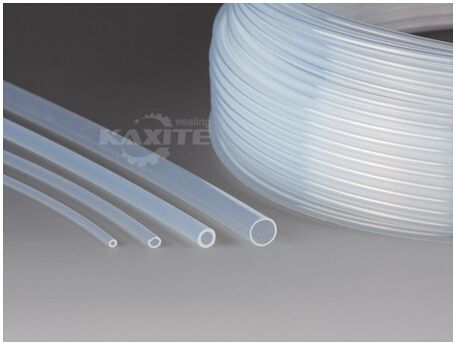
A key phrase for search teams—Can PTFE Tubes Be Used in Medical and Pharmaceutical Applications?—should be answered with application-specific evidence, not a generic “yes.” The right tube is the one that passes your fluid contact, sterilization, and documentation review.
Pain point: A supplier sends a line in a quotation that says “medical grade PTFE.” The procurement team has no resin traceability, no statement on ISO 10993 or USP Class VI support, and no clear change-control path. The quote looks competitive, but the buyer cannot defend it in an internal qualification review.
Solution: Turn vague claims into a document checklist. Ask for evidence that matches the product’s intended use, then compare suppliers on the same basis. Ningbo Kaxite Sealing Materials Co., Ltd. can help procurement teams build a practical documentation package for medical and pharmaceutical PTFE tube inquiries, including dimensional reports, material statements, and lot traceability where applicable.
| Document or evidence | What it supports | Ask before purchase order |
|---|---|---|
| Resin grade and lot traceability | Material consistency and change control | Can you link the tube batch to the resin lot? |
| ISO 10993 support statement | Biological evaluation planning for medical use | Which tests are supported, and for what contact category? |
| USP Class VI support | Common screening reference for medical plastics | Is the statement product-specific or generic? |
| Certificate of Analysis | Batch-level quality review | Which dimensions, appearance, and tests are reported? |
| Extractables and leachables support | Pharmaceutical fluid contact risk assessment | Do you have data or guidance for the drug-contact condition? |
| Change-control notification | Supply continuity and validation protection | Will material or process changes be notified in advance? |
Pain point: A tube performs well in a bench sample, but after ethylene oxide, gamma, or steam sterilization the assembly shows dimensional change, fitting issues, or increased particulate risk. The buyer needs sterilization compatibility before the design is locked.
Solution: Review the whole assembly, not only the PTFE resin. PTFE generally offers strong thermal and chemical stability, but stress, fit, packaging, and adjacent materials can affect the final result. Ask for sterilization-specific recommendations and validate the finished tube assembly under the intended cycle. A supplier that understands both material and medical-device expectations can reduce avoidable trial-and-error.
| Sterilization or cleaning route | PTFE consideration | Validation evidence to request |
|---|---|---|
| Ethylene oxide | Often used for heat-sensitive medical assemblies | Residuals plan, aeration guidance, and material compatibility |
| Gamma irradiation | PTFE is generally stable, but assembly effects still matter | Dose range review and post-sterilization dimensional report |
| Steam or autoclave | High temperature resistance is useful, but fittings and stress must be checked | Cycle profile and post-cycle visual or dimensional checks |
| Hydrogen peroxide or vapor cycles | Compatibility depends on the full device design | Material statement and application-specific test plan |
| CIP and SIP cleaning | Chemical resistance supports cleaning, but residue control must be reviewed | Cleaning agent list, temperature, and contact time |
Pain point: A pharmaceutical buyer needs tubing for a solvent-containing formulation. The team knows PTFE is inert, so it assumes no further testing is needed. Later, questions appear about extractables, adsorption, permeation, and lot-to-lot variability. The project loses time because the risk assessment started too late.
Solution: Treat chemical compatibility as a documented risk review. PTFE is chemically resistant, but the final judgment should match the drug formulation, contact time, temperature, sterilization cycle, and regulatory pathway. Request extractables and leachables support where needed, and keep compatibility records with the supplier qualification file. Ningbo Kaxite Sealing Materials Co., Ltd. can help buyers frame the right questions for medical and pharmaceutical tube applications before samples are approved.
| Risk area | Why it matters | Requested evidence |
|---|---|---|
| Aggressive solvents | Can affect long-term tube performance or assembly components | Chemical compatibility chart and application review |
| Extractables | Compounds may migrate under certain contact conditions | Extraction study support or supplier guidance |
| Leachables | Patient or product safety assessment may require data | Toxicological risk review with the finished device or drug product |
| Adsorption | Some active ingredients may interact with fluid-path surfaces | Application-specific adsorption evaluation |
| Permeation | Vapors or gases may pass through materials under certain conditions | Application testing and wall-thickness review |
Pain point: Three suppliers quote the same “PTFE tube,” but the offers differ in tolerances, resin grade, surface finish, packaging, and documentation. The lowest price may create the highest validation cost. The buyer needs a comparison sheet that makes technical differences visible.
Solution: Write a specification that reflects the fluid path, assembly method, sterilization route, and documentation requirements. Then require every supplier to quote against the same line items. This approach helps procurement teams compare apples to apples and gives quality teams a clear approval path. Ningbo Kaxite Sealing Materials Co., Ltd. works with buyers to turn application details into a clear PTFE tube specification for medical and pharmaceutical projects.
| Parameter | Why specify it | Example question for the supplier |
|---|---|---|
| Inner diameter, outer diameter, and tolerance | Controls flow, fit, and assembly reliability | What tolerance can you hold lot to lot? |
| Wall thickness and concentricity | Affects strength, flexibility, and permeation review | What inspection method is used? |
| Resin grade and color | Supports material consistency and change control | Can you provide resin traceability and a CoA? |
| Surface finish | Influences flow, cleaning, and particle risk | What surface condition is standard, and what can be customized? |
| Sterilization and cleaning exposure | Prevents post-qualification failures | What validation support do you recommend? |
| Packaging and cleanroom handling | Protects cleanliness and incoming inspection | How is the tube packed, labeled, and protected? |
Procurement teams often ask the same question in different ways. The two groups below address the direct material question and the supplier approval question.
Yes, PTFE tubes can be used in many medical and pharmaceutical applications when the selected grade, dimensions, and documentation fit the intended use. Common examples include diagnostic equipment, laboratory fluid handling, drug-delivery lines, and clean-fluid transfer. Buyers should confirm chemical compatibility, sterilization exposure, extractables and leachables needs, and lot traceability before approval. PTFE is not a universal answer for every fluid path, but it is a practical candidate when inertness, low friction, and temperature resistance are important. Ningbo Kaxite Sealing Materials Co., Ltd. helps buyers review these points against a real specification rather than a generic material claim.
Request resin traceability, a product-specific Certificate of Analysis, dimensional inspection records, ISO 10993 or USP Class VI support where applicable, sterilization compatibility guidance, change-control procedures, packaging details, and samples for incoming evaluation. Also ask how the supplier handles nonconformance, batch records, and technical questions after the order. A supplier that can answer these items clearly is easier to qualify and safer to keep in a validated supply chain.
| Buyer question | Short answer | Next action |
|---|---|---|
| Can PTFE Tubes Be Used in Medical and Pharmaceutical Applications? | Yes, with application-specific qualification and documentation | Match tube grade to fluid, sterilization, and regulatory needs |
| Is “medical grade” enough? | No, the buyer still needs product-specific evidence | Request CoA, traceability, and test support |
If your team is sourcing PTFE tubes for medical or pharmaceutical projects, bring your drawing, fluid contact details, sterilization method, and documentation checklist to Ningbo Kaxite Sealing Materials Co., Ltd. Our team helps procurement and quality groups turn open questions into practical specifications, sample evaluations, and supply documents. To discuss your application, visit https://www.kaxite.com.cn or email [email protected] with your required dimensions, quantity, and qualification needs. We welcome the chance to review your PTFE tube project and help you move from a market search to a documented supplier conversation.
Puts, G. J., Crouse, P., & Ameduri, B. M. (2019). Polytetrafluoroethylene: Synthesis and Characterization of the Original Extreme Polymer. Chemical Reviews, 119(3), 1763–1805.
Kannan, R. Y., Salacinski, H. J., Butler, P. E., Hamilton, G., & Seifalian, A. M. (2005). Current status of prosthetic bypass grafts: a review. Journal of Biomedical Materials Research Part B: Applied Biomaterials, 74B(1), 570–581.
Xue, L., & Greisler, H. P. (2003). Biomaterials in the development and future of vascular grafts. Journal of Vascular Surgery, 37(2), 472–480.
Gorbet, M. B., & Sefton, M. V. (2004). Biomaterial-associated thrombosis: roles of coagulation factors, complement, platelets and leukocytes. Biomaterials, 25(26), 5681–5703.
Ratner, B. D. (2007). Biomaterials: where we have been and where we are going. Annual Review of Biomedical Engineering, 9, 1–26.
Jenke, D. R. (2007). Evaluation of the chemical compatibility of plastic contact materials and pharmaceutical products: safety concerns and testing strategies. Journal of Pharmaceutical Sciences, 96(10), 2566–2581.
Norwood, D. L., Granger, T. R., & Paskiet, D. M. (2008). The role of extractables and leachables in pharmaceutical packaging. Pharmaceutical Technology, 32(10), 72–84.
McDonnell, G., & Russell, A. D. (1999). Antiseptics and disinfectants: activity, action, and resistance. Clinical Microbiology Reviews, 12(1), 147–179.
Sastri, V. R. (2010). Plastics in Medical Devices: Properties, Requirements, and Applications. William Andrew Publishing, 1st Edition.
Ebnesajjad, S. (2015). Fluoroplastics: Melt Processible Fluoropolymers—The Definitive User’s Guide and Data Book. William Andrew Publishing, 2nd Edition.
-