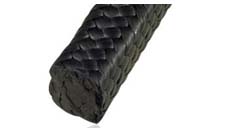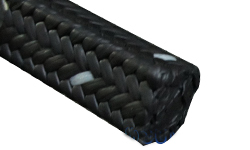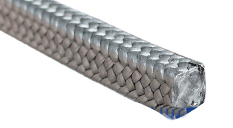
In the world of industrial sealing, where extreme pressures, aggressive chemicals, and high temperatures are the norm, few materials can match the combined performance of PTFE and graphite. Graphite PTFE Packing represents a pinnacle of sealing technology, engineered to deliver unparalleled reliability in the most challenging environments. At Kaxite Sealing, we have leveraged over two decades of materials science expertise to perfect this advanced braided packing, offering a product that significantly extends service life, reduces maintenance downtime, and lowers total operational costs. This composite packing is specifically designed for applications where pure graphite or pure PTFE packings fall short, providing a synergistic blend of chemical inertness, thermal stability, and self-lubricating properties.
This sealing solution is indispensable across a broad spectrum of industries. Whether it's containing aggressive acids and solvents in chemical processing pumps, handling superheated steam in power generation valves, or managing high-speed rotary motion in refinery equipment, Graphite PTFE Packing stands up to the task. Its unique construction minimizes shaft or stem wear, resists hardening and cracking over time, and maintains an effective seal under varying conditions. For engineers and maintenance specialists seeking a versatile, high-performance packing that guarantees safety and efficiency, understanding the specifications and capabilities of this material is crucial.
Kaxite Sealing's Graphite PTFE Packing is manufactured to exacting standards, ensuring consistency and performance batch after batch. Below is a detailed breakdown of its physical properties, chemical compatibility, and operational parameters.
| Parameter | Specification / Range | Notes |
|---|---|---|
| Temperature Range | -268°C to +288°C (-450°F to +550°F) | In oxidizing atmospheres, upper limit is 260°C (500°F). Short-term peaks possible. |
| Maximum Pressure | Up to 2500 PSI (172 Bar) | Dependent on shaft speed, temperature, and media. Consult engineering guide. |
| Shaft Speed | Up to 25 m/s (5000 ft/min) | Excellent for high-speed rotary applications. Graphite provides inherent lubrication. |
| Chemical Compatibility | Excellent to virtually all industrial chemicals | Resistant to acids, bases, solvents, hydrocarbons, and steam. Excludes molten alkali metals and fluorine. |
| Thermal Conductivity | High | Graphite component efficiently dissipates frictional heat, preventing packing burnout. |
| Coefficient of Friction | Very Low | PTFE and graphite are both renowned for low-friction properties, reducing power consumption. |
| Compression Recovery | Good | Maintains seal integrity during thermal cycling and pressure fluctuations. |
Q: What are the primary applications for Graphite PTFE Packing?
A: This packing is ideal for sealing rotating shafts, reciprocating rods, and valve stems in aggressive service. Common applications include centrifugal and reciprocating pumps handling acids, caustics, or solvents; mixers in chemical reactors; steam valves and turbines in power plants; agitators in pharmaceutical production; and expansion joints in high-temperature piping. It is particularly favored where leakage of expensive, hazardous, or environmentally sensitive media must be absolutely minimized.
Q: How do I choose between Graphite PTFE Packing and other styles like pure PTFE or aramid fiber packings?
A: Selection depends on your service conditions. Choose Graphite PTFE Packing when you face a combination of aggressive chemicals AND high temperatures (above 120°C/250°F) where pure PTFE might cold-flow or degrade. It outperforms aramid (e.g., Kevlar) in chemical resistance to strong acids and bases. If your application involves only mild chemicals at lower temperatures, pure PTFE may suffice. For primarily high-temperature, non-chemical service, a pure graphite packing could be an alternative. Kaxite Sealing provides detailed selection charts and engineering support to help you choose correctly.
Q: Is this packing suitable for food, beverage, or pharmaceutical applications?
A: Yes. The PTFE used in Kaxite Sealing's Graphite PTFE Packing complies with FDA regulations CFR 21.177.1550 for incidental food contact. It is non-toxic, non-contaminating, and does not support bacterial growth. However, for direct product contact in ultra-pure applications, a certified pure PTFE packing without graphite might be recommended; please consult our technical team for specific protocol requirements.
Q: What is the correct installation procedure for this packing?
A: Proper installation is critical for performance. Ensure the shaft/stem and gland are clean, smooth, and free of burrs. Rings should be cut precisely using a sharp blade and a mandrel of the correct diameter. Stagger the ring joints by 90 degrees around the shaft. Tighten the gland follower evenly until slight resistance is felt—DO NOT OVERTIGHTEN. After initial installation and a short run-in period (typically 30 minutes), re-tighten the gland nuts slightly to compensate for initial compression and thermal settling. Refer to the Kaxite Sealing installation guide for detailed, step-by-step instructions with diagrams.
Q: Does Graphite PTFE Packing require a break-in period or external lubrication?
A: A short break-in period is normal and recommended. The graphite within the packing provides ample self-lubrication for most services, eliminating the need for external grease or flushing lines in many cases. For extremely dry or abrasive media, a minimal water flush might be advised. During the first few hours of operation, allow the packing to generate some heat to mold to the shaft, then perform a final, slight gland adjustment. This process ensures optimal seal formation and long life.
Q: How can I tell if the packing is failing, and what is its typical service life?
A: Signs of failure include a persistent increase in leakage (more than a few drops per minute), excessive gland adjustment requirements, visible hardening or brittleness of the packing rings, or a noticeable increase in shaft temperature due to friction. Service life varies dramatically based on operating conditions—speed, pressure, temperature, media abrasiveness, and shaft condition. With proper installation on a well-maintained system, Kaxite Sealing's Graphite PTFE Packing can reliably last from 12 to 24 months or more in continuous service, far exceeding many conventional packings.
Q: What are the temperature limits, and what happens outside those ranges?
A: The continuous upper limit in non-oxidizing atmospheres is 288°C (550°F). In air or oxidizing environments, the limit is 260°C (500°F) to prevent gradual oxidation of the graphite. Below -268°C (-450°F), PTFE undergoes a phase change. Exceeding the upper limit can cause the PTFE to sinter or the graphite to oxidize, leading to hardening, loss of lubrication, increased friction, and rapid seal failure. Always select a packing with a temperature rating at least 20% above your maximum process temperature.
Q: Is it compatible with strong acids like sulfuric acid or bases like sodium hydroxide?
A: Absolutely. This is one of its key strengths. The PTFE component is renowned for being virtually inert, offering superb resistance to nearly all concentrations of sulfuric, hydrochloric, nitric, and other mineral acids at elevated temperatures. It is equally resistant to strong caustics like sodium hydroxide (lye) and potassium hydroxide. This universal chemical resistance makes it a versatile, one-size-fits-many solution in chemical plants, reducing inventory complexity.
Q: How does the graphite content improve performance over pure PTFE?
A: The graphite infusion provides three major enhancements: 1) Thermal Conductivity: It rapidly draws heat away from the shaft interface, preventing localized overheating and thermal degradation of the PTFE. 2) Lubricity: Graphite's layered structure acts as a solid lubricant, reducing friction and wear on both the packing and the shaft, especially during start-up. 3) Thermal Stability: It enhances the packing's resistance to cold flow (creep) under high temperature and pressure, maintaining a tighter seal for longer. The result is a packing that handles more extreme conditions with greater reliability.
Selecting a supplier for critical sealing components goes beyond the material specification sheet. It involves trust, technical support, and a proven track record. Kaxite Sealing has built its reputation on these pillars. Our Graphite PTFE Packing is not a generic commodity; it is the product of rigorous R&D and continuous improvement. We control the manufacturing process from raw material selection—using only premium-grade PTFE resin and crystalline graphite—to the precision braiding and finishing of the final product. This vertical integration guarantees consistency, a factor essential for predictable maintenance scheduling and operational safety.
Our commitment extends to our customers through comprehensive technical support. Our engineering team is available to assist with packing selection, installation troubleshooting, and failure analysis. We provide not just a product, but a sealing solution tailored to your specific operational challenges. Furthermore, Kaxite Sealing maintains a global supply chain and extensive inventory, ensuring you receive the high-performance Graphite PTFE Packing you need, when and where you need it, minimizing costly downtime. For engineers and procurement managers who cannot afford compromise, specifying Kaxite Sealing is a decision that safeguards process integrity and optimizes long-term plant efficiency.