Injectable Sealant Tools: Precision Leak Sealing Solutions from Kaxite Sealing
In the demanding world of industrial maintenance, facility management, and construction, controlling leaks efficiently and permanently is paramount. Traditional methods often fall short, leading to recurring issues, operational downtime, and escalating costs. This is where professional-grade injectable sealant tools from Kaxite Sealing become indispensable. These advanced systems are engineered for precision application of specialized sealants to stop leaks under pressure, in hard-to-reach areas, and on a wide variety of substrates. More than just a tool, they represent a complete methodology for proactive asset integrity management.
Core Components of a Kaxite Sealing Injectable Sealant System
A complete injectable sealant system from Kaxite Sealing is a sophisticated assembly designed for reliability and ease of use. Understanding each component is key to maximizing its potential.
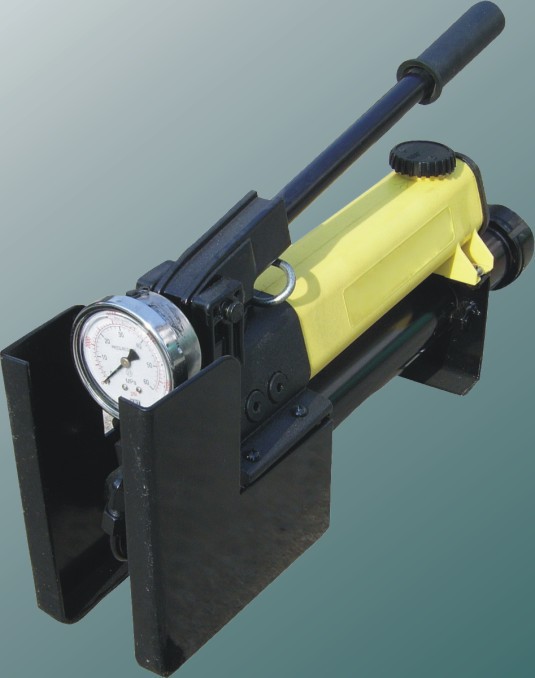
- High-Pressure Injection Pump: The heart of the system. Our pumps are hydraulically or pneumatically driven, generating the precise pressure (often up to 10,000 psi or more) needed to inject viscous sealants into leak paths, even against flowing process media.
- Sealant Cartridges: Pre-measured, contaminant-free containers of Kaxite’s proprietary sealant compounds. Available in various formulations (epoxy, silicone, urethane) for different temperatures, chemicals, and substrates.
- Injection Fittings & Adapters: A critical link. These include needle injectors, packers, and flange port adapters that create a sealed connection point on the leaking asset, allowing controlled sealant entry.
- Hoses and Couplings: Reinforced, high-pressure hoses with quick-disconnect couplings for safe and flexible setup, connecting the pump to the injection point.
- Control Manifold & Gauges: Provides the operator with precise control over injection pressure and flow, with clear gauges for monitoring in real-time.
Detailed Technical Specifications: Kaxite Sealing ProSeries Tool Range
The following table outlines the specifications of our flagship ProSeries models, helping professionals select the perfect tool for their specific application.
| Model | ProSeries 200 (Hydraulic) | ProSeries 450 (Pneumatic) | ProSeries 800 (Electric) |
|---|---|---|---|
| Primary Drive | Hydraulic Pump (10:1 Ratio) | Pneumatic Air Motor | Electric Motor (110V/220V) |
| Max. Output Pressure | 15,000 psi | 10,000 psi | 8,000 psi |
| Sealant Cartridge Type | Standard 400ml / 800ml Cartridge | Standard 400ml Cartridge | Standard 400ml Cartridge |
| Flow Rate (Approx.) | 0.4 liters/min at 5,000 psi | 0.25 liters/min at 5,000 psi | 0.15 liters/min at 5,000 psi |
| Weight (Tool Only) | 18 kg | 9.5 kg | 12 kg |
| Ideal Application | Heavy-duty flange sealing, pipeline repairs, high-pressure vessel leaks. | General plant maintenance, heat exchangers, valve packing leaks. Safe for hazardous areas. | Indoor facilities, remote locations without compressed air, precision low-flow applications. |
Kaxite Sealing Formulation Guide: Matching Sealant to the Substrate
Selecting the correct sealant is as crucial as using the right tool. Kaxite Sealing offers a range of engineered polymers.
| Sealant Type | Kaxite Product Code | Temperature Range | Chemical Resistance | Best For |
|---|---|---|---|---|
| High-Temp Epoxy | KX-EPO-HTT | -40°C to 230°C (-40°F to 450°F) | Excellent resistance to oils, solvents, mild acids/alkalis. | Steam leaks, hot water lines, chemical processing equipment. |
| Flexible Silicone | KX-SIL-FLX | -60°C to 260°C (-76°F to 500°F) | Good general resistance, excellent water/weather resistance. | Expansion joints, roofing penetrations, outdoor ductwork. |
| Urethane Elastomer | KX-UR-ELA | -30°C to 120°C (-22°F to 250°F) | Abrasion resistant, good for fuels and gases. | Slurry pipelines, tank seams, abrasive material handling systems. |
| Food-Grade Silicone | KX-SIL-FG | -40°C to 200°C (-40°F to 390°F) | NSF 61/51 certified, odorless, non-toxic when cured. | Beverage processing, pharmaceutical water systems, food packaging. |
Frequently Asked Questions (FAQ) About Injectable Sealant Tools
Q: Can injectable sealant tools be used on live, pressurized leaks?
A: Yes, this is one of their primary advantages. Kaxite Sealing tools and techniques are specifically designed for leak sealing under pressure. The high-pressure pump forces the sealant into the leak path, overcoming the system's internal pressure. Specialized injection fittings allow you to safely create a port without needing a full system shutdown, minimizing production loss.
Q: What types of leaks can be repaired with these tools?
A: Kaxite injectable sealant tools are incredibly versatile. Common applications include sealing leaks in: Flange gaskets (the most common use), pipe cracks and pinholes, heat exchanger tube sheets, valve stem packings and bonnets, tank and vessel seams, and porous castings. They work on metals, plastics, concrete, and composites.
Q: Is the repair permanent, or is it just a temporary fix?
A: When performed correctly using the appropriate Kaxite sealant for the service conditions, the repair is designed to be a permanent, structural fix. The sealant cures in-place, forming a durable polymer barrier that is often more resilient than the original gasket or joint. It becomes an integral part of the asset, with many repairs lasting for the remaining lifecycle of the equipment.
Q: What training is required to operate these tools safely and effectively?
A: While the tools are designed for robustness, effective leak sealing is a skilled practice. Kaxite Sealing strongly recommends attending our certified training program. This covers essential topics like: site safety assessment, proper fitting selection and installation, pump operation and pressure management, understanding sealant cure profiles, and developing a step-by-step injection strategy. Proper training ensures safety, maximizes success rates, and protects your investment.
Q: How do I choose between hydraulic, pneumatic, and electric drive models?
A: The choice depends on your work environment and needs. Hydraulic models (like ProSeries 200) offer the highest pressure for the toughest jobs but require a hydraulic power source. Pneumatic models (like ProSeries 450) are lighter, intrinsically safe for explosive atmospheres, and leverage common plant air, making them the most versatile for general industry. Electric models (like ProSeries 800) provide consistent power where compressed air is unavailable and are excellent for controlled, precise applications indoors.
Q: How does the Kaxite Sealing system differ from simply using a standard caulking gun?
A: The difference is profound. A caulking gun applies surface sealant with minimal pressure (under 100 psi). Kaxite injectable sealant tools are engineered systems that deliver specialized two-part or multi-component polymers at extremely high pressures (thousands of psi). This pressure is necessary to penetrate deep into the leak's origin, follow the flaw path, and completely fill the cavity from the inside out, creating a mechanically keyed, high-strength seal rather than a superficial external patch.