In the demanding world of industrial maintenance, pipework, and engine assembly, precision and reliability are non-negotiable. Achieving a perfect, leak-free seal is the cornerstone of safety, efficiency, and operational longevity. This critical task, however, hinges on more than just the quality of the gasket itself; it requires the correct, professional-grade tools for installation, removal, and inspection. Specialized gasket tools are engineered to handle the unique challenges of sealing applications, ensuring proper compression, preventing damage to mating surfaces, and saving significant time and labor costs. For professionals who cannot afford downtime or failures, investing in the right toolkit is investing in peace of mind.
At Kaxite Sealing, we understand that a gasket is only as good as its installation. For over two decades, we have not only supplied high-performance sealing materials but have also developed and refined a comprehensive suite of Gasket Tools designed to meet the rigorous standards of various industries, from oil and gas and chemical processing to automotive and marine engineering. Our tools are crafted from premium materials and undergo stringent quality control to ensure they perform flawlessly in the most challenging environments.
A complete gasket toolset addresses every stage of the sealing process. Here are the essential categories:
Below is a detailed breakdown of our flagship gasket tools, showcasing the engineering and specifications that define professional-grade equipment.
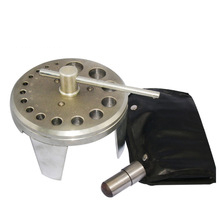
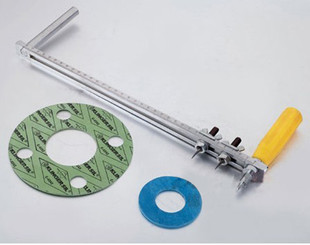
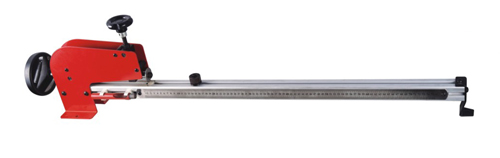
Ideal for plant maintenance teams, these cutters allow for the rapid, precise fabrication of gaskets from soft materials like rubber, cork, and non-asbestos sheets.
| Model | KX-MC100 | KX-MC150 | KX-MC220 |
|---|---|---|---|
| Max. Cutting Diameter | 100 mm (4") | 150 mm (6") | 220 mm (8.7") |
| Min. Inside Diameter | 15 mm (0.6") | 20 mm (0.8") | 25 mm (1") |
| Material Thickness Capacity | Up to 3 mm (1/8") | Up to 3.5 mm (0.14") | Up to 4 mm (0.16") |
| Construction | High-carbon steel blade, hardened pivot points, aluminum alloy body. | ||
| Primary Use | Small pipe flanges, instrument connections. | General pipeline work, pump flanges. | Larger valve flanges, heat exchanger covers. |
Powered tools for efficient, uniform removal of stubborn gasket and carbon deposits from iron, steel, and aluminum surfaces.
| Model | PT-SCR20 | PT-BR25 | PT-SCR30 Heavy Duty |
|---|---|---|---|
| Power Source | Pneumatic (90 PSI operating pressure) | ||
| Oscillation Rate | 10,000 OPM | 8,500 OPM | 12,000 OPM |
| Tool Width | 20 mm (0.8") | 25 mm (1") brush head | 30 mm (1.2") |
| Weight | 1.1 kg (2.4 lbs) | 1.3 kg (2.9 lbs) | 1.8 kg (4 lbs) |
| Features | Quick-change blade holder, variable speed trigger. | Non-marring nylon/brass bristle options, dust extraction port. | Reinforced housing, heat-treated scraper blades included. |
Critical for achieving the specified bolt load, especially in multi-step bolting procedures (torque-to-yield).
| Specification | Details |
|---|---|
| Model Range | KX-DTQ50 (10-50 Nm), KX-DTQ300 (40-300 Nm), KX-DTQ1000 (200-1000 Nm) |
| Accuracy | ±1% clockwise, ±2% counterclockwise (full scale) |
| Angle Measurement | 0-720° range, ±1° accuracy |
| Display | Backlit LCD, shows torque (Nm, ft-lb, in-lb), angle, peak value. |
| Data Output | Bluetooth connectivity for data logging and procedure documentation. |
| Calibration | ISO 6789 compliant, certificate provided. 5000-cycle battery life. |
Q: Why can't I just use a utility knife or a screwdriver to make or remove a gasket?
A: While possible for very casual repairs, using improper tools is a leading cause of seal failure. A utility knife cannot cut a perfect, consistent circle or complex shape, leading to uneven compression. A screwdriver used as a scraper will inevitably gouge and score the critical sealing surface of the flange. Even microscopic scratches can become leak paths. Professional gasket tools are designed to protect the flange while performing their specific task with precision.
Q: How do I choose the right gasket cutter for my application?
A: Consider three main factors: 1) Flange Size: Match the cutter's maximum diameter to your largest common flange. 2) Gasket Material: Ensure the cutter is rated for the thickness and hardness of the sheet material you use (e.g., rubber, PTFE, fiber). 3) Frequency of Use: For daily use, invest in a hardened steel, industrial-grade model like the Kaxite KX-Series for longevity and cleaner cuts.
Q: Is a pneumatic scraper always better than a manual one?
A: Pneumatic scrapers offer superior speed, consistency, and reduced operator fatigue for large-scale or frequent cleaning jobs. They provide a more uniform surface finish, which is vital for seal integrity. However, for very delicate surfaces, small areas, or in environments without compressed air, a well-designed manual scraper with a sharp, correct blade angle is still an excellent and controlled tool.
Q: What is the "bolting procedure," and why is a torque wrench with angle measurement necessary?
A: A bolting procedure is a specified method for tightening flange bolts to ensure even gasket compression. A simple torque value is often not enough, especially with semi-metallic or spiral-wound gaskets. The "torque + angle" method involves tightening bolts to a low initial torque (seating the gasket) and then turning each bolt a specified additional angle (e.g., 90°, 180°). This achieves a more accurate and consistent bolt stretch (load). A digital wrench like the Kaxite TQ series measures both parameters precisely, which is crucial for critical joints in pressure systems.
Q: How often should my torque wrenches and other precision gasket tools be calibrated?
A: Calibration frequency depends on usage. For tools in constant professional use, calibration every 6 months or 5,000 cycles is recommended. For intermittent use, annual calibration is a minimum. Always calibrate after any shock (e.g., dropping the wrench) or if you suspect inaccuracy. Kaxite Sealing offers traceable calibration services to ensure your tools meet OEM and safety standards.
Q: Can Kaxite Sealing tools be used with gaskets from other manufacturers?
A: Absolutely. Kaxite Sealing gasket tools are engineered to universal industry standards. They are fully compatible with and will enhance the performance of any quality gasket, regardless of brand. The principle of proper surface preparation, precise fitting, and controlled bolt loading is universal to achieving a reliable seal.
Q: What is the most overlooked but critical step in gasket installation?
A: Thorough flange surface preparation and inspection is often rushed. Before even placing the new gasket, the flange faces must be completely clean, dry, and free of old residue, oil, and burrs. They should then be inspected for flatness, warping, or pitting. Using a straightedge and feeler gauge is a basic method. Any defect in the flange surface will compromise even the best gasket and tools. This step is where our removal and inspection tools prove their value.
Integrating the right gasket tools into your maintenance protocol is a force multiplier. It elevates work quality from makeshift to methodical, turning a potential point of failure into a benchmark of reliability. The specifications and guidance detailed here underscore the technical depth required in professional sealing work. Kaxite Sealing is committed to providing not just the components, but the complete technological solution for leak-free performance. Our tool range is continually developed in response to field feedback and advancing industry practices, ensuring that professionals have access to equipment that matches the sophistication of modern sealing materials and engineering requirements.