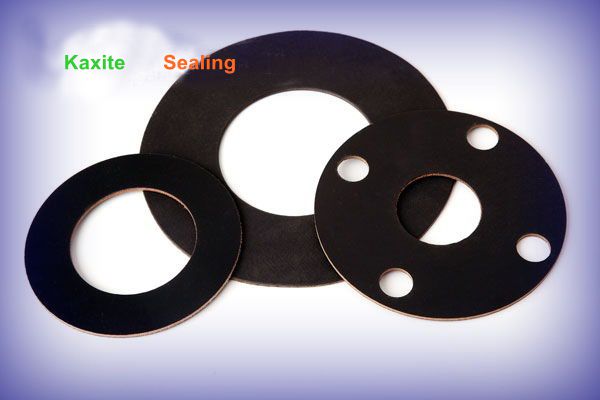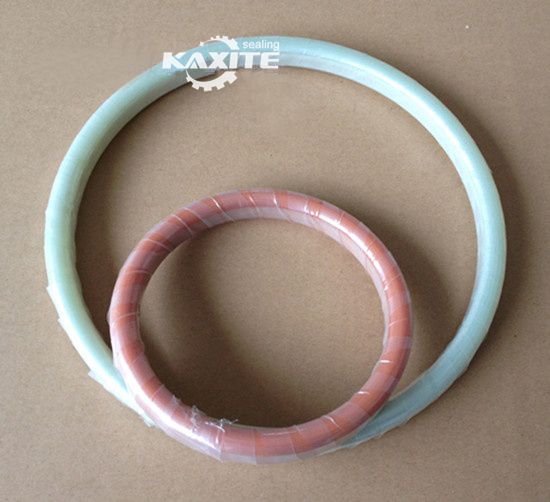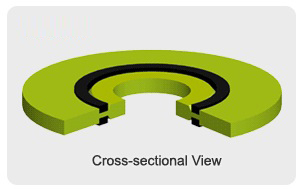
In industrial piping and bolted flange connections, particularly within critical sectors like oil & gas, chemical processing, power generation, and water treatment, preventing corrosion is paramount. One of the most effective and engineered solutions to combat a pervasive threat—galvanic and stray current corrosion—is the use of specialized Flange Insulation Gasket Kits. These kits are not merely gaskets; they are comprehensive isolation systems designed to break the electrical continuity in a pipeline, thereby protecting expensive infrastructure and ensuring long-term operational safety and reliability.
At Kaxite Sealing, we leverage decades of material science and engineering expertise to produce high-performance insulation kits that meet the stringent demands of modern industry. Our kits are meticulously designed to provide complete electrical isolation while maintaining a robust, pressure-tight seal under challenging service conditions.
When two dissimilar metals (e.g., carbon steel and stainless steel) are connected in an electrolyte (like water or moist soil), an electrochemical reaction occurs, leading to galvanic corrosion. The less noble metal (anode) corrodes preferentially, often at an accelerated rate. Similarly, stray electrical currents from grounding systems or nearby equipment can use the pipeline as a path, causing severe pitting and erosion at flange points. Flange insulation gasket kits interrupt this electrical path by inserting high-dielectric, non-conductive materials between the flange faces and around the bolts, effectively isolating the two flange sections from each other.
A standard Kaxite Sealing insulation kit is a carefully coordinated set of components. Each part plays a vital role in ensuring total isolation and a leak-free seal.
| Component | Standard Material | Key Properties & Purpose | Available Alternatives |
|---|---|---|---|
| Insulating Gasket | PTFE (Teflon®), Filled PTFE | Primary sealing and insulating layer. Excellent chemical resistance, wide temperature range (-200°C to +260°C), and superior dielectric strength. | Modified PTFE, Gylon®, Ceramic Filled PTFE for abrasive services. |
| Inner Sleeve / Bushings | PPS (Polyphenylene Sulfide) or PEEK | Insulates bolt shanks from the bolt holes. Provides high mechanical strength, creep resistance, and thermal stability. | PTFE, High-Strength Phenolic. |
| Washers (Under Bolt Head & Nut) | PPS or PTFE with Mica/Epoxy | Prevents electrical contact between the bolt/nut and the flange. Mica/epoxy washers offer extremely high dielectric strength and compression resistance. | All-PTFE, Phenolic, Ceramic-Filled. |
| Steel Washers | Carbon Steel, Stainless Steel 304/316 | Used on top of insulating washers to distribute bolt load and prevent galling or damage to the insulating material during torqueing. | Hot-Dip Galvanized, Zinc-Plated. |
| Alignment Pins | POM (Acetal) or PPS | Non-metallic pins for aligning flange holes during assembly without creating an electrical bridge. | Nylon, PTFE-Coated Steel. |
Our kits are engineered to match specific application requirements. Below are the standard and optional parameters we offer.
| Parameter | Specification Range & Details | Testing Standard |
|---|---|---|
| Pressure Rating | Up to Class 2500 (PN 420). Designed to match the pressure class of the insulated flange pair. | ASME B16.5, EN 1092-1 |
| Temperature Range | Standard: -50°C to +230°C (-58°F to +446°F). Extended range available: -200°C to +260°C with special materials. | ASTM D696, ASTM E831 |
| Dielectric Strength | > 5 kV/mm (for PTFE core). Mica/epoxy components can exceed 15 kV/mm. Ensures complete electrical isolation. | ASTM D149 |
| Chemical Compatibility | Excellent resistance to virtually all industrial chemicals, solvents, acids, and alkalis, especially with PTFE-based components. | NACE MR0175/ISO 15156, ASTM D543 |
| Flange Standards | ANSI/ASME B16.5, B16.47, EN 1092-1 (DIN), JIS B2220. Raised Face (RF), Flat Face (FF), Ring-Type Joint (RTJ). | Per flange standard |
| Sizes | From 1/2" (DN15) to 60" (DN1500) and larger upon request. Full kits for all standard bolt circles. | N/A |
| Bolt Hole Configuration | Custom drilled to match customer's flange. Standard kits include sleeves/washers for all bolts. | N/A |
| Color Coding | Standard: White (PTFE), Black (PPS). Available for easy identification and material verification. | N/A |
Q: When should I use a Flange Insulation Gasket Kit instead of a standard gasket?
A: You should use an insulation kit whenever you need to prevent galvanic corrosion between dissimilar metals in a flange connection or when the pipeline requires protection from stray electrical currents. Common applications include isolating wellheads, insulating pipeline sections at road crossings or plant boundaries, protecting water injection lines, and in cathodic protection systems. If your system has mixed materials like carbon steel and copper alloy valves, or is in a known corrosive environment or area with stray currents, insulation is mandatory.
Q: How do I select the right material for my application?
A: Material selection depends on three primary factors: temperature, pressure, and media. PTFE is the default for most chemical services up to 230°C. For higher temperatures or more abrasive slurries, filled PTFE or alternative materials like PEEK are recommended. Our engineering team at Kaxite Sealing can assist with material selection based on your specific process data sheet (PDS). Always consider the maximum continuous operating temperature and any potential thermal cycling.
Q: Can I retrofit an existing flanged connection with an insulation kit?
A: Yes, retrofitting is a common practice during maintenance turnarounds. The existing flange faces must be cleaned, inspected for pits or grooves that could compromise the seal, and be in good condition. The bolts may need to be replaced if they are corroded, as the new insulating sleeves require a clean, uniform bolt shank. It is crucial to follow the proper installation sequence and torque procedure to ensure effective isolation.
Q: What is the correct installation procedure for a Flange Insulation Gasket Kit?
A: Proper installation is critical for performance. 1) Ensure flanges are clean, aligned, and undamaged. 2) Insert non-metallic alignment pins. 3) Place the insulating gasket centrally. 4) Insert insulating sleeves into each bolt hole. 5) Install bolts through the sleeves. 6) On each bolt, stack: insulating washer, steel washer, nut. 7) Hand-tighten nuts. 8) Torque bolts in a crisscross pattern to the specified value in multiple passes, as per ASME PCC-1 guidelines. Never use impact wrenches directly on the insulating washers.
Q: How do I test if the installed flange insulation is working effectively?
A: Electrical continuity testing is the standard method. Using a low-resistance ohmmeter (megohmmeter), measure the resistance across the insulated flange joint. A reading of greater than 1 megohm (1,000,000 ohms) typically indicates good isolation. The test should be performed after installation and periodically during service as part of a predictive maintenance program. Always follow safe electrical testing procedures in potentially hazardous areas.
Q: Are Kaxite Sealing kits compliant with industry standards?
A: Absolutely. Our Flange Insulation Gasket Kits are manufactured to meet or exceed relevant international standards, including ISO 15589-2 for pipeline cathodic protection, NACE standards for corrosive environments, and the pressure-temperature ratings of ASME B16.5 and EN 1092-1. Certificates of Conformance and material test reports are available upon request.
Q: Can you provide custom kits for non-standard flanges or special requirements?
A: Yes, customization is a core strength of Kaxite Sealing. We regularly produce kits for large diameters, special bolt patterns, exotic materials like Grafoil® for high temperatures, or combined isolation and sealing challenges (e.g., for heat exchangers). We work from your drawings or specifications to deliver a kit that fits and performs perfectly.
The reliability of a Flange Insulation Gasket Kit hinges on the quality of its materials, precision in manufacturing, and depth of engineering support. Kaxite Sealing delivers on all fronts. We use only premium-grade, traceable polymers and composites. Each component is machined to precise tolerances to ensure easy installation and consistent performance. Our technical support team provides comprehensive assistance, from material selection and installation guidance to troubleshooting. We understand that a flange insulation kit is a long-term investment in asset integrity, and we engineer our products accordingly. For your next project requiring corrosion protection through electrical isolation, specify Kaxite Sealing—where precision meets protection.