Language
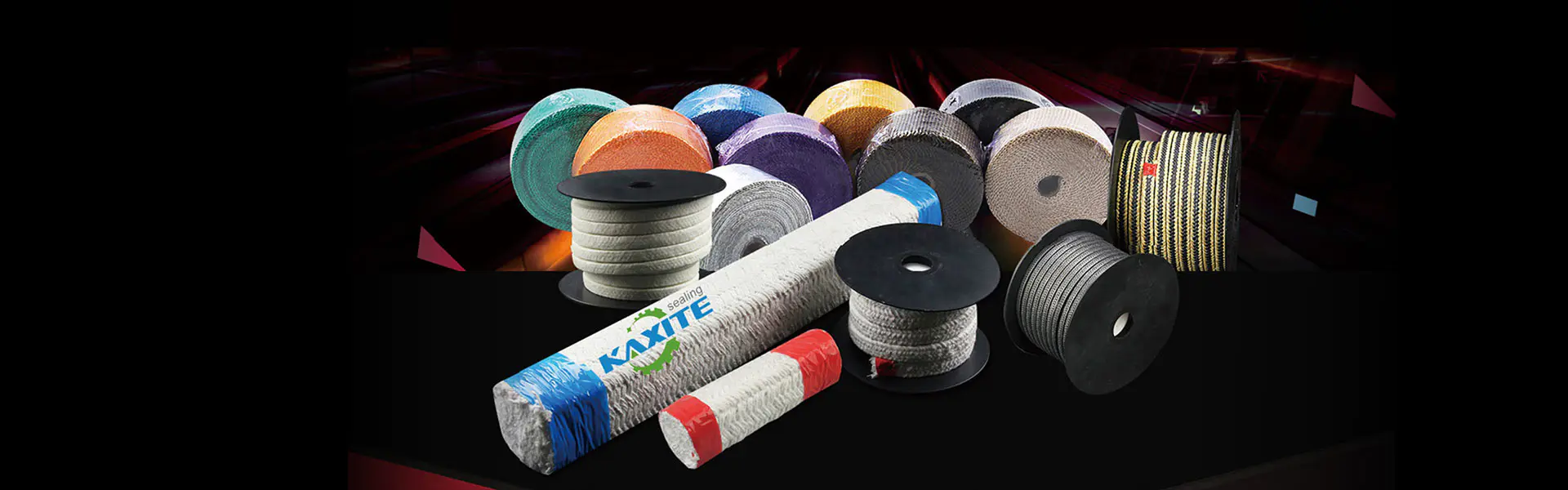
In the demanding world of sealing solutions, where failure is not an option, PTFE and PEEK seals represent the pinnacle of material science and engineering. At Kaxite Sealing, we specialize in designing and manufacturing high-performance seals from these advanced polymers, providing unmatched reliability in the most challenging environments. Unlike conventional elastomers, PTFE (Polytetrafluoroethylene) and PEEK (Polyetheretherketone) offer a unique combination of chemical inertness, extreme temperature tolerance, and exceptional mechanical properties, making them indispensable for industries like aerospace, semiconductor manufacturing, chemical processing, oil & gas, and life sciences. Understanding their distinct characteristics and optimal applications is crucial for selecting the right seal for your critical operation.
While both are high-performance thermoplastics, PTFE and PEEK serve different, often complementary, roles in sealing technology.
PTFE is renowned for its almost universal chemical resistance and its extremely low coefficient of friction. It is the material of choice for applications involving aggressive chemicals and where stick-slip must be avoided.
PEEK is a high-strength, rigid thermoplastic that excels in applications requiring exceptional mechanical strength, wear resistance, and stability at high temperatures, especially where creep resistance is critical.
Our engineered seals are available in standard and custom configurations. Below are key specifications for our filled PTFE and PEEK-based sealing materials.
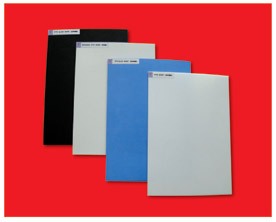
| Material Grade (Kaxite Code) | Base Polymer | Primary Fillers/Reinforcement | Key Properties & Typical Applications | Color |
|---|---|---|---|---|
| KT-PTFE-G25 | PTFE | 25% Glass Fiber | Improved compression resistance, reduced creep, good wear resistance. Ideal for bushings, bearings, and general industrial seals. | Light Brown |
| KT-PTFE-C20 | PTFE | 20% Carbon | Enhanced thermal conductivity, excellent creep resistance, low deformation. Used in compressor rings, valve seats, and conductive applications. | Black |
| KT-PTFE-B15 | PTFE | 15% Bronze | Superior wear resistance, high thermal conductivity, excellent load-bearing capacity. Common in heavy-duty piston rings and thrust washers. | Bronze |
| KT-PEEK-V0 | PEEK | Virgin (Unfilled) | High purity, excellent chemical and hydrolysis resistance. Perfect for semiconductor, food & beverage, and medical seals. | Beige |
| KT-PEEK-G30 | PEEK | 30% Glass Fiber | High stiffness, superior tensile strength, excellent dimensional stability. Used in high-pressure pump components and aerospace seals. | Light Grey |
| KT-PEEK-CF30 | PEEK | 30% Carbon Fiber | Maximized strength-to-weight ratio, exceptional wear resistance, low friction. Ideal for dynamic seals in racing, aerospace, and high-performance machinery. | Black |
| Property | ASTM Test | PTFE (Virgin) | PTFE (25% Glass Filled) | PEEK (Virgin) | PEEK (30% Carbon Filled) |
|---|---|---|---|---|---|
| Density (g/cm³) | D792 | 2.15 - 2.20 | 2.20 - 2.30 | 1.30 - 1.32 | 1.40 - 1.45 |
| Tensile Strength (MPa) | D638 | 20 - 35 | 15 - 25 | 90 - 100 | 160 - 200 |
| Compressive Strength (MPa) | D695 | 12 | 25 | 120 | 200 |
| Continuous Service Temp. (°C) | - | 260 | 260 | 250 | 250 |
| Coefficient of Friction (vs. Steel) | D1894 | 0.05 - 0.10 | 0.10 - 0.20 | 0.30 - 0.40 | 0.20 - 0.30 |
Q: When should I choose a PTFE seal over a PEEK seal, or vice versa?
A: The choice hinges on the primary challenge in your application. Choose PTFE seals when your priority is supreme chemical resistance to aggressive media (acids, bases, solvents) or when an ultra-low friction, anti-stick surface is required, such as in food processing or pharmaceutical applications. Opt for PEEK seals from Kaxite Sealing when the application involves high continuous mechanical load, elevated temperatures combined with pressure, or where exceptional wear resistance and dimensional stability are paramount, such as in high-pressure fuel systems or aerospace actuators.
Q: What is "cold flow" or "creep," and how does it affect PTFE seals?
A: Cold flow, or creep, is the tendency of a material to deform permanently under a constant mechanical load over time, even at room temperature. Virgin PTFE is particularly susceptible to this, which can lead to a loss of sealing force and eventual leakage in static seal applications. At Kaxite Sealing, we combat this by formulating filled PTFE compounds. Adding fillers like glass, carbon, or bronze significantly improves creep resistance, allowing PTFE seals to maintain their shape and sealing integrity under sustained pressure.
Q: Can PEEK seals handle cryogenic temperatures as well as high temperatures?
A: Yes, PEEK performs exceptionally well across a broad temperature spectrum. While its standout feature is continuous service up to 250°C, it also retains excellent toughness and mechanical properties at cryogenic temperatures as low as -196°C (liquid nitrogen temperatures). This makes Kaxite Sealing PEEK seals an excellent choice for applications like LNG handling, superconducting magnets, and space exploration equipment that experience extreme thermal cycling.
Q: Are PTFE and PEEK seals suitable for FDA/USP Class VI or other regulatory compliant applications?
A: Both materials can be compliant, but selection and sourcing are critical. Virgin, unfilled PTFE is inherently inert and is commonly used in FDA-compliant applications for food and pharmaceutical contact. Similarly, virgin PEEK is often USP Class VI certified and is a staple in medical and life science equipment. It is imperative to specify your regulatory requirements when ordering. Kaxite Sealing provides full material traceability and certification for grades designed for regulated industries.
Q: How do I determine the right filler material for my PTFE seal?
A: The filler optimizes PTFE for specific service conditions. For general wear resistance and improved stiffness, glass fiber is a common choice. For applications requiring better thermal conductivity and reduced deformation under load (e.g., compressor rings), carbon or graphite fillers are ideal. For the highest wear resistance and load-bearing capability in dynamic applications, bronze-filled PTFE is superior. Our engineering team at Kaxite Sealing can guide you through this selection based on your operating pressure, temperature, media, and dynamic/static conditions.
Q: What are the machining and tolerancing considerations for these seals?
A: Both PTFE and PEEK can be precision machined to very tight tolerances. However, PEEK is generally more rigid and stable, allowing for machining to tighter tolerances and thinner cross-sections without deformation. PTFE, especially unfilled, is softer and requires careful handling to avoid distortion. Post-machining stress relief may be necessary for complex PTFE parts. Kaxite Sealing utilizes state-of-the-art CNC machining and quality control processes to ensure that every seal, whether a standard O-ring, a custom lip seal, or a complex geometrically shaped seal, meets the specified dimensional and performance criteria.
The unique properties of PTFE and PEEK open doors to solutions in critical sectors. Kaxite Sealing components are trusted in the following environments: