Language

Picture this: it is 2 a.m. on a Tuesday, and a flange on your citric acid transfer line starts dripping because the “chemical-resistant” O-ring you sourced three months ago has turned into a cracked, swollen ring. Your maintenance team is on overtime, your production target is slipping, and you are back at the same question: Where can I buy PTFE O-rings online? For procurement engineers, plant managers, and sealing distributors, that question is less about finding any online store and more about finding a supplier that will not disappear after the first batch fails. PTFE O-rings offer near-universal chemical resistance, a temperature range from -200°C to 260°C, and excellent compliance in static joints, but only if the material grade, tolerance, and surface finish match the actual service conditions. Ningbo Kaxite Sealing Materials Co., Ltd. works with buyers who need exactly that: factory-direct PTFE O-rings with material traceability, custom dimensions, and predictable lead times. In this guide, you will learn how to evaluate PTFE O-Ring suppliers, avoid common sourcing mistakes, and answer “Where can I buy PTFE O-rings online?” with confidence.

A maintenance engineer at a specialty chemical plant once replaced Viton O-rings with low-cost PTFE rings from an anonymous marketplace seller. The new rings leaked within two weeks, not because PTFE was the wrong choice, but because the rings were machined from reprocessed virgin rod with poor dimensional control. The real problem was the supplier’s lack of compression set data and surface roughness control. PTFE O-rings solve aggressive chemical and high-temperature sealing challenges, but only when the correct grade is selected. Use the table below to match common PTFE grades to your operating environment.
| Material Grade | Temperature Range | Best for | Hardness Shore D |
|---|---|---|---|
| Virgin PTFE | -200°C to 260°C | Food, pharma, aggressive acids | 50-60 |
| Glass-filled PTFE | -200°C to 260°C | Compressive loads, wear | 55-65 |
| Carbon-filled PTFE | -200°C to 260°C | Hydraulic, dynamic friction | 60-70 |
| Stainless steel-filled PTFE | -200°C to 260°C | High pressure, steam | 65-75 |
Ningbo Kaxite Sealing Materials Co., Ltd. addresses this pain point by offering compression-molded and machined PTFE O-rings with batch-level hardness and tensile certificates, so you never guess again.
A procurement specialist needed 500 pieces of AS568-214 PTFE O-rings for a food-grade filling line. The lowest quote looked attractive until the supplier could not confirm whether the material met FDA 21 CFR 177.1550 or EC 1935/2004. The buyer had to restart the search, losing two weeks. Sourcing PTFE O-rings online requires more than a price comparison. You should verify material compliance, tooling capability, and whether the supplier can provide a Certificate of Conformance. Ningbo Kaxite Sealing Materials Co., Ltd. helps by offering custom sizing from standard AS568 to metric dimensions, tight tolerances down to ±0.05 mm, and quick confirmation of food, pharma, and chemical compliance.
| Checkpoint | What to ask | Why it matters |
|---|---|---|
| Material certification | FDA, EC 1935/2004, or specific chemical resistance data | Prevents contamination and regulatory rejection |
| Dimensional tolerance | ±0.05 mm or tighter for machined PTFE O-rings | Avoids groove fit issues and seal compression loss |
| Batch traceability | Raw material lot number and hardness report | Reduces risk of mixed or recycled filler lots |
| Lead time support | Stock availability and custom production schedule | Keeps maintenance and project timelines on track |
In a high-pressure steam line, a glass-filled PTFE O-ring may creep less than virgin PTFE, but if the medium is concentrated nitric acid, the filler may be attacked. A chemical engineer learned this after ordering generic “PTFE O-rings” for a mixed acid reactor. The solution is to map temperature, pressure, chemical exposure, and movement before selecting the grade. Virgin PTFE is often preferred for food and pharma because of purity, while glass-filled PTFE offers better resistance to cold flow in static flanges. Carbon-filled PTFE works well in hydraulic systems where friction and wear matter. Stainless steel-filled PTFE handles high-pressure steam and extreme bearing loads. Ningbo Kaxite Sealing Materials Co., Ltd. can recommend the right grade based on your specific medium and operating window, helping you avoid over-specifying an expensive filled compound or under-specifying a weak one.
An automotive aftermarket distributor received a shipment of PTFE O-rings with hardness ranging from 52 to 62 Shore D, causing inconsistent sealing in brake fluid test rigs. The vendor claimed “PTFE is PTFE,” but the buyer knew that hardness variation suggested recycled filler or improper sintering. To prevent this, ask for lot-specific dimensional inspection reports, Shore D hardness testing, and tensile strength values. Ningbo Kaxite Sealing Materials Co., Ltd. performs in-process dimensional checks and provides material certification from virgin and filled PTFE compounds, reducing the risk of field returns. By partnering with a supplier that treats every batch as a quality event, you protect both your production line and your purchasing reputation.
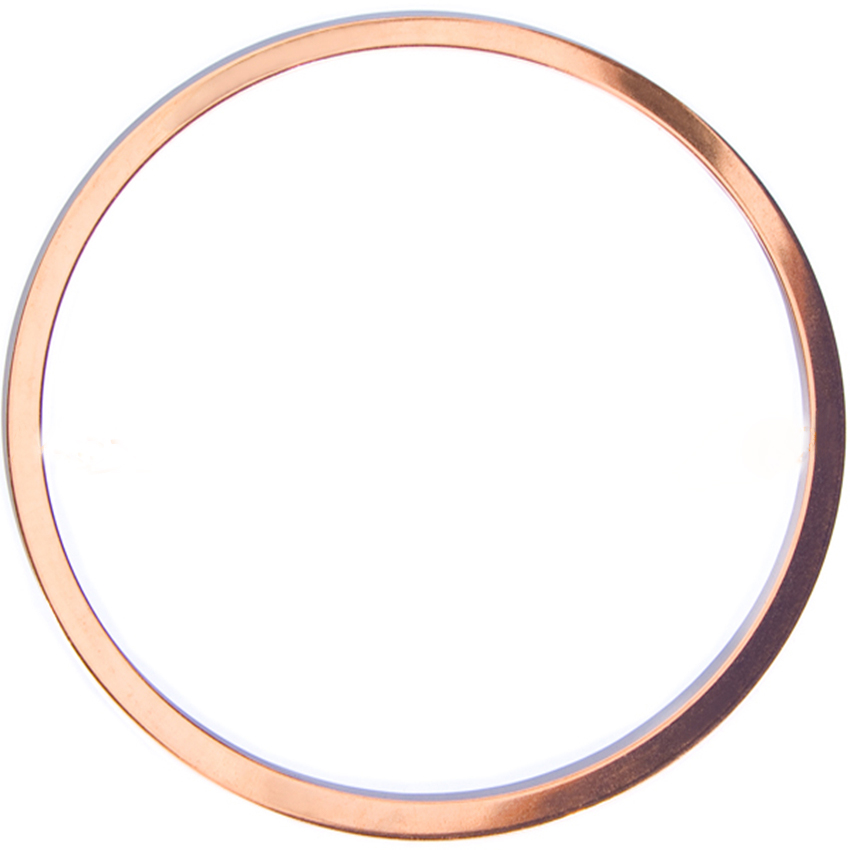
If standard AS568 or metric PTFE O-rings do not fit your groove, a direct manufacturer is the fastest route. Ningbo Kaxite Sealing Materials Co., Ltd. machines custom PTFE O-rings from skived sheet or extruded tube and can hold tolerances down to ±0.05 mm. Request a quote with your inner diameter, cross-section, material grade, and quantity.
Check whether the seller provides a material data sheet and can name the polymer grade, such as Teflon PTFE, glass-filled PTFE, or expanded PTFE. At Kaxite, each batch is traceable to its raw material certificate, so you can confirm resistance to acids, solvents, steam, and food contact media before you buy.
Which PTFE O-ring failure mode has caused you the most downtime? Share your experience or ask a sourcing question below — the right seal is often easier than it seems once you talk to an application-focused supplier.
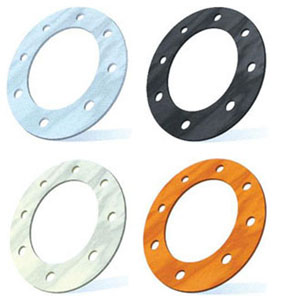
Ningbo Kaxite Sealing Materials Co., Ltd. is a China-based sealing manufacturer that supplies PTFE O-rings, PTFE envelope gaskets, and custom machined PTFE parts to domestic and international buyers. The factory supports small trial orders and full production batches, so you can validate a seal before scaling up. Whether you are replacing elastomer O-rings in an aggressive chemical line or sourcing for a new pump design, the team helps you select the right PTFE grade and finish.
When you are ready to buy PTFE O-rings online, Ningbo Kaxite Sealing Materials Co., Ltd. offers a direct factory advantage: custom PTFE O-rings, PTFE envelope gaskets, and machined sealing components with full material traceability. Contact our sealing team at [email protected] for a quote or technical recommendation.
Ebnesajjad, S. (2017). Expanded PTFE Applications in Sealing Technology. Journal of Fluorine Chemistry, 194, 12-23.
Li, Y., & Wang, X. (2019). Friction and wear of PTFE-based composites for dynamic seals. Tribology International, 132, 105-113.
Chen, H., & Zhang, L. (2015). Effect of glass fiber content on compression creep of PTFE gaskets. Polymer Testing, 46, 72-80.
Samanta, S., & Prasad, K. (2020). Chemical compatibility of PTFE O-rings in aggressive media. Corrosion Science, 163, 108287.
Miller, D. L. (2014). Dimensional tolerance modeling for machined PTFE seals. Sealing Technology, 2014(11), 7-12.
Fukushima, K., & Mori, T. (2018). Thermal degradation of filled PTFE in oxygenated environments. Journal of Applied Polymer Science, 135(24), 46371.
Williams, J. G. (2016). Stress relaxation and sealability of expanded PTFE sheet gaskets. Journal of Pressure Vessel Technology, 138(3), 031203.
Patel, R., & Desai, P. (2021). Comparative study of PTFE and FKM O-rings in high-pressure hydraulic systems. Wear, 476, 203684.
Zhang, M., & Xu, Y. (2013). Influence of filler type on the hardness and tensile strength of PTFE compounds. Materials & Design, 46, 142-148.
Brown, R. A. (2022). Online procurement and quality assurance for polymer seals. Journal of Purchasing and Supply Management, 28(4), 100789.
-