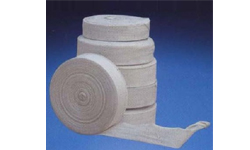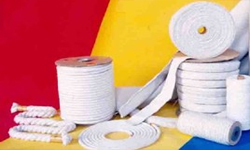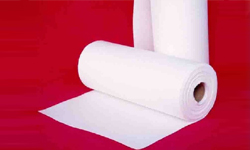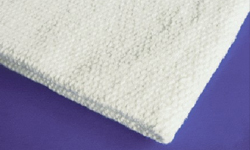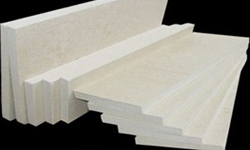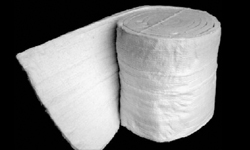
In demanding industrial environments, the need for reliable, high-temperature insulation is paramount. Ceramic fiber, a lightweight refractory material, stands as a cornerstone technology for thermal management and protection. At Kaxite Sealing, we specialize in engineering premium-grade ceramic fiber products designed to deliver exceptional performance, energy efficiency, and longevity in the most challenging applications. Our materials are engineered from high-purity alumina-silica compositions, creating a versatile fiber capable of withstanding continuous temperatures up to 1430°C (2600°F) and higher for specific grades. This intrinsic capability makes ceramic fiber an indispensable solution for industries ranging from metal processing and petrochemicals to aerospace and power generation.
The superiority of Kaxite Sealing's ceramic fiber lies in its unique combination of properties: extremely low thermal conductivity, minimal heat storage, excellent thermal shock resistance, and outstanding chemical stability. Unlike traditional dense refractories, ceramic fiber modules, blankets, and boards are remarkably lightweight, reducing structural load and enabling faster heat-up and cool-down cycles for furnaces and kilns. This translates directly into significant fuel savings and increased operational flexibility. Furthermore, our fibers are produced with consistent quality and dimensional accuracy, ensuring easy installation and reliable performance batch after batch.
Understanding the technical specifications is crucial for selecting the correct ceramic fiber product. Kaxite Sealing offers a comprehensive range, each formulated for specific temperature ranges and application requirements. Below are the core parameters that define our product line.
The following table outlines the typical specifications for our flagship Kaxite Sealing Standard Grade ceramic fiber blanket.
| Property | Test Method | Standard Grade Value | High-Purity Grade Value |
|---|---|---|---|
| Classification Temperature | ASTM C892 | 1430°C / 2600°F | 1540°C / 2800°F |
| Continuous Use Limit | - | 1200°C / 2192°F | 1350°C / 2462°F |
| Density (Nominal) | ASTM C167 | 128 kg/m³ (8 pcf) | 128 kg/m³ (8 pcf) |
| Thermal Conductivity (Hot Face 1000°C) | ASTM C201 | 0.24 W/m·K | 0.22 W/m·K |
| Linear Shrinkage (24hrs @ Max Temp) | ASTM C356 | < 2.5% | < 2.0% |
| Tensile Strength | ASTM C1335 | > 80 kPa | > 90 kPa |
| Chemical Composition (Al2O3) | XRF | 44 - 47% | 47 - 52% |
Q: What exactly is ceramic fiber and how is it manufactured?
A: Ceramic fiber is a synthetic, amorphous refractory fiber produced by melting a combination of high-purity alumina and silica sands at temperatures exceeding 2000°C, then fiberizing the molten stream using a spinning or blowing process. This results in a wool-like mass of interlocked microscopic fibers, which is then processed into various forms like blankets, boards, and modules. Kaxite Sealing controls every step of this process to ensure fiber consistency, low shot content, and optimized thermal properties.
Q: What are the primary advantages of using ceramic fiber over traditional brick or castable refractory?
A: The advantages are significant. Ceramic fiber is about 1/10th the weight of brick, drastically reducing the structural steel requirements for a furnace. Its low thermal mass allows for rapid heating and cooling, improving process cycle times and saving energy. It offers superior thermal shock resistance, eliminating spalling and cracking common in dense refractories. Installation is also faster and often requires less skilled labor, especially when using pre-assembled modules from Kaxite Sealing.
Q: Is ceramic fiber safe to handle? What precautions are necessary?
A: Like many insulation materials, ceramic fiber requires proper handling. The fibers can be irritating to skin, eyes, and the respiratory system. During installation, we recommend using appropriate personal protective equipment (PPE) such as gloves, long sleeves, safety glasses, and a NIOSH-approved dust mask. Once installed and heated, the fibers sinter together, forming a stable lining that does not release fibers under normal operation. Kaxite Sealing products are available with optional binders or coatings to further reduce fiber dusting during installation.
Q: How do I select the correct density and thickness for my application?
A: Selection depends on the operating temperature, desired heat loss (surface temperature), and the required lining longevity. Higher density products generally offer better resistance to gas erosion and physical abuse. Thickness is determined by performing a heat loss calculation based on hot face temperature and acceptable cold face temperature. Kaxite Sealing provides detailed technical data sheets and our engineering team can assist with specific recommendations to optimize your thermal system's efficiency and cost.
Q: Can ceramic fiber be used in contact with flames or corrosive atmospheres?
A: Ceramic fiber is an excellent insulator against flame impingement and is widely used as a lining in direct-fired equipment. Regarding corrosion, standard alumina-silica fibers offer good resistance to most atmospheres but can be attacked by highly corrosive alkalis, hydrofluoric acid, and phosphoric acid. For such environments, Kaxite Sealing offers high-alumina or zirconia-enhanced grades with superior chemical resistance. A review of the process atmosphere is always advised during the material selection phase.
Q: What is the expected service life of a ceramic fiber lining?
A: Service life varies greatly based on application conditions: maximum temperature, thermal cycling frequency, atmosphere, and potential for mechanical abrasion or vibration. Under stable, continuous operation within the recommended temperature range, a Kaxite Sealing ceramic fiber lining can last for 5-10 years or more. In severe cyclic service, life may be shorter. Regular inspection of the hot face for surface degradation is the best practice for planning maintenance.
Q: How does Kaxite Sealing ceramic fiber ensure consistent quality and performance?
A: Quality begins with our raw material sourcing, using only high-purity precursors. Our manufacturing process employs advanced computer-controlled furnaces and fiberizing technology to maintain tight tolerances on fiber diameter and composition. Every production batch undergoes rigorous in-house testing for key parameters like density, shrinkage, and tensile strength. This commitment to quality control ensures that the product you receive performs exactly as specified in our technical data, providing reliable and predictable insulation performance.
The versatility of ceramic fiber makes it a critical component in countless thermal processes. Kaxite Sealing products are trusted by engineers and maintenance professionals worldwide to solve complex insulation challenges.