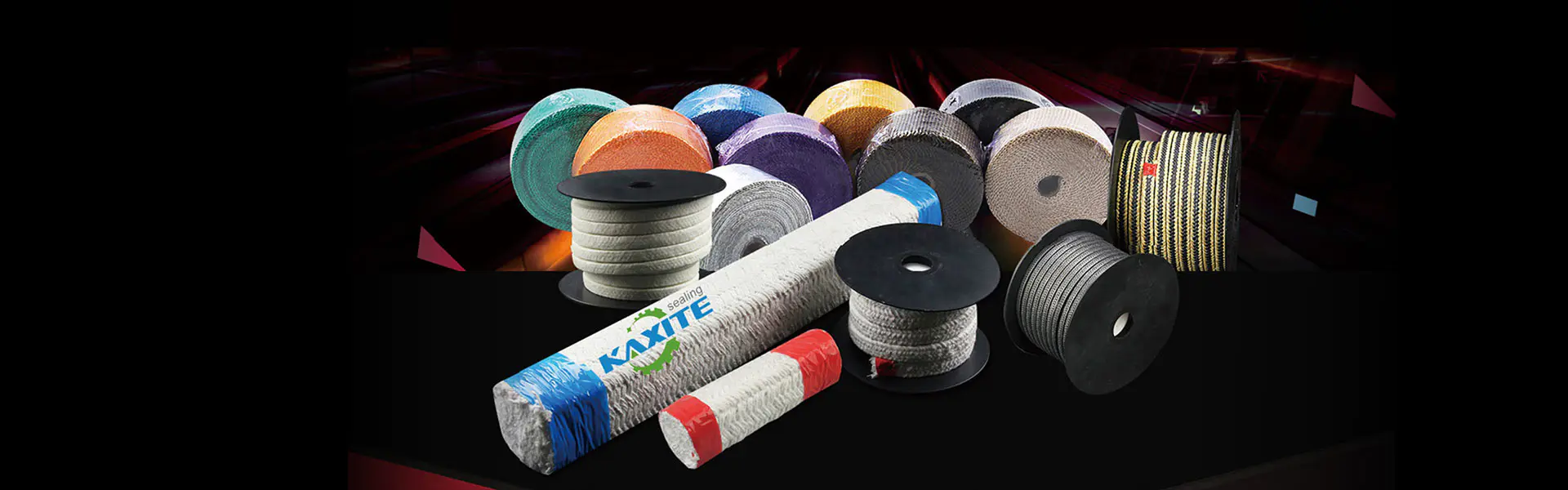
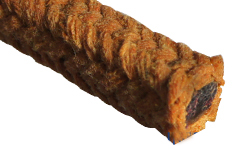
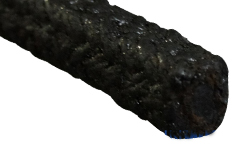
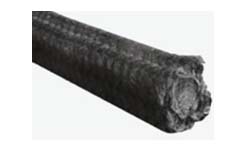
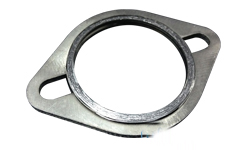
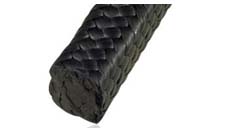
Vegetable Fiber Packing represents a significant advancement in industrial sealing technology, offering an eco-friendly and high-performance alternative to traditional packing materials. At Kaxite Sealing, we have pioneered the development and refinement of this material to meet the rigorous demands of modern industry. Our commitment to sustainability and engineering excellence is embedded in every strand of our packing solution.
This specialized packing is engineered from high-grade, naturally derived fibers, processed to create a robust and reliable sealing product. It is designed for applications involving valves, pumps, mixers, and other rotating or reciprocating equipment handling water, steam, air, oils, and many chemicals. The inherent properties of vegetable fibers provide exceptional durability, low friction, and excellent thermal conductivity.
**Core Product Parameters of Kaxite Sealing Vegetable Fiber Packing**
The performance of our packing is defined by a precise set of material and physical characteristics. Below are the key parameters that ensure optimal functionality.
**Material Composition & Properties:**
* **Base Fiber:** High-tenacity, long-staple vegetable fibers (e.g., abaca, flax).
* **Lubrication:** Impregnated with high-purity food-grade lubricants and PTFE dispersions.
* **Binder:** A specialized resin system for structural integrity and filament cohesion.
* **pH Level:** Neutral (approximately 6.5 - 7.5), minimizing corrosion on shafts and sleeves.
* **Temperature Range:** -40°C to +250°C (-40°F to +482°F) continuously. Short-term peaks up to 280°C (536°F) are possible.
* **Thermal Conductivity:** Excellent heat dissipation properties to prevent shaft overheating.
* **Specific Gravity:** 1.1 - 1.3 g/cm³.
**Physical & Mechanical Specifications:**
* **Density:** 0.9 - 1.1 g/cm³, providing a balance between sealing force and flexibility.
* **Tensile Strength:** > 120 MPa, ensuring the packing does not break under gland load.
* **Compression Set:** < 15%, allowing it to maintain seal tightness over long periods.
* **Coefficient of Friction:** Low dynamic friction, reducing power consumption and wear.
* **Chemical Resistance:** Resistant to fresh water, salt water, steam, alcohols, alkalis, and many organic solvents. Consult our chemical resistance chart for specific media.
**Standard Product Dimensions & Packaging:**
Kaxite Sealing Vegetable Fiber Packing is supplied in continuous coils or pre-cut rings to fit a wide range of equipment.
| Nominal Size (Inches) | Nominal Size (mm) | Coil Length (ft) | Coil Length (m) | Packing Cross-Section Tolerance |
| :-------------------- | :---------------- | :--------------- | :-------------- | :------------------------------ |
| 1/8" | 3 mm | 50 ft / 100 ft | 15 m / 30 m | +/- 0.2 mm |
| 3/16" | 5 mm | 50 ft / 100 ft | 15 m / 30 m | +/- 0.25 mm |
| 1/4" | 6 mm | 50 ft | 15 m | +/- 0.3 mm |
| 5/16" | 8 mm | 50 ft | 15 m | +/- 0.3 mm |
| 3/8" | 10 mm | 50 ft | 15 m | +/- 0.4 mm |
| 1/2" | 12 mm | 50 ft | 15 m | +/- 0.4 mm |
| 5/8" | 16 mm | 50 ft | 15 m | +/- 0.5 mm |
| 3/4" | 19 mm | 50 ft | 15 m | +/- 0.5 mm |
*Note: Pre-cut ring sets are available upon request for specific pump and valve models.*
**Typical Applications and Industry Use:**
* **Water & Wastewater:** Centrifugal pumps, mixers, valves in treatment plants.
* **Food & Beverage:** Sanitary pumps, steam valves, agitators (approved for incidental contact).
* **Pharmaceutical:** Utility steam lines, water-for-injection support systems.
* **Marine & Shipbuilding:** Pump shaft seals, valve stems in engine rooms and bilge systems.
* **Chemical Processing:** Pumps handling mild alkalis, solvents, and process water.
* **Power Generation:** Boiler feed pump glands, general service valves.
**Kaxite Sealing Vegetable Fiber Packing: Frequently Asked Questions (FAQ)**
What is Vegetable Fiber Packing, and how does it differ from traditional graphite or aramid packing?
Vegetable Fiber Packing is a braided sealing material made from natural, plant-based fibers treated with lubricants. Unlike purely synthetic graphite (which can be brittle) or aramid (which has high abrasiveness), our vegetable fiber packing offers a unique combination of natural resilience, excellent water absorption/swelling properties for self-tightening seals, and superior heat dissipation. It is particularly effective in applications involving water, steam, and mild chemicals where its environmental profile is a benefit.
What are the primary advantages of choosing Kaxite Sealing's Vegetable Fiber Packing?
The primary advantages are multi-faceted. First, its environmental sustainability: it is biodegradable and made from renewable resources. Second, its operational performance: it provides reliable sealing with minimal shaft wear, requires less adjustment, and reduces maintenance downtime. Third, its safety: it is non-toxic and can be used in applications with incidental product contact in food and pharma sectors. Finally, its cost-effectiveness: it offers a long service life and reduces total cost of ownership compared to many synthetic alternatives.
For which media or fluids is this packing most suitable?
Kaxite Sealing Vegetable Fiber Packing is exceptionally well-suited for cold and hot water, steam, air, inert gases, alcohols, alkalis, seawater, brines, oils, fats, and many organic solvents. It is not recommended for strong acids, strong oxidizing agents, or highly concentrated caustic solutions. Always consult the Kaxite Sealing engineering team or our detailed chemical resistance guide for specific fluid compatibility.
What is the correct installation procedure for this type of packing?
Proper installation is critical. Clean the stuffing box thoroughly. Cut packing rings on a clean surface using a sharp blade; ensure the ends are cut square. Stagger the ring joints by 90 degrees during installation. Use a stuffing box tool to tighten the gland follower evenly. After initial installation and before full operation, "run in" the packing by tightening the gland nut hand-tight, then running the equipment for 15-20 minutes. Re-tighten slightly until a minimal, controlled leak is achieved for lubrication and cooling. Avoid over-tightening.
How do I determine the correct size and number of packing rings needed?
The correct size is determined by the clearance between the pump shaft/valve stem and the stuffing box bore (i.e., the cross-section of the packing). The number of rings is determined by the depth of the stuffing box. A general rule is to use 3-6 rings, or enough to fill the box without over-compression. Our technical datasheets and customer support team can provide precise recommendations based on your equipment model.
Can Kaxite Sealing Vegetable Fiber Packing be used in high-speed rotary equipment?
Yes, it is suitable for a wide range of rotational speeds. Its low coefficient of friction and excellent thermal properties allow it to perform well in moderate to high-speed applications. For extreme high-speed scenarios, we recommend consulting with our engineers to confirm suitability or explore our complementary product lines, such as our high-performance carbon fiber packing.
What maintenance is required after installation?
Minimal maintenance is a key benefit. After the initial run-in period, periodic adjustment of the gland follower may be required to compensate for normal wear—typically every few months under standard operating conditions. The goal is to maintain a slight, visible leak (a few drops per minute) for lubricating and cooling the packing set. Regular inspection for excessive leakage or heat generation is advised.
Is this packing compliant with industry standards for food and water contact?
Kaxite Sealing Vegetable Fiber Packing is manufactured using FDA-listed components for incidental food contact (under FDA CFR 21). It is also compliant with standards for drinking water applications, such as NSF/ANSI 61 for water system components, where applicable. Certificates of Compliance are available upon request.
How does the temperature range affect performance?
Within its specified continuous range of -40°C to +250°C, the packing maintains its sealing integrity and mechanical properties. The natural fibers and lubricants are selected to perform optimally within this range. Exceeding the upper temperature limit can lead to accelerated degradation of the lubricants and eventual carbonization of the fibers, while operation below the lower limit may temporarily reduce flexibility.
What is the typical service life I can expect?
Service life varies significantly based on application factors: equipment type, shaft speed, media being sealed, pressure, temperature, alignment, and installation quality. Under standard conditions (water pump, moderate speed and temperature, proper installation), service life of 6 to 18 months is common before repacking is necessary. Kaxite Sealing's high-quality construction consistently delivers performance at the upper end of this spectrum.