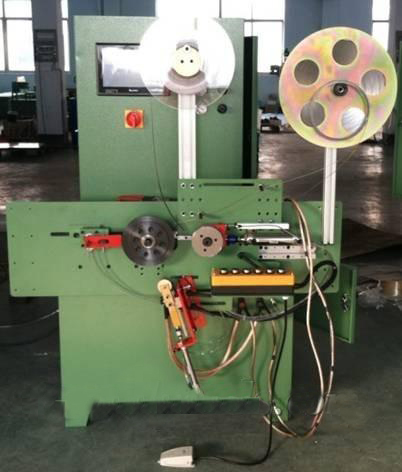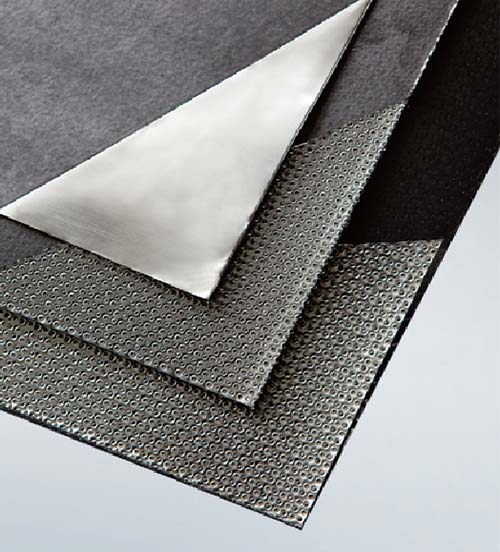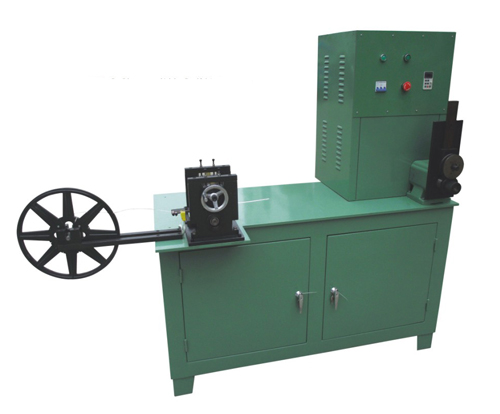
What are common applications and industries that use double jacketed gasket machines? For professionals sourcing industrial sealing solutions, this question is crucial. These specialized machines produce the gaskets that are the unsung heroes of process integrity, creating robust seals for demanding environments where a single leak can mean costly downtime or safety hazards. From the high-pressure steam lines of a power plant to the corrosive chemical streams in a refinery, double jacketed gaskets are vital. Their unique dual-layer, metal-jacketed construction offers superior performance, and the machines that make them are key to quality. This guide explores the essential applications and breaks down how investing in the right gasket technology, supported by experts like Ningbo Kaxite Sealing Materials Co., Ltd., can solve critical operational challenges.
Article Outline:
1. Solving High-Pressure & High-Temperature Challenges
2. Ensuring Safety in Corrosive & Hazardous Processing
3. Key FAQs About Applications
4. Partnering with a Sealing Solutions Leader
Imagine the control room alarms sounding because a critical steam line flange is leaking. The plant must reduce load immediately, leading to massive production losses. This is the nightmare scenario for power generation, petrochemical, and oil & gas procurement teams. Standard gaskets often fail under extreme cyclic pressure and temperatures exceeding 500°C (932°F). This is where double jacketed gasket machines come in. They manufacture gaskets with a soft, compressible filler material (like graphite or PTFE) tightly enclosed within two concentric metal jackets, usually stainless steel. This design creates a formidable seal that maintains its integrity under thermal cycling and high bolt load, preventing catastrophic leaks. For industries like power generation (turbine flanges, boiler systems) and upstream oil & gas (wellhead equipment, Christmas trees), specifying gaskets made by precision machines is non-negotiable for safety and uptime. Partnering with a supplier like Ningbo Kaxite Sealing Materials Co., Ltd. ensures access to gaskets produced on advanced machinery, guaranteeing dimensional accuracy and material consistency critical for these applications.
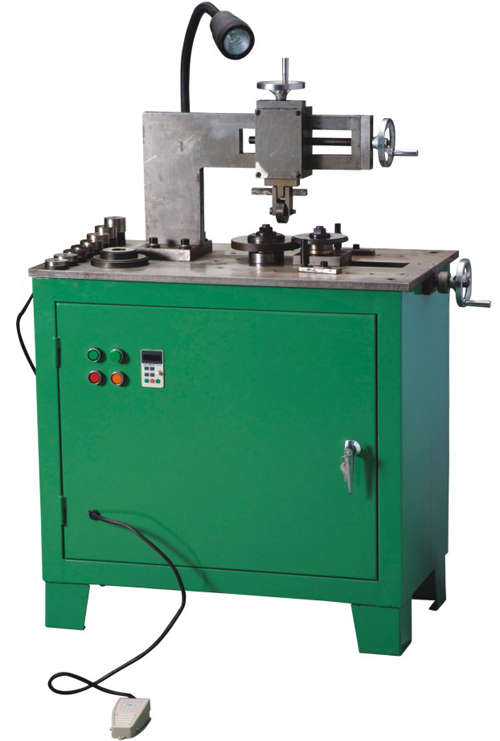
Typical Parameters for High-Temp/Pressure Gaskets:
| Application | Typical Pressure Range | Typical Temperature Range | Common Metal Jacket Material | Common Filler |
|---|---|---|---|---|
| Power Plant Steam Lines | Class 600 - 2500 | Up to 815°C (1500°F) | 304/316 Stainless Steel | Flexible Graphite |
| Refinery Process Piping | Class 150 - 900 | Up to 650°C (1200°F) | 316 SS, Monel | PTFE, Graphite |
| Oil & Gas Wellheads | 10,000 psi + | Up to 345°C (650°F) | Inconel 625, Duplex Steel | Flexible Graphite |
A procurement manager for a chemical plant reviews a maintenance report: recurring leaks in a sulfuric acid transfer line are causing hazardous spills, environmental concerns, and frequent gasket replacements. The root cause? Standard gaskets are being corroded by the aggressive media. In chemical processing, pharmaceutical, and pulp & paper industries, containing corrosive, toxic, or precious fluids is paramount. Double jacketed gaskets excel here. The metal jacket provides a complete barrier, protecting the vulnerable filler from direct chemical attack and preventing product contamination. The machines that produce these gaskets allow for precise sealing surface formation and the use of exotic jacket materials like Hastelloy or Tantalum, specifically chosen for corrosion resistance. This translates to longer service life, reduced maintenance frequency, and enhanced plant safety. By sourcing from a specialized manufacturer like Ningbo Kaxite Sealing Materials Co., Ltd., you gain expertise in material selection and machine fabrication tailored to your specific chemical service, solving the chronic leak problem at its source.
Parameters for Corrosive Service Gaskets:
| Industry | Typical Media | Critical Requirement | Jacket Material Options | Key Benefit |
|---|---|---|---|---|
| Chemical Processing | Acids, Caustics, Solvents | Corrosion Resistance | Hastelloy C276, Tantalum | Prevents Leaks & Contamination |
| Pharmaceutical | High-Purity Water, APIs | Cleanability, Non-contaminating | 316L Stainless Steel, Titanium | Maintains Product Integrity |
| Pulp & Paper | Chlorine Dioxide, Black Liquor | Resistance to Oxidizers | Alloy 20, Nickel | Extends Maintenance Cycles |
Q: What are common applications and industries that use double jacketed gasket machines beyond oil and gas?
A: Absolutely. While prominent in oil & gas, these machines serve critical roles in other sectors. In Power Generation, they produce gaskets for high-pressure turbine casings and boiler feed pumps. The Chemical Industry relies on them for reactors and heat exchangers handling corrosives. Shipbuilding (naval and LNG carrier fuel systems) and Heavy Machinery (hydraulic systems) also depend on the leak-proof seals manufactured by these precise machines.
Q: How does the machine quality affect the final gasket's performance in these applications?
A: The machine is fundamental. A high-precision double jacketed gasket machine ensures uniform filler density, precise jacket forming, and consistent dimensions. This directly impacts sealing performance—preventing blow-outs under pressure, ensuring even stress distribution on flange faces, and providing reliable thermal cycling resistance. Inferior machinery can lead to weak spots and premature failure. This is why partnering with an experienced supplier like Ningbo Kaxite Sealing Materials Co., Ltd., which utilizes and understands advanced manufacturing equipment, is crucial for obtaining gaskets that perform as specified in demanding field applications.
Selecting the right gasket is more than a purchase; it's an investment in plant reliability and safety. Understanding the applications and the machinery behind the product empowers you to make informed decisions. When your operations demand the robustness of double jacketed gaskets, you need a partner who masters both the material science and the manufacturing craft.
For over two decades, Ningbo Kaxite Sealing Materials Co., Ltd. has been a trusted global provider of high-performance sealing solutions. We specialize in manufacturing precision-engineered gaskets, including double jacketed types, for the exacting demands of power, chemical, oil & gas, and other heavy industries. Our expertise ensures that every product addresses the specific pressure, temperature, and corrosion challenges you face. Visit our website at https://www.kaxite.com.cn to explore our technical capabilities and product range. Ready to solve your sealing challenge? Contact our engineering support team directly at [email protected] for a customized consultation.
Referenced Scientific Literature:
Park, C., & Lee, Y. (2018). A study on the sealing performance and mechanical behavior of metal-jacketed gaskets under high-temperature conditions. Journal of Pressure Vessel Technology, 140(3), 031201.
Bouzid, A.-H., & Derenne, M. (2016). The effect of surface finish and gasket type on the sealing performance of bolted flange connections. International Journal of Pressure Vessels and Piping, 146, 1-9.
Sawa, T., & Nagata, K. (2015). Leakage analysis of bolted flange connections with double-jacketed gaskets subjected to internal pressure and thermal loading. Journal of Solid Mechanics and Materials Engineering, 9(1), 1-12.
Abid, M., & Nash, D. H. (2013). A comparative study of the sealing performance of different gasket types under combined internal pressure and thermal loading. Proceedings of the Institution of Mechanical Engineers, Part E: Journal of Process Mechanical Engineering, 227(4), 245-258.
Bickford, J. H. (2007). Gaskets and Gasketed Joints. CRC Press. (Book Reference).
Payne, J. R., & Bazergui, A. (1990). Development of test procedures for gaskets in elevated temperature service. WRC Bulletin, 358.
Brown, M. W., & O’Donnell, W. J. (1978). Sealing capability of double-jacketed asbestos-filled gaskets for reactor coolant pressure boundary. Nuclear Engineering and Design, 48(1), 117-128.
Chaaban, A., & Ma, X. (2005). Stress analysis of double-jacketed gaskets using finite element methods. ASME Conference Proceedings, 2005(47407), 135-142.
Gadre, A. D., & Leon, G. F. (2001). Long-term performance of flexible graphite double-jacketed gaskets in chemical service. Sealing Technology, 2001(89), 7-11.
European Sealing Association. (2019). Guideline 019: Gasket Selection for Flanged Joints. ESA Publications. (Industry Standard Reference).