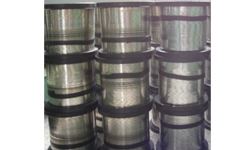
Within the realm of high-performance synthetic fibers, PTFE fiber stands as a pinnacle of material engineering. This unique material, born from polymerizing tetrafluoroethylene, offers an almost unparalleled combination of properties that make it indispensable in demanding industrial, aerospace, and filtration applications. Unlike standard textiles or even other high-temperature fibers, PTFE fiber maintains its integrity and performance under extremes of temperature, chemical exposure, and mechanical stress that would degrade or destroy lesser materials. For over five decades, its unique characteristics have solved complex engineering challenges, and today, it remains a critical component in advancing technology across numerous sectors. The inherent stability of PTFE polymer translates directly into the fiber's exceptional performance profile.
The superiority of PTFE fiber is rooted in a specific set of intrinsic properties. These are not merely incremental improvements but fundamental advantages that define its application space.
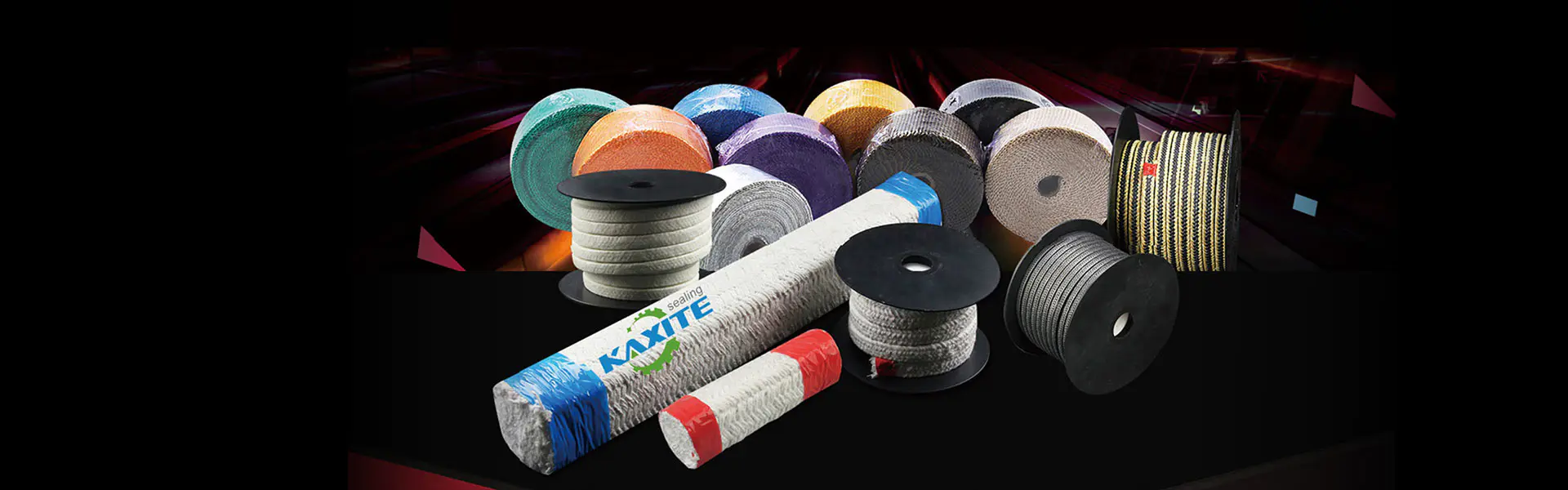
At Kaxite Sealing, we engineer our PTFE fiber to meet the most rigorous global standards. Our production process ensures consistency, purity, and performance that engineers and designers can rely on. Below is a detailed breakdown of our standard product specifications.
| Parameter | Specification / Value | Test Method / Notes |
|---|---|---|
| Polymer Type | 100% Virgin PTFE (Polytetrafluoroethylene) | ASTM D4894 |
| Fiber Form | Multifilament, Monofilament, Staple Fiber, Chopped Fiber | Available upon request |
| Standard Denier (dtex) | 200 dtex, 400 dtex, 800 dtex, 1200 dtex | Custom deniers available |
| Tenacity (Strength) | 1.8 - 3.5 g/denier | ASTM D2256 |
| Elongation at Break | 15% - 40% | ASTM D2256 |
| Continuous Service Temperature | -268°C to +288°C (-450°F to +550°F) | Long-term thermal stability |
| Melting Point | Does not melt; Degrades above ~349°C (660°F) | N/A |
| Limiting Oxygen Index (LOI) | >95% | ASTM D2863; Inherently non-flammable |
| Coefficient of Friction | 0.04 - 0.1 (Dynamic, fiber vs. metal) | ASTM D1894 |
| Dielectric Strength | >40 kV/mm | ASTM D149 |
| Chemical Resistance | Resistant to virtually all chemicals | Exceptional inertness |
| Color (Standard) | White, Brown (Golden) | Custom colors achievable with high-temp pigments |
| Grade Code | Primary Form | Typical Denier | Key Characteristics & Best Applications |
|---|---|---|---|
| KS-PTFE-MF-H | Multifilament Yarn | 400 dtex, 800 dtex | High tenacity, excellent flexibility. Ideal for weaving high-temperature belts, packings, and braided seals. |
| KS-PTFE-MO | Monofilament | 200 dtex - 1200 dtex | Superior dimensional stability, smooth surface. Used in filtration meshes, surgical meshes, and precise screening. |
| KS-PTFE-SF | Staple Fiber | 3-6 denier per filament | Needle-punched felts, wet-laid papers, and thermal insulation batting. Excellent for gaskets and compressor valve plates. |
| KS-PTFE-CF | Chopped Fiber | 3 mm, 6 mm, 12 mm lengths | Reinforcement filler for plastics, rubbers, and composites to reduce wear and friction, improve dimensional stability. | KS-PTFE-C | Conductive Fiber | 400 dtex | Carbon-loaded PTFE fiber for static dissipation and EMI shielding in cleanroom and electronics applications. |
The unique property matrix of PTFE fiber makes it the material of choice for mission-critical applications across diverse industries.
Q: What exactly is PTFE fiber, and how is it different from PTFE resin?
A: PTFE fiber is a textile form created by spinning or extruding PTFE polymer into continuous filaments or staple fibers. While the base chemistry is the same as bulk PTFE resin (e.g., used for sheets or rods), the fiber form provides flexibility, weave-ability, and a high surface-area-to-volume ratio, enabling its use in fabrics, braids, felts, and as reinforcement. It translates the polymer's superb properties into a versatile textile format.
Q: Can PTFE fiber truly handle such a wide temperature range?
A: Yes, absolutely. This is one of its defining features. PTFE fiber retains useful mechanical properties from cryogenic temperatures (near absolute zero) up to 550°F (288°C) continuously. Its molecular structure remains stable across this immense range. It does not become brittle at extreme cold nor melt at high heat like most polymers, making it uniquely suitable for applications experiencing thermal cycling.
Q: Is PTFE fiber safe for use in food contact or medical applications?
A: Pure, virgin PTFE fiber is biologically inert and is approved for certain food contact and medical device applications under specific regulations (such as FDA CFR 21 in the U.S. and EU regulations). It is crucial to source medical-grade fiber from a certified manufacturer like Kaxite Sealing, which controls purity, absence of additives, and production hygiene to meet these stringent standards.
Q: How is PTFE fiber woven or processed if it doesn't melt?
A: Standard thermoplastic melt-spinning is not possible with PTFE. It is typically processed using either paste extrusion (for multifilament) or film-fibrillation techniques. These processes create a fibrillated network that provides strength. Weaving, braiding, and needle-punching are standard textile methods used to convert the yarn or staple into fabrics, braids, or felts. Specialized equipment and expertise are often required.
Q: Can PTFE fiber be dyed or colored?
A: Dyeing PTFE fiber with conventional dyes is extremely difficult due to its chemical inertness and non-porous surface. Coloring is typically achieved by incorporating thermally stable inorganic pigments (like iron oxides) directly into the polymer resin before the fiber is spun. Kaxite Sealing offers standard white and brown (golden) fibers and can provide custom pigmented fibers for identification or aesthetic purposes.
Q: What are the key storage and handling considerations for PTFE fiber?
A: Store in a cool, dry, and clean environment away from direct sunlight. While PTFE is chemically resistant, keeping it free from dust and particulate contamination is important, especially for filtration or medical applications. No special humidity control is needed due to its zero moisture absorption. Use standard material handling practices; no significant health hazards are associated with handling the solid fiber.
Q: When should I choose PTFE fiber over other high-performance fibers like Aramid or PBI?
A: Choose PTFE fiber when your primary challenges involve a combination of extreme chemical exposure AND high temperature, or when a very low coefficient of friction, exceptional dielectric properties, or absolute non-flammability (LOI >95%) is required. While aramids have higher tensile strength and PBI has superior char retention in fire, neither matches PTFE's comprehensive chemical inertness and anti-stick properties across the same temperature breadth.
Q: How does Kaxite Sealing ensure the quality and consistency of its PTFE fiber?
A: Kaxite Sealing employs a vertically integrated manufacturing process with stringent quality control at every stage, from polymer feedstock verification to final fiber testing. We utilize advanced spectrometry to ensure polymer purity, monitor denier and tenacity in-line during spinning, and conduct batch-wise testing per international standards (ASTM, ISO). Our technical data sheets provide certified, traceable data for each production lot, giving our customers guaranteed performance.
Q: Can Kaxite Sealing provide custom-engineered PTFE fiber solutions?
A: Yes, customization is a core strength at Kaxite Sealing. Beyond our standard grades, we work closely with clients to develop tailored solutions. This can include specific denier/filament counts, custom staple lengths, conductive or lubricant-impregnated variants, and unique combinations of properties for specialized applications in aerospace, semiconductor, or chemical processing. Our engineering team collaborates from concept to production.