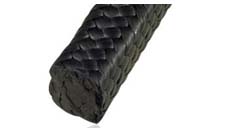
Carbon Fiber is a revolutionary material that has transformed industries from aerospace and automotive to sporting goods and high-performance engineering. At Kaxite Sealing, we specialize in providing premium-grade carbon fiber products and solutions designed for extreme durability, lightweight strength, and superior performance. This advanced composite material, known for its exceptional strength-to-weight ratio, is composed of thin, strong crystalline filaments of carbon. These fibers are bound together with a polymer resin, such as epoxy, to form a composite that is both incredibly strong and remarkably light.
For engineers, designers, and manufacturers seeking to push the boundaries of what's possible, understanding the precise specifications and capabilities of carbon fiber is paramount. Below, we detail the key product parameters and technical data that define Kaxite Sealing's high-quality carbon fiber offerings.
**Key Material Properties & Parameters**
The performance of carbon fiber composites depends on several critical factors. Here is a list of the primary parameters we control and guarantee at Kaxite Sealing:
* **Fiber Type:** We offer a range of types including Standard Modulus (SM), Intermediate Modulus (IM), High Modulus (HM), and Ultra-High Modulus (UHM). Each type offers a different balance of tensile strength and stiffness.
* **Tow Size:** This refers to the number of individual carbon filaments in a single strand (tow). Common sizes include 1K (1,000 filaments), 3K, 6K, 12K, and 24K. Smaller tow sizes (like 1K, 3K) are often used for complex weaves and detailed parts, while larger tows (12K, 24K) are used for applications requiring thicker laminates and higher production speeds.
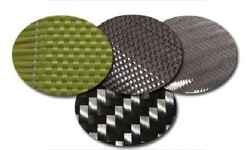
* **Weave Pattern:** The pattern in which the tows are woven into a fabric significantly impacts the material's drape, surface finish, and mechanical properties.
* **Plain Weave:** Balanced and stable, with good interlaminar shear strength.
* **Twill Weave (e.g., 2x2, 4x4):** Offers better drape over complex curves and a distinctive diagonal appearance.
* **Satin Weave (e.g., 4-Harness, 8-Harness):** Provides excellent drapeability and a smooth surface finish, ideal for aerodynamic components.
* **Areal Weight (GSM):** The weight of the fabric in grams per square meter. Lower GSM fabrics are lighter and used for thin laminates, while higher GSM fabrics build thickness faster.
* **Resin System:** The matrix that binds the fibers. We work with various systems including Epoxy (standard, high-temp), Vinyl Ester, and Polyester, each with different cure cycles, temperature resistance, and chemical compatibility.
* **Ply Orientation:** The directional alignment of the fabric layers (plies) within a laminate. Common orientations include 0°, 90°, and ±45°, which are stacked in specific sequences to achieve desired strength and stiffness in particular directions.
**Technical Data Comparison Table**
To illustrate the differences between our standard product grades, refer to the following table. All data is based on typical values for a cured laminate with a 60% fiber volume fraction using a standard epoxy resin.
| Property | Standard Modulus (SM) T300 3K | Intermediate Modulus (IM) T800 6K | High Modulus (HM) M40J 12K | Test Method |
| :--- | :--- | :--- | :--- | :--- |
| **Tensile Strength** | 3,530 MPa | 5,490 MPa | 4,400 MPa | ASTM D3039 |
| **Tensile Modulus** | 230 GPa | 294 GPa | 377 GPa | ASTM D3039 |
| **Elongation at Break** | 1.5 % | 1.9 % | 1.2 % | ASTM D3039 |
| **Density** | 1.76 g/cm³ | 1.81 g/cm³ | 1.77 g/cm³ | ASTM D792 |
| **Fiber Diameter** | 7 μm | 5 μm | 5 μm | - |
| **Typical Areal Weight** | 200 GSM | 410 GSM | 300 GSM | - |
| **Primary Application** | Consumer goods, automotive panels | Aerospace secondary structures, high-end automotive | Satellite components, precision robotics, sporting goods | - |
**Kaxite Sealing Carbon Fiber Fabric Specifications**
We supply carbon fiber in various fabric forms. This table outlines our most popular fabric styles.
| Product Code | Weave Pattern | Tow Size | Areal Weight (GSM) | Width (cm) | Resin Compatibility |
| :--- | :--- | :--- | :--- | :--- | :--- |
| KS-CF-PW200 | Plain Weave | 3K | 200 | 100, 125, 150 | Epoxy, Vinyl Ester |
| KS-CF-TW285 | 2x2 Twill | 3K | 285 | 100, 125 | Epoxy |
| KS-CF-SW400 | 4-Harness Satin | 6K | 400 | 100 | Epoxy, Polyester |
| KS-CF-UP600 | Unidirectional Tape | 12K | 600 | 30, 150 | Epoxy (Pre-preg available) |
| KS-CF-TW430 | 2x2 Twill | 12K | 430 | 100, 125 | Epoxy, Vinyl Ester |
**Carbon Fiber: Frequently Asked Questions (FAQ)**
**What exactly is carbon fiber?**
Carbon fiber is a high-strength, lightweight material made from thin, crystalline strands of carbon. These individual filaments, about 5-10 micrometers in diameter, are bundled into "tows" and woven into fabrics or aligned as tapes. They are then combined with a plastic polymer resin to create a rigid and durable composite material.
**Why is carbon fiber so strong yet so light?**
The strength comes from the alignment of the carbon crystal structure along the fiber's axis, creating extremely strong molecular bonds. Its low density (around 1.8 g/cm³ compared to 7.8 g/cm³ for steel) is an inherent property of the carbon element and the porous structure of the precursor materials used in manufacturing. This combination results in a strength-to-weight ratio superior to most metals.
**What are the main advantages of using carbon fiber composites?**
The primary advantages are: exceptional strength and stiffness at a very low weight, excellent fatigue resistance, low thermal expansion, good vibration damping, corrosion resistance, and the ability to be molded into complex, aerodynamic shapes. This allows for performance and efficiency gains unattainable with traditional materials.
**Are there different grades or types of carbon fiber?**
Yes, carbon fibers are primarily categorized by their tensile modulus (stiffness). Standard Modulus (SM) is the most common and cost-effective. Intermediate Modulus (IM) offers higher strength and stiffness. High Modulus (HM) and Ultra-High Modulus (UHM) fibers provide maximum stiffness but can be more brittle. The choice depends on the specific mechanical requirements of the application.
**How is carbon fiber made?**
The most common process involves starting with a precursor material, usually polyacrylonitrile (PAN) fibers. These fibers are first stabilized through oxidation at high temperatures. They are then carbonized in an inert atmosphere at very high temperatures (1000-3000°C), which drives off non-carbon atoms. Finally, they may undergo surface treatment and sizing application to improve bonding with resins.
**What is the difference between "wet layup" and "pre-preg" carbon fiber?**
Wet layup involves impregnating dry carbon fiber fabric with liquid resin manually or via infusion during the molding process. Pre-preg (pre-impregnated) carbon fiber comes from the supplier with the resin already applied and partially cured (B-staged). Pre-preg offers more consistent resin content, easier handling, and often superior mechanical properties, but requires refrigerated storage and an autoclave or oven for final curing.
**Can carbon fiber be recycled?**
Recycling carbon fiber composites is challenging but an active area of development. Mechanical recycling grinds down scrap into short fibers for use as filler. Thermal processes like pyrolysis burn off the resin to recover the fibers, though they may be degraded. Chemical processes aim to dissolve the resin. While virgin fiber quality is hard to match in recycled material, it is suitable for many non-structural applications, and Kaxite Sealing is committed to supporting sustainable material lifecycle solutions.
**What are the limitations or disadvantages of carbon fiber?**
The main disadvantages are high cost compared to fiberglass or metals, brittleness (low impact toughness leading to splintering), high electrical conductivity (which can cause galvanic corrosion when in contact with metals), and the complexity of repair. Damage often requires specialized inspection and patch techniques.
**How do I choose the right carbon fiber fabric for my project?**
Selection depends on your design priorities. Consider the required mechanical properties (strength vs. stiffness), part geometry (complex shapes need drapeable weaves like twill or satin), desired surface finish, production method (hand layup, infusion, pre-preg), and budget. The engineers at Kaxite Sealing can provide expert guidance based on your application's specific needs.
**What industries use Kaxite Sealing carbon fiber products?**
Our materials are specified across a broad spectrum of industries including: aerospace (interior panels, UAVs), automotive (body panels, structural components, interiors), marine (high-performance boat hulls, masts), wind energy (blade reinforcements), sporting goods (bicycle frames, fishing rods, helmets), and industrial engineering (robotic arms, custom machinery, lightweight fixtures).
**How should carbon fiber components be maintained and cleaned?**
Use mild soap and water with a soft cloth. Avoid abrasive cleaners or pads that can scratch the clear coat. For deeper cleaning, use specialized composite cleaners. Regularly inspect for cracks, chips, or delaminations. Protect the surface with UV-resistant wax or coating if exposed to prolonged sunlight to prevent resin degradation.
**What quality standards does Kaxite Sealing adhere to?**
Kaxite Sealing implements rigorous quality control protocols aligned with international standards. Our materials are tested and certified to meet relevant ASTM, ISO, and customer-specific requirements. We ensure batch-to-batch consistency, traceability, and performance reliability for all our carbon fiber products.