Serrated Gaskets: The Definitive Guide to High-Pressure, High-Temperature Sealing Solutions
In the demanding world of industrial sealing, where extreme pressures and temperatures are the norm, standard flat gaskets often fall short. This is where the engineered precision of serrated gaskets becomes indispensable. At Kaxite Sealing, with decades of specialization in advanced sealing technology, we understand that a gasket is not merely a component; it is a critical safety and performance barrier in your system. This comprehensive guide delves into the intricacies of serrated gaskets, their applications, specifications, and why they are the go-to choice for preventing leaks in the most challenging environments.
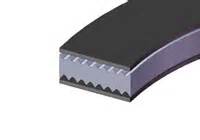
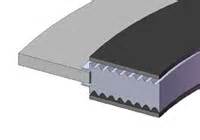
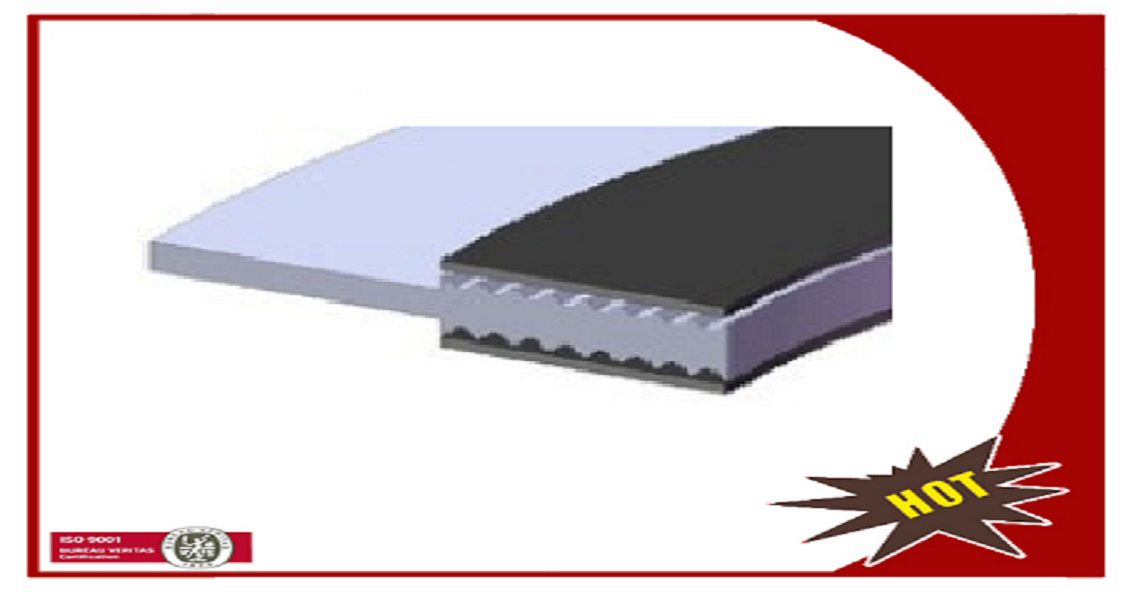
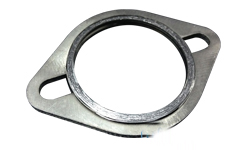
Serrated gaskets, also known as grooved gaskets or serrated metal gaskets, are designed with concentric grooves or serrations machined onto their sealing faces. These grooves bite into the softer flange material, creating multiple concentric seals that are exceptionally resistant to high internal pressure and thermal cycling. Unlike softer, composite gaskets, serrated gaskets are typically made from solid metal, offering superior mechanical strength and resilience.
**Primary Applications of Serrated Gaskets**
* High-Pressure Vessels and Reactors
* Heat Exchangers and Boilers
* Oil & Gas Pipeline Flanges (ASME B16.20, B16.5)
* Chemical and Petrochemical Processing Equipment
* Power Generation Turbines and Steam Systems
* Aerospace and Military Hydraulic Systems
These gaskets are specifically engineered for use with raised face (RF) flanges. The serrations are designed to seat into the finish of the raised face, creating a tight, metal-to-metal seal that is far more robust than a flat gasket under compression.
### Detailed Product Parameters & Material Specifications
The performance of a serrated gasket hinges on its precise dimensions, material grade, and serration pattern. Kaxite Sealing manufactures these gaskets to the most exacting international standards, ensuring optimal performance and safety.
**Standard Dimensions (Based on ASME B16.20):**
| Nominal Pipe Size (NPS) | Outside Diameter (OD) | Inside Diameter (ID) | Thickness (Typical) |
| :--- | :--- | :--- | :--- |
| 1/2" | 2.38 in (60.5 mm) | 0.84 in (21.4 mm) | 1/8 in (3.2 mm) |
| 2" | 5.00 in (127.0 mm) | 2.38 in (60.5 mm) | 1/8 in (3.2 mm) |
| 6" | 10.62 in (269.9 mm) | 6.19 in (157.2 mm) | 1/8 in (3.2 mm) |
| 12" | 19.75 in (501.7 mm) | 12.75 in (323.9 mm) | 1/8 in (3.2 mm) |
| 24" | 33.50 in (850.9 mm) | 24.75 in (628.7 mm) | 1/8 in (3.2 mm) |
*Note: Dimensions are for standard 150# and 300# ratings. Dimensions vary for higher pressure classes (600#, 900#, 1500#, 2500#). Custom sizes are available at Kaxite Sealing upon request.*
**Common Material Grades & Their Properties:**
The choice of material is critical and depends on the media being sealed, temperature, pressure, and corrosion requirements.
| Material Grade | Common Standards | Temperature Range (Approx.) | Key Characteristics & Typical Applications |
| :--- | :--- | :--- | :--- |
| Soft Iron / Low Carbon Steel | ASTM A285, A36 | -20°F to 800°F (-29°C to 427°C) | Good general-purpose material for steam, water, oil. Cost-effective. |
| 304 / 304L Stainless Steel | ASTM A240, UNS S30400/S30403 | -425°F to 1500°F (-254°C to 816°C) | Excellent corrosion resistance. Used in food, chemical, and general corrosive services. |
| 316 / 316L Stainless Steel | ASTM A240, UNS S31600/S31603 | -425°F to 1500°F (-254°C to 816°C) | Superior corrosion resistance, especially to chlorides and acids. Common in marine and chemical processing. |
| Alloy 20 (Carpenter 20) | UNS N08020 | Up to 1000°F (538°C) | Outstanding resistance to sulfuric acid and other aggressive chemicals. |
| Monel 400 | UNS N04400 | Up to 1000°F (538°C) | Excellent resistance to seawater, hydrofluoric acid, and alkalis. |
| Inconel 600 | UNS N06600 | Up to 2000°F (1093°C) | High strength and oxidation resistance at extreme temperatures. Used in furnace and aerospace applications. |
| Titanium | ASTM B265, Gr. 2 | Up to 600°F (316°C) | Exceptional strength-to-weight ratio and corrosion resistance in oxidizing environments. |
**Serrations (Grooves) Profile Specifications:**
The design of the serration itself is a key performance factor. Kaxite Sealing offers various patterns to suit specific sealing needs.
* **Concentric Serrations:** The standard pattern, with grooves machined concentrically around the center. Ideal for most high-pressure applications.
* **Spiral Serrations:** A continuous spiral groove. Can provide a longer effective seal path.
* **Profile Dimensions:**
* **Groove Depth:** Typically between 0.010" to 0.020" (0.25mm to 0.51mm).
* **Groove Pitch (Distance between grooves):** Commonly ranges from 1/64" to 1/32" (0.4mm to 0.8mm).
* **Included Angle:** The angle of the groove "V". Standard angles are 90° or 75°.
### Serrated Gaskets FAQ (Frequently Asked Questions)
**What is the main advantage of a serrated gasket over a standard flat metal gasket?**
The primary advantage is its ability to create a much more reliable seal under high pressure and thermal cycling. The sharp serrations plastically deform and bite into the flange surface, creating multiple microscopic seal lines. This "bite" prevents the gasket from being blown out or loosened by internal pressure fluctuations and vibration, which is a common failure mode for smooth flat gaskets.
**How do I select the right material for my serrated gasket application?**
Material selection is a three-factor process. First, identify the chemical compatibility of the gasket material with the process media to prevent corrosion. Second, ensure the material's temperature rating exceeds your maximum operating temperature. Third, consider the flange material; a gasket material softer than the flange is generally required for the serrations to bite effectively. The engineers at Kaxite Sealing can provide detailed material selection guidance based on your specific service conditions.
**Can serrated gaskets be reused?**
It is generally not recommended to reuse serrated gaskets. During the initial bolting, the serrations undergo controlled plastic deformation to create the seal. Upon disassembly, this deformation is set, and the biting edges are often dulled or filled with flange material. Reusing the gasket will likely result in a poor seal, as the gasket cannot "bite" again with the same effectiveness. For critical services, always install a new gasket.
**What flange surface finish is required for a serrated gasket?**
Serrated gaskets perform best on flanges with a controlled, machined finish. A smooth finish (like 125-250 µin Ra or 3.2-6.3 µm Ra) is typically required. Flanges that are too rough can prevent proper seating, while mirrorsmooth finishes might not allow sufficient bite. The raised face of the flange must also be free of scratches, pitting, or old gasket material to ensure a perfect seal.
**How much bolt load is required to properly seat a serrated gasket?**
Seating a serrated gasket requires a significantly higher initial bolt load compared to soft gaskets. The load must be sufficient to cause the sharp peaks of the serrations to yield and embed into the flange surface. This load is typically specified by the gasket manufacturer or standards like ASME PCC-1. It is crucial to follow a cross-pattern bolting sequence and achieve the specified torque to ensure even seating and prevent flange distortion. Kaxite Sealing provides detailed installation torque specifications with its products.
**What are the limitations of serrated gaskets?**
While excellent for high-pressure/temperature applications, they are not universal. They are not suitable for flat-face (FF) flanges. They require higher bolt loads, which may not be achievable with all flange/bolt materials. They can be difficult to seal if the flanges are not perfectly aligned or are subject to excessive bending moments. For low-pressure applications requiring a bubble-tight seal against gas, a softer, conformable gasket might be more appropriate.
**How does Kaxite Sealing ensure the quality of its serrated gaskets?**
Every Kaxite Sealing serrated gasket is manufactured under a stringent quality management system. We start with certified raw materials, traceable to their mill test reports. CNC machining ensures precise control over dimensions and serration geometry. Final inspection includes verification of all critical dimensions, visual inspection for defects, and material certification. For critical applications, we can provide additional NDE (Non-Destructive Examination) such as liquid penetrant testing.