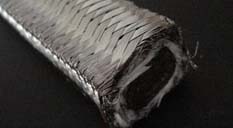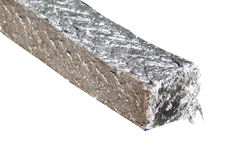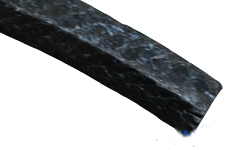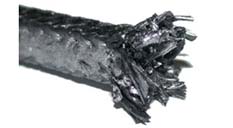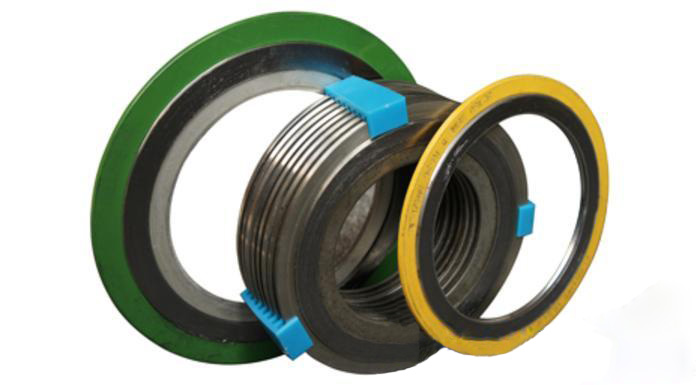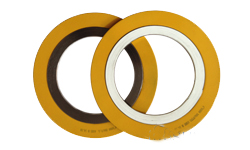
In the demanding world of industrial sealing, reliability is non-negotiable. For two decades, Kaxite Sealing has been at the forefront, engineering sealing solutions that withstand extreme conditions. Among our flagship materials, Graphite Packing stands out as a cornerstone of modern sealing technology. Unlike traditional braided packings, graphite packing utilizes the inherent properties of high-purity graphite to deliver exceptional performance where others fail. Its unique combination of thermal stability, chemical inertness, and self-lubrication makes it the superior choice for a vast array of critical applications, from high-temperature valves and pumps in refineries to aggressive chemical processing equipment. This guide delves deep into the technical specifications, advantages, and proper application of this versatile material.
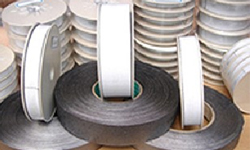
Why choose graphite over other sealing materials? The answer lies in its unparalleled material properties. Kaxite Sealing's graphite packing is manufactured from exfoliated, flexible graphite ribbon, wound or braided into various styles to meet specific needs. This structure provides a dense, conformable seal that adjusts to minor gland movements and wear.
To ensure optimal selection, it is crucial to understand the technical parameters of our graphite packing offerings. Kaxite Sealing provides a range of graphite packing types, each designed for specific service conditions. Below is a detailed breakdown of our standard product lines.
| Product Code | Style / Construction | Density (g/cm³) | Temperature Range (°C) | pH Range | Primary Applications |
|---|---|---|---|---|---|
| KX-GP100 | Die-Formed Rings | 1.6 - 1.8 | -200 to +650 (Oxidizing) | 0 - 14 | Valve stems, static flanges, heat exchangers |
| KX-GP200 | Braided with Inconel Wire | 1.8 - 2.2 | -200 to +800 (Oxidizing) | 0 - 14 | High-temperature pumps, agitators, expansion joints |
| KX-GP300 | Corrugated Ribbon | 1.4 - 1.7 | -200 to +1650 (Inert) | 0 - 14 | Glass manufacturing, furnace doors, high-heat valves |
| KX-GP400 | Braided with Carbon Fiber | 1.7 - 2.0 | -200 to +450 (Oxidizing) | 0 - 14 | Chemical pumps, mixers, food processing equipment |
| Property | Test Method | Typical Value (KX-GP100) | Typical Value (KX-GP200) |
|---|---|---|---|
| Compression Recovery (%) | ASTM F36 | > 40% | > 35% |
| Thermal Conductivity (W/m·K) | ASTM D5470 | 15 - 25 (Through-plane) | 10 - 20 (Through-plane) |
| Leakage Rate (mL/hr) | API 622 / 6B | < 5 | < 3 |
| Carbon Content (%) | ASTM D5617 | > 99.5% | > 98.5% |
| Sulfur Content (ppm) | ASTM D4239 | < 500 | < 800 |
Selecting and installing the right packing involves understanding its behavior and requirements. Here are answers to the most frequently asked questions by plant engineers and maintenance professionals.
Q: What is the main difference between flexible graphite packing and traditional braided styles like aramid or PTFE?
A: The core difference is the base material. Traditional packings rely on fibrous yarns (asbestos, aramid, glass, PTFE) which are impregnated with lubricants. These lubricants can degrade or vaporize under high heat or chemical attack, leading to hardening and failure. Flexible graphite packing is made from pure, exfoliated graphite. It is self-lubricating, maintains its flexibility at extreme temperatures, and is chemically inert, offering more reliable long-term performance in severe service.
Q: How do I determine the correct size and number of packing rings for my application?
A: The size is determined by the gland/stuffing box dimensions. Measure the shaft/stem diameter and the bore of the stuffing box. The difference divided by two gives you the cross-sectional size of the packing you need. For the number of rings, a general rule is 4-6 rings for standard applications. For high-pressure or problematic services, more rings (up to 8) may be recommended to create an adequate pressure drop across the packing set. Always refer to Kaxite Sealing's engineering datasheets for specific recommendations based on pressure and media.
Q: Can graphite packing be used on rotating equipment, or is it only for valves?
A: Absolutely, it is highly effective on both dynamic (rotating and reciprocating) and static equipment. For rotating shafts like pump shafts, styles reinforced with Inconel wire (like our KX-GP200) or carbon fiber (KX-GP400) provide enhanced tensile strength and abrasion resistance, preventing extrusion and ensuring longer life under rotational stress. Proper installation and break-in procedures are crucial for success on rotating equipment.
Q: What are the installation "must-dos" and "must-avoids" for graphite packing?
A> Must-Dos: 1) Clean the stuffing box and shaft thoroughly. 2) Use a sizing mandrel or the shaft itself to cut rings squarely—never use a knife on a flat surface. 3) Stagger the ring joints by 90 degrees. 4) Use a proper tamping tool to seat each ring firmly and evenly. 5) Follow the recommended break-in procedure (often "finger-tight" then gradual tightening after heat cycles).
Must-Avoids: 1) Do NOT over-tighten the gland follower initially; graphite compresses easily. 2) Avoid using any sealants or lubricants unless specifically recommended (graphite is self-lubricating). 3) Do not install damaged or crushed rings. 4) Avoid using on applications with strong oxidizing agents (e.g., nitric acid, chlorine) above 450°C without consulting our engineers.
Q: How does Kaxite graphite packing perform in high-pressure steam service?
A> It is an excellent choice for high-pressure steam valves and pumps. Its high thermal conductivity rapidly dissipates heat from the friction zone, preventing localized overheating and degradation. Its resilience allows it to maintain seal integrity despite thermal cycling and pressure fluctuations. For the most demanding steam applications, we recommend our die-formed ring styles (KX-GP100) or wire-reinforced braids (KX-GP200) for their density and resistance to extrusion under high differential pressure.
Q: Is graphite packing safe for use in food and pharmaceutical processing?
A> Yes, but with important qualifications. Pure, high-grade flexible graphite with very low sulfur and chloride content is often acceptable. Kaxite Sealing offers specific grades that meet FDA requirements for incidental food contact (21 CFR 178.3620). It is critical to select a style without metal reinforcements (like Inconel) if the metal could be a contamination concern. Our technical team can help specify the correct, compliant grade for sanitary applications.
The versatility of Kaxite Sealing's graphite packing makes it indispensable across numerous sectors. Its ability to handle extremes solves chronic sealing challenges.