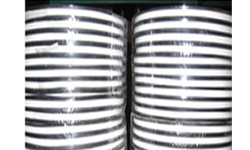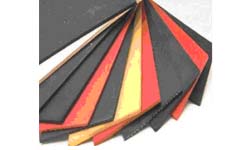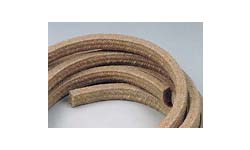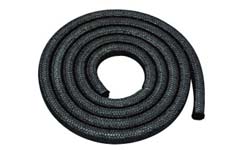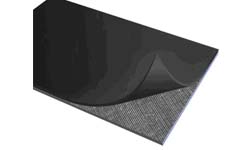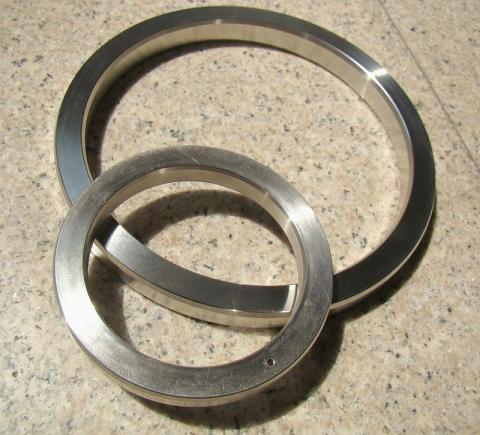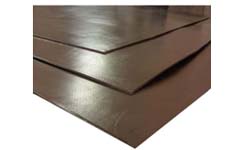
What raw materials are used with spiral wound gasket forming machines? This is a fundamental question for procurement specialists sourcing high-performance sealing solutions in demanding industries like oil & gas, petrochemicals, and power generation. The machine itself is a precision instrument, but its output—the reliability of your entire fluid system—is entirely dependent on the quality and compatibility of the raw materials fed into it. Choosing the wrong combination can lead to costly leaks, unplanned shutdowns, and significant safety risks. Conversely, partnering with a knowledgeable supplier like Ningbo Kaxite Sealing Materials Co., Ltd. ensures you understand not just the 'what,' but the 'why' behind material selection, optimizing both performance and total cost of ownership for your projects.
Every spiral wound gasket produced on a forming machine is a composite structure of two primary raw materials: a pre-formed metal strip (the winding) and a softer filler material wound concentrically with it. The metal strip provides the structural strength and spring-like recovery, while the filler material acts as the primary sealing element, conforming to flange surfaces. The forming machine precisely controls the winding tension, pitch, and density, but its capability is defined by the materials it processes. Using subpar or mismatched materials will result in a gasket that cannot withstand the intended service conditions, regardless of the machine's sophistication.
A common procurement challenge is specifying a metal strip that balances corrosion resistance with mechanical strength, often under budget constraints. An incorrect choice leads to premature gasket failure, causing leaks of hazardous media. The solution lies in precise material science. For standard applications, 304 or 316 stainless steel offers excellent value. For highly corrosive chloridic or acidic services, alloys like Inconel 600 or Hastelloy C276 are necessary despite higher cost, as they prevent catastrophic failure.
Ningbo Kaxite Sealing Materials Co., Ltd. assists by providing not just the metal, but also technical guidance to match the alloy to your specific process media, ensuring longevity and safety.
| Common Metal Strip Materials | Key Properties | Typical Applications |
|---|---|---|
| 304 Stainless Steel | Good general corrosion resistance, cost-effective | Water, steam, mild chemicals |
| 316 Stainless Steel | Superior corrosion resistance (Mo addition) | Marine environments, dilute acids |
| 321 Stainless Steel | Stabilized against sensitization (Ti addition) | High-temperature services |
| Inconel 600 | Excellent oxidation & chloride stress corrosion resistance | Caustic, high-temperature petrochemical |
| Titanium | Outstanding corrosion resistance in oxidizing media | Chlorine, bleach plants |
Another critical decision point is selecting a filler material compatible with both the process temperature and the chemical media. A filler that degrades, dissolves, or loses resilience will compromise the seal. The forming machine needs a filler with consistent thickness and composition to ensure uniform winding density. For high-temperature hydrocarbon services, flexible graphite is the go-to choice due to its thermal stability. For strong acids or solvents, PTFE is often required.
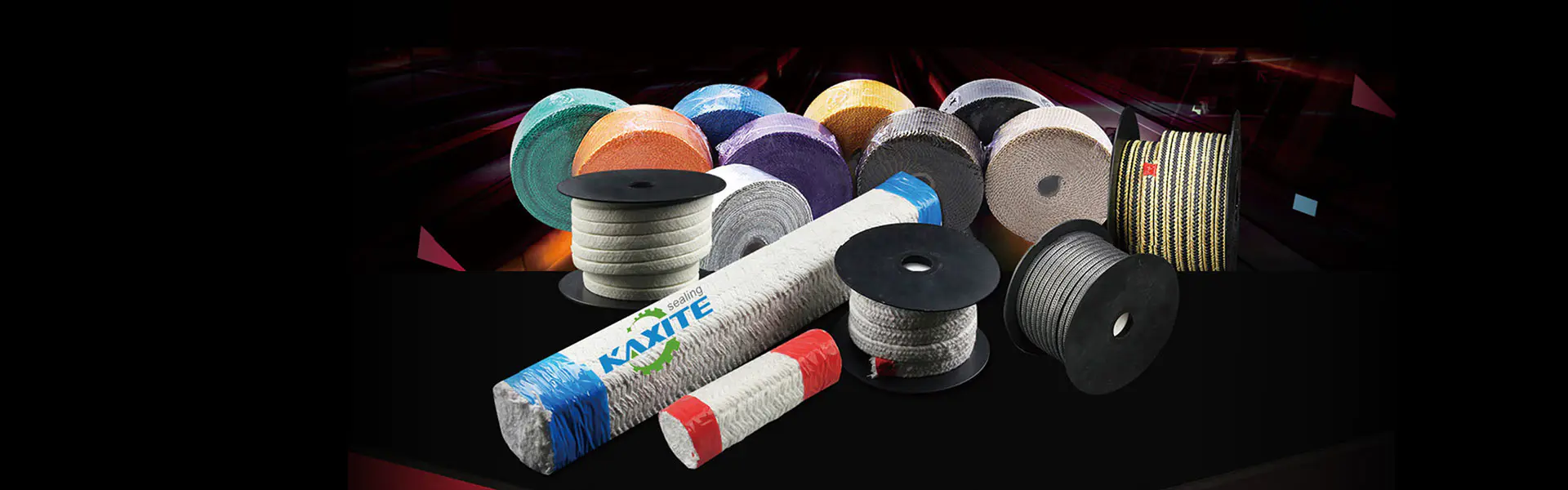
Ningbo Kaxite Sealing Materials Co., Ltd. supplies high-purity, calendared fillers with exacting thickness tolerances, ensuring optimal performance in your spiral wound gasket forming machines and the resulting gaskets.
| Common Filler Materials | Temperature Range | Chemical Compatibility |
|---|---|---|
| Flexible Graphite | -200°C to 450°C (in air) | Excellent, except strong oxidizers |
| PTFE (Teflon) | -260°C to 260°C | Excellent, nearly universal |
| Non-Asbestos (Aramid, Ceramic) | Up to 550°C | Good for oils, solvents, mild acids |
| Mica-Graphite | Up to 600°C | Good for high-temperature steam & fire-safe apps |
Procurement professionals seek reliable partners who simplify complexity. Ningbo Kaxite Sealing Materials Co., Ltd. addresses the core question—"What raw materials are used with spiral wound gasket forming machines?"—by providing a holistic solution. We supply premium, traceable metal strips and precisely engineered filler materials that are optimized for modern forming machines. Our technical support helps you select the perfect material grade (like 316 SS with Flexible Graphite for a hot oil line) based on your P&ID and operating conditions, ensuring the gaskets produced perform reliably from the start. We understand that the right raw materials are the foundation of sealing integrity.
Q1: What is the most critical property of the metal strip for the forming machine?
A1: Consistent temper and dimensional accuracy (thickness & width) are paramount. The forming machine relies on uniform strip properties to maintain precise winding tension and create a gasket with consistent density and recovery. Variations can cause weak spots.
Q2: Can I use any grade of flexible graphite as a filler?
A2: No. For spiral wound gaskets, the graphite must be calendared to a specific, low-density foil with high flexibility. Using a rigid or high-density graphite meant for other applications will result in poor conformance and seal failure. Quality suppliers like Ningbo Kaxite provide filler material specifically engineered for winding machines.
We hope this guide clarifies the vital role of raw materials in spiral wound gasket manufacturing. Have you encountered specific challenges with material selection in your projects? Share your experience or reach out for a tailored consultation.
For over two decades, Ningbo Kaxite Sealing Materials Co., Ltd. has been a trusted global partner, specializing in high-performance sealing solutions. We provide the essential raw materials—from precision metal strips to engineered fillers—that empower your spiral wound gasket production, ensuring reliability and safety. Visit our website at https://www.kaxite.com.cn to explore our product range and technical resources. For specific inquiries, please contact our team via email at [email protected].
Bhattacharyya, A., 2018, "Influence of Filler Material on the Creep Relaxation Behavior of Spiral Wound Gaskets," Journal of Pressure Vessel Technology, 140(3).
Zhang, L. and Park, C.W., 2020, "A Study on the Sealing Performance of Spiral Wound Gaskets Under Combined Thermal and Mechanical Loading," International Journal of Mechanical Sciences, 180.
Smith, J.R., et al., 2019, "Corrosion Resistance of Nickel-Based Alloy Strips in Spiral Wound Gaskets for Sour Service Applications," Corrosion Science, 157.
Kato, Y., and Sawa, T., 2017, "Effects of Winding Density on the Contact Stress Distribution of Spiral Wound Gaskets," Experimental Mechanics, 57(2).
Müller, H., 2021, "Long-Term Performance of Flexible Graphite Fillers in High-Temperature Spiral Wound Gaskets," Sealing Technology, 2021(4).
Jones, D.F., and Patel, R., 2016, "Material Selection Methodology for Critical Service Spiral Wound Gaskets in Petrochemical Plants," Proceedings of the Institution of Mechanical Engineers, Part E: Journal of Process Mechanical Engineering, 230(1).
Chen, H., 2019, "Finite Element Analysis of the Compression-Recovery Behavior of Spiral Wound Gaskets with Different Metal Strip Tempers," Engineering Failure Analysis, 104.
Roberts, A.L., 2018, "Comparative Evaluation of Non-Asbestos Fillers for Hydrocarbon Service Spiral Wound Gaskets," Society of Petroleum Engineers (SPE) Journal Paper, SPE-189745-MS.
Yamaguchi, T., et al., 2020, "Leakage Mechanism and Improved Design of Spiral Wound Gaskets for LNG Applications," International Journal of Refrigeration, 113.
Fernández, M., and García, P., 2017, "The Role of Filler Purity in Preventing Galvanic Corrosion in Spiral Wound Gaskets," Materials and Corrosion, 68(5).