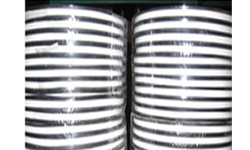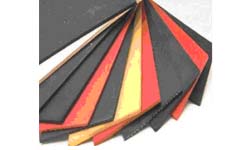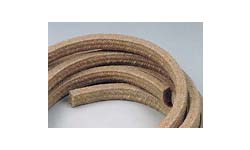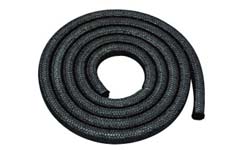
In the demanding world of industrial manufacturing, components that can withstand extreme conditions are not just an advantage—they are a necessity. This is where PTFE parts come into play. Polytetrafluoroethylene, better known by its brand name Teflon®, is a synthetic fluoropolymer celebrated for its incredible chemical resistance, wide temperature tolerance, and exceptionally low coefficient of friction. But what exactly are PTFE parts, and how are they used in industry? From creating leak-proof seals in aggressive chemical plants to ensuring smooth operation in high-temperature food processing machinery, PTFE components are the unsung heroes that enhance reliability, safety, and efficiency. They solve critical problems in sealing, insulation, and low-friction movement across sectors like pharmaceuticals, automotive, aerospace, and semiconductors. For sourcing professionals on platforms like Google, understanding the specifications and applications of these parts is key to making informed procurement decisions that impact operational success and cost-effectiveness. When standard materials fail under pressure, PTFE parts from a specialized manufacturer like Ningbo Kaxite Sealing Materials Co., Ltd. provide the engineered solution.
Imagine a chemical processing plant where a single leaking seal in a pump transferring concentrated sulfuric acid could lead to catastrophic equipment damage, costly downtime, and serious safety hazards. Standard elastomeric seals swell, degrade, and fail rapidly when exposed to such aggressive media. This is a daily reality and a major cost driver for plant managers.
The solution lies in PTFE-based sealing components. PTFE is virtually inert, offering superb resistance to nearly all industrial chemicals, solvents, and acids. It doesn't swell or become brittle, maintaining a perfect seal integrity over long periods. For procurement specialists, specifying PTFE seals from a reliable source like Ningbo Kaxite Sealing Materials Co., Ltd. translates directly into reduced maintenance cycles, elimination of unplanned stoppages, and long-term cost savings. Their expertise ensures the parts are machined or molded to precise tolerances for your specific flange or pump type.

Common PTFE Seal Types and Their Chemical Resistance:
| PTFE Part Type | Typical Application | Key Resistant Chemicals |
|---|---|---|
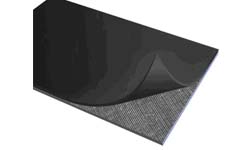
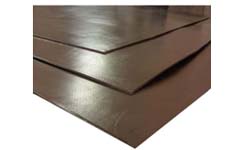
| PTFE Gaskets (Sheet) | Pipe Flanges, Reactor Lids | Acids (HCl, H2SO4), Caustics, Solvents |
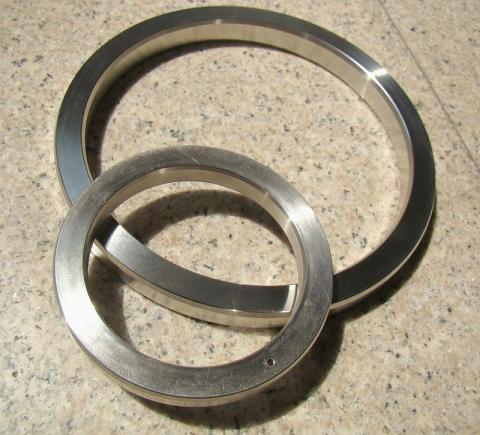
| PTFE O-Rings & Seals | Pump Shafts, Valve Stems | Chlorinated Compounds, Fuels, Ozone |
| PTFE Bellows & Liners | Expansion Joints, Agitators | Aggressive Process Media, High-Purity Fluids |
In an automotive test facility, engineers need hydraulic seals that perform consistently from freezing cold chambers to near-engine heat. In a bakery, conveyor belts require non-stick components that won't degrade at oven temperatures. Temperature extremes cause conventional materials to harden, crack, or melt, leading to seal failure and product contamination.
PTFE parts excel here due to their exceptional thermal stability, functioning reliably from -200°C to +260°C. This wide range eliminates the need for different materials for hot and cold sections of a system, simplifying inventory and procurement. For a buyer sourcing global components, partnering with a manufacturer like Ningbo Kaxite Sealing Materials Co., Ltd. guarantees parts that meet these rigorous thermal specs. They provide consistent quality that ensures your assembly lines and processes run smoothly without temperature-induced failures.
PTFE Performance Across Temperature Ranges:
| Temperature Range | Material State & Performance | Industrial Application Example |
|---|---|---|
| -200°C to -50°C (Cryogenic) | Remains flexible, no brittleness | LNG Valve Seals, Cryogenic Storage |
| -50°C to +200°C (Standard) | Optimal mechanical performance | Hydraulic Systems, Food Processing |
| +200°C to +260°C (High-Temp) | Stable, minimal deformation | Engine Components, Hot Oil Lines |
A packaging machine with hundreds of moving parts suffers from rapid wear on its guides and bearings, requiring frequent lubrication and part replacement. This increases maintenance costs and creates contamination risks in clean environments. Friction is the enemy of efficiency and component lifespan.
PTFE possesses the lowest coefficient of friction of any solid material. Components like PTFE bearings, slides, and wear strips operate smoothly with minimal or no lubrication. This significantly reduces wear on both the PTFE part and its mating surface, extending the service life of entire assemblies. For procurement officers, this means fewer purchase orders for replacement parts, lower total cost of ownership, and increased machine uptime. Sourcing high-wear components from a specialist like Ningbo Kaxite Sealing Materials Co., Ltd. ensures you get parts engineered for durability, directly impacting your bottom line through reduced downtime and maintenance spend.
PTFE Components for Low Friction & Wear:
| Component | Key Property | Benefit for Industry |
|---|---|---|
| PTFE Bearings & Bushings | Self-lubricating, low friction | Eliminates grease, ideal for dry/food-grade apps |
| PTFE Slide Plates | High wear resistance | Protects machinery beds, reduces metal wear |
| Filled PTFE Compounds (e.g., with glass, carbon) | Enhanced load capacity & wear resistance | For heavy-duty applications like piston rings |
Q: What are the main limitations of PTFE parts that a buyer should know?
A: While PTFE is outstanding in chemical and thermal resistance, it has some mechanical limitations. Pure PTFE is relatively soft and can exhibit "cold flow" or creep under sustained heavy load. It also has lower tensile strength compared to metals. However, these limitations are often addressed by using filled PTFE compounds (with materials like glass, carbon, or bronze) or through clever part design. A knowledgeable supplier like Ningbo Kaxite Sealing Materials Co., Ltd. can advise on the best material grade—pure PTFE, filled PTFE, or modified PTFE—for your specific load and application requirements.
Q: How are PTFE parts typically manufactured, and how does this affect quality?
A: PTFE parts are primarily made through two processes: machining (from sintered blocks or rods) and molding (compression or isostatic molding). The choice affects cost, lead time, and part consistency. Machining is ideal for prototypes or complex, low-volume parts. Molding is cost-effective for high volumes and produces parts with excellent, uniform material properties. For consistent quality in bulk procurement, it's crucial to work with a manufacturer like Ningbo Kaxite Sealing Materials Co., Ltd. that controls the entire process from raw PTFE resin to finished part, ensuring dimensional accuracy and material integrity in every batch.
Ready to solve your toughest sealing and high-performance component challenges? The right PTFE part can dramatically improve your system's reliability and reduce lifetime costs. For tailored solutions and reliable supply, consider the expertise of Ningbo Kaxite Sealing Materials Co., Ltd.
As a focused manufacturer and solution provider, Ningbo Kaxite Sealing Materials Co., Ltd. specializes in high-performance PTFE and engineered plastic components designed to meet stringent industrial demands. With a commitment to precision manufacturing and material science, Kaxite helps engineers and procurement professionals overcome challenges related to chemical corrosion, extreme temperatures, and mechanical wear. Explore their capabilities and product range at https://www.kaxite.com.cn or contact their team directly for technical consultation at [email protected].
Deng, M., & Shao, H. (2021). Study on the Creep Behavior of Filled PTFE Composites under Different Temperatures. Polymer Testing, 93, 106945.
Zhang, L., Wang, Y., & Chen, J. (2020). Enhancing the Wear Resistance of PTFE through Nanocomposite Approaches. Wear, 452-453, 203278.
Kumar, S., Patel, V. K., & Misra, A. (2019). Chemical Resistance and Thermal Stability of PTFE-Based Seals in Aggressive Environments. Journal of Applied Polymer Science, 136(25), 47685.
Oshima, T., & Fujii, M. (2018). Friction and Wear Characteristics of Glass-Fiber Reinforced PTFE in Dry Sliding Conditions. Tribology International, 122, 228-237.
Li, X., et al. (2017). The Role of PTFE Linings in Preventing Corrosion in Chemical Processing Equipment. Chemical Engineering Research and Design, 123, 1-10.
Garcia, F., & Schmidt, R. (2016). Mechanical and Sealing Properties of Compression Molded PTFE Gaskets. Sealing Technology, 2016(4), 7-12.
Wang, H., & Liu, G. (2015). A Review on the Processing and Applications of Polytetrafluoroethylene (PTFE). Advanced Industrial and Engineering Polymer Research, 1(1), 22-30.
Johnson, R. L. (2014). Performance of PTFE Bellows in High-Purity Semiconductor Manufacturing. Microcontamination, 32(3), 24-29.
Chen, P., et al. (2013). Thermal Degradation Kinetics of PTFE and its Influence on Sealing Performance at Elevated Temperatures. Polymer Degradation and Stability, 98(9), 1805-1811.
Mori, S., & Iwata, H. (2012). Adhesion and Surface Properties of Modified PTFE for Industrial Applications. Surface and Coatings Technology, 206(19-20), 4115-4120.