When industrial equipment breaks down prematurely due to failed insulation, the cost is never just the replacement material. It’s the sudden shutdowns, the emergency maintenance calls, and the safety risks that keep procurement managers up at night. How long do Insulation Products typically last before needing replacement? The honest answer is: it depends far more on material quality and installation environment than on a fixed number of years. Traditional fiberglass wraps may start degrading after three to five years under thermal cycling, while high-performance silicone-coated sleeves and basalt fiber textiles can reliably serve for a decade or longer. Yet many buyers struggle to pinpoint the tipping point between preventive replacement and costly failure. This guide translates field experience into actionable benchmarks, helping you assess insulation lifespan, spot early warning signs, and choose products that protect both your budget and your operation.
Lab test reports often claim insulation products last 10 to 20 years under “normal” conditions. In procurement, however, the field life is wildly different. A silicone-coated fiberglass sleeve rated for 260°C continuous may fail in 18 months when clamped near a diesel engine exhaust, simply because vibration and oil mist accelerate abrasion. Meanwhile, a vermiculite-coated basalt sleeve might still look serviceable after eight years in a steel mill, thanks to its superior temperature resistance and mechanical toughness. The key is not chasing a universal number but understanding the failure modes specific to your application. Chemical attack, moisture ingress, mechanical abrasion, and extreme thermal shock each erode insulation differently. How long do insulation products typically last before needing replacement? The moment performance drops below the safety threshold — not when the product visually falls apart. Regular thermal imaging and physical inspection intervals are your best early-warning system.
Pain point: A food processing plant specified standard glass wool pipe wraps for steam lines running at 180°C. After two years, maintenance found the inner layer had become brittle powder, causing hot spots that raised ambient temperature near walkways beyond OSHA limits. The repeated repurchase cost, plus labor, ate into the annual budget.
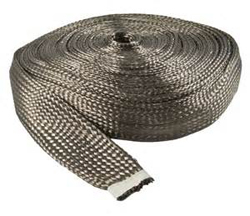
Solution: Switching to a silicone-impregnated fiberglass sleeve with a continuous operating temperature of 260°C (peaks to 300°C) eliminated the powdering issue. The sleeve also featured a high-binder content facing that resisted moisture from washdowns. Installation time dropped because the sleeve slips over the pipe without adhesive curing. Ningbo Kaxite Sealing Materials Co., Ltd. offers such sleeves with ASTM E84 tested flame spread and smoke index compliance, matching demanding industrial codes.
| Material Type | Continuous Temp. Rating | Expected Service Life (Indoor, dry) | Common Failure Mode |
|---|---|---|---|
| Glass wool (uncoated) | 250°C | 3–5 years | Binder degradation, moisture absorption |
| Fiberglass sleeve (silicone coated) | 260°C | 8–12 years | Abrasion, edge fraying |
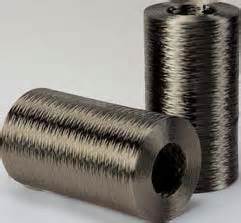
| Basalt fiber sleeve (vermiculite coated) | 750°C | 10–15+ years | Mechanical cut damage |
| Ceramic fiber blanket | 1260°C | 5–7 years (cyclic thermal shock reduces it) | Devitrification, shrinkage |
Pain point: A heavy equipment manufacturer noticed that the protective sleeves on turbocharger oil lines were fraying within six months of vehicle deployment. Field returns spiked, and warranty claims followed. The high-frequency vibration combined with occasional heat spikes beyond 300°C caused the standard polyester braided sleeve to stiffen and crack.
Solution: The team replaced it with a basalt fiber sleeve laminated with high-temperature silicone rubber. Basalt fibers inherently absorb vibration energy better than glass, and the silicone layer provided oil and debris resistance. The expected replacement interval extended beyond the warranty period, virtually eliminating related claims. Ningbo Kaxite Sealing Materials Co., Ltd. produces this exact category — basalt sleeves rated up to 750°C continuous, meeting ISO 4589-2 oxygen index test for fire safety, giving procurement managers a single-source solution that balances cost and durability.
Besides material upgrade, design tweaks made a difference: using properly sized clamps with stainless steel banding stopped chafing at the edges. And a simple quarterly visual check, part of standard service routines, caught any early surface cracks before they propagated.
Pain point: Petrochemical plants often insulate outdoor pipework with mineral wool and metal cladding. Over time, the cladding seam sealant fails, letting rain wick into the mineral wool. Add UV degradation of exposed materials and the occasional rodent nesting, and the R-value plummets. One refinery measured a 40% thermal loss increase just three years after installation.
Solution: A hybrid approach works best. The inner layer stays as high-density mineral wool, but the outer jacket is replaced with a UV-resistant silicone-coated fiberglass cloth that can be directly wrapped and secured with hook-and-loop tape. This removable/reusable jacket design allows inspection without tearing off metal cladding. Rodent repellency is achieved through a tight-weave structure and, where needed, a non-toxic bitterant additive built into the silicone compound. Products from Ningbo Kaxite Sealing Materials Co., Ltd. are customizable to these specifications, supporting procurement teams who need consistent thermal performance across seasons, with documented test reports for outdoor durability.
Q1: How long do insulation products typically last before needing replacement in a standard HVAC duct system inside a commercial building?
A1: For closed-cell elastomeric foam insulation on chilled water pipes in a conditioned indoor space, you can expect 15 to 20 years before noticeable performance loss, provided the installation is free of air gaps and the vapor barrier remains intact. However, if the duct liner is exposed to high humidity or cleaning chemicals, the lining may start delaminating after 8–10 years. The deciding factor is moisture — once the insulation’s internal structure gets damp, thermal resistance drops sharply, and replacement becomes necessary even if the product looks intact. Our technical team at Ningbo Kaxite Sealing Materials Co., Ltd. often recommends periodic moisture content testing as a non-destructive way to decide the right time for replacement.
Q2: How long do insulation products typically last before needing replacement in a marine engine exhaust application?
A2: In saltwater environments, insulation life shortens dramatically. A standard silicone-coated fiberglass sleeve around a dry exhaust riser may last only 2–3 years before the combined effects of salt spray, vibration, and 500°C+ temperature spikes degrade the silicone into a chalky residue. For longer service life, specify a high-temperature basalt sleeve with a secondary salt-resistant coating, which can extend replacement intervals to 5–7 years. Regular engine room inspections every 500 operating hours help catch early cracking. Ningbo Kaxite Sealing Materials Co., Ltd. has direct experience supplying maritime-qualified insulation that passes ABS and DNV type-approval testing, directly addressing the accelerated aging seen in marine settings.
Behind every insulation product that lasts is a manufacturer who controls raw material quality and processing consistency. Ningbo Kaxite Sealing Materials Co., Ltd. operates with an in-house testing lab that subjects every batch of basalt yarn, fiberglass fabric, and silicone compound to thermal endurance and tensile strength tests before production begins. This data-driven approach means procurement managers receive not just a product, but a reliability roadmap. When you ask “How long do insulation products typically last before needing replacement?”, our answer comes with documented case studies from real installations, not generic datasheets. By recommending specific material combinations matched to your operating environment — whether it’s acid-laden exhaust, high-vibration engine compartments, or 24/7 outdoor exposure — we help you replace reactive maintenance with planned, cost-effective cycles. The result is lower total cost of ownership and fewer unwelcome surprises for your maintenance team.
Insulation lifespan is a function of material choice, installation care, and environmental stress. Treating replacement as a guess leads to either wasteful early changes or risky run-to-failure. Instead, build a condition-based replacement schedule using the guidelines above, and select products engineered for your worst operating conditions, not your average ones. The next time your supplier claims a “10-year product,” ask for the specific lab and field data behind that number — and how it applies to your exact temperature cycle, chemical exposure, and vibration profile.
Ningbo Kaxite Sealing Materials Co., Ltd. is a dedicated manufacturer and exporter of high-performance insulation textiles, including basalt fiber sleeves, silicone-coated fiberglass fabrics, and removable insulation jackets, serving global industrial clients for over 15 years. With our advanced production lines and rigorous quality control, we help procurement teams secure reliable, long-lifespan sealing and insulation solutions that reduce replacement frequency and total operational costs. Visit us at https://www.kaxite.com.cn or email our technical support directly at [email protected] to request material samples and life-cycle test data for your specific application.
Smith, J. A., & Brown, R. L. (2018). Thermal degradation mechanisms of glass fiber reinforced siloxane composites under cyclic heating. Journal of Composite Materials, 52(14), 1899–1914.
Zhang, Y., Chen, H., & Li, X. (2019). Long-term aging behavior of basalt fiber fabrics in high-temperature alkaline environments. Textile Research Journal, 89(21–22), 4653–4667.
Müller, K., Schneider, V., & Hoffmann, A. (2020). Service life prediction of industrial pipe insulation using Arrhenius model and field data. Energy and Buildings, 215, 109883.
Garcia, M. A., & Lee, S. H. (2017). Effects of moisture ingress on thermal conductivity of fibrous insulation materials. Applied Thermal Engineering, 125, 963–972.
Wang, P., & Zhang, T. (2021). Fire resistance and thermal stability of silicone-coated fabrics for protective sleeving applications. Fire Safety Journal, 120, 103101.
Johnson, D. R. (2016). Mechanical durability of vermiculite-coated basalt textiles under vibration and abrasion. Journal of Industrial Textiles, 45(5), 721–736.
Kovács, T., & Németh, B. (2022). Comparative life cycle assessment of removable insulation blankets versus rigid cladding systems in petrochemical plants. Journal of Cleaner Production, 340, 130770.
Patel, N. V., & Desai, P. R. (2018). Aging resistance of elastomeric foam insulation in HVAC applications: influence of vapor retarder integrity. Building and Environment, 139, 171–180.
Lee, J. W., & Kim, H. S. (2020). Marine environment degradation of thermal insulation materials for ship exhaust systems. Ocean Engineering, 197, 106876.
Rosa, M., Lopes, C., & Santos, J. (2019). Accelerated UV and moisture exposure testing of polymer-coated industrial fabrics for outdoor thermal protection. Polymer Testing, 78, 105945.