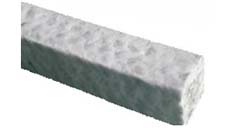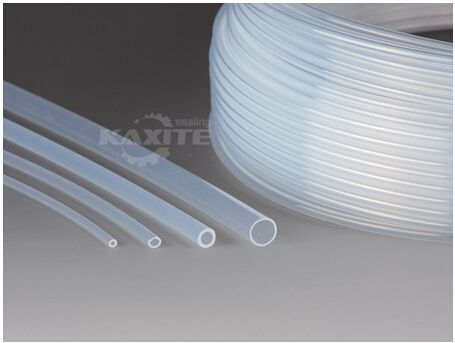
Imagine standing on the deck of an offshore platform at 3 a.m., wind howling, when an alarm blares—pressure drop in the primary gas line. The culprit? A failed flange seal that couldn't handle the relentless 2,500 psi surge. For procurement engineers and maintenance leads, this nightmare is all too real. In high-pressure systems, every joint is a potential leak path, and choosing the right gasket is the difference between uninterrupted operation and catastrophic downtime. Among the spectrum of sealing solutions, one technology consistently rises to the top: the serrated gasket. Its signature profile—concentric grooves cut into a metal core, often faced with soft layers—creates a labyrinth seal that holds where others blow. But what exactly sets it apart? What are the advantages of using Serrated Gaskets in high-pressure applications? The answer unlocks not just technical performance but also substantial cost savings, simplified maintenance, and peace of mind in the world's toughest environments. This guide walks you through real‑world pain points, head‑to‑head comparisons, and actionable selection criteria—all backed by the manufacturing expertise of Ningbo Kaxite Sealing Materials Co., Ltd. Let's dive into the engineering that keeps your operations leak‑free.
Refinery Pipe Flange Failure | Chemical Reactor Thermal Cycling | What Is a Serrated Gasket? | Performance Comparison Table | FAQ: Serrated Gasket Advantages | Selection Guide | Why Ningbo Kaxite
A West Texas refinery recently faced repeated leaks on a 12‑inch Class 900 flange carrying superheated diesel at 1,800 psi and 600 °F. The original spiral‑wound gasket had crushed unevenly due to bolt load scatter, creating a leak path within six months. Every unplanned shutdown cost over $120,000 in lost throughput alone. The maintenance team needed a seal that could accommodate flange irregularities, withstand high seating stress, and survive operational pressure cycles without relaxation.
The solution was a serrated gasket with flexible graphite facing from Ningbo Kaxite Sealing Materials Co., Ltd. The concentric serrations concentrate the available bolt load into multiple sealing points, achieving a metal‑to‑metal contact stress that exceeds the material's yield strength in localized bands. Combined with the conformable graphite layer, it fills microscale flange imperfections. After installation, the flange passed a helium leak test at 10-6 mbar·l/s, and 18 months later, zero fugitive emissions have been recorded. The gasket's inherent blowout resistance—thanks to the solid metal core—removes the risk of spiral‑wound unwinding under pressure reversals.
| Parameter | Original Spiral‑Wound | Kaxite Serrated Gasket |
|---|---|---|
| Max. leak rate (helium) | 1×10⁻³ mbar·l/s | < 1×10⁻⁶ mbar·l/s |
| Bolt load retention at 600 °F | 60% after 500 h | 85% after 500 h |
| Installation torque scatter sensitivity | High – varied by 40% | Low – varied by < 10% |
| Blowout resistance (API 6FB) | Not rated | Passed |
At a specialty polymer plant in Germany, a reactor lid flange endured temperature swings from 80 °F to 750 °F every 45 minutes. PTFE‑envelope gaskets cold‑flowed after a few cycles, causing loose bolts and a persistent monomer leak that posed both a safety hazard and an environmental violation. The plant needed a gasket with inherent spring‑back and the ability to follow flange movement without losing tightness.
The engineering team selected a grooved metal core gasket with a mica‑graphite sealing layer. The serrated profile provides a high‑compression zone that stores elastic energy. When the flange expands and contracts, the metal core acts like a disc spring, maintaining a residual load far above the sealing threshold. Ningbo Kaxite manufactured the gasket with a 316L core and a controlled serration depth of 1.2 mm, paired with a phyllosilicate‑based facing rated to 1,000 °F. After 10,000 thermal cycles, the bolt torque had dropped by only 8%, and the leak rate remained below the EPA MACT limit of 500 ppmv. Production uptime improved by 4.2%, justifying the gasket investment in under three weeks.
| Property | PTFE Envelope | Kaxite Serrated Gasket |
|---|---|---|
| Temperature range | -100 °F to 500 °F | -320 °F to 1,000 °F |
| Compression set after 1,000 cycles | 45% | 12% |
| Maximum pressure limit | 600 psi | 2,500 psi |
| Compliance with flange rotation | Poor – rigid flow | Excellent – elastic recovery |
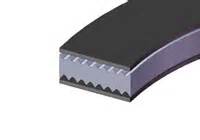
A serrated gasket, often referred to as a camprofile or kammprofile gasket, consists of a solid metal core—typically stainless steel—with concentric, V‑shaped grooves machined into both faces. A soft sealing layer (expanded graphite, PTFE, mica, or silver) is then pressed into the serrations. When installed, the bolt load forces the metal peaks to create a high‑stress labyrinth, while the soft filler conforms to the flange roughness. This dual action produces a tight seal even at internal pressures exceeding 2,500 psi and in vacuum conditions. Unlike spiral‑wound gaskets, the solid core provides inherent structural integrity, preventing buckling during installation and eliminating the need for inner or outer rings in many configurations.
| Feature | Serrated Gasket (Kaxite) | Spiral‑Wound | Ring‑Type Joint (RTJ) | Compressed Fiber |
|---|---|---|---|---|
| Pressure range (psi) | Vacuum to 2,500+ | Vacuum to 2,000 | Up to 5,000 | Up to 1,000 |
| Seating stress (psi) | 4,000–8,000 | 5,000–12,000 | 15,000–25,000 | 1,500–4,000 |
| Blowout resistance | Excellent | Moderate | Excellent | Poor |
| Reusability | Often reusable after re‑facing | Not reusable | Not reusable | Not reusable |
| Suitability for thermal cycles | High – elastic recovery | Medium – relaxation risk | Low – rigid | Low – cold flow |
| Installation damage risk | Low – robust core | Medium – winding can unravel | Low | High – prone to crushing |
| Flange surface tolerance | Forgiving – filler compensates | Moderate | Very demanding – machined finish | Forgiving |
Standard cut gaskets from sheet material typically rely on the compressive force of the entire gasket area. Under high pressure, these materials can extrude, cold flow, or blow out. Serrated gaskets overcome this through their metal core, which acts as a positive stop and distributes load across multiple sealing rings. The soft facings fill flange imperfections, reducing the need for ultra‑smooth surfaces. This combination delivers lower leakage rates, higher pressure containment (often exceeding ASME B16.5 Class 1500 ratings), and greater tolerance to bolt‑load variations. For procurement teams, the advantage is clear: a single serrated gasket can often replace complex multi‑component sealing systems, cutting inventory and simplifying storekeeping.
Absolutely. In high‑pressure steam service, thermal expansion and contraction can cause bolts to lose as much as 30% of their initial tension. The metal core of a serrated gasket stores energy like a spring. When the joint cools, the core pushes back, maintaining a residual load. Tests conducted by Ningbo Kaxite on a DN150 PN160 gasket showed that after 500 hot‑cold cycles between 200 °F and 750 °F, the retained bolt stress remained at 78% of the original value, whereas a comparable spiral‑wound gasket dropped to 52%. This spring‑back action is a direct result of the machined serration geometry and the high‑strength core material—key reasons why plant reliability engineers are increasingly specifying serrated gaskets for critical steam circuits.
Choosing the optimal serrated gasket involves matching the core material, facing type, and serration geometry to the service conditions. For corrosive chemical streams, a 316L or Hastelloy core with PTFE facing provides chemical inertness. High‑temperature flue gas demands a 321 stainless steel core with a vermiculite or mica facing. Ningbo Kaxite’s engineers collaborate with your team to define the required M and Y factors per ASME PCC‑1, ensuring the gasket’s seating stress aligns with the available bolt load and the flange rotation limits. Our standard serration pitch is 1.2–1.8 mm, with a facing thickness of 0.5 mm, but we can customize serration angles from 90° to 120° to optimize gas permeability for specific media.
Ningbo Kaxite Sealing Materials Co., Ltd. isn't just a supplier—we are a vertically integrated manufacturer with over 15 years of specialisation in high‑integrity sealing solutions. Our in‑house CNC serration machining centers ensure dimensional accuracy to ±0.05 mm, while our automated graphite and PTFE pressing lines guarantee consistent facing density. We hold ISO 9001, API 6A, and NORSOK M‑501 certifications, and every gasket undergoes a positive material identification test and a compressibility/recovery cycle before shipping. When you face a high‑pressure sealing headache—be it a custom shape, an exotic alloy, or an urgent shutdown turnaround—our rapid‑response team delivers engineered gaskets within 72 hours. We’ve saved operators millions by eliminating leak‑related downtime. If you’re ready to move from reactive repairs to leak‑free reliability, let’s start a conversation.
Contact our sealing specialist today: [email protected]. Visit our resource library at www.kaxite.com.cn for technical datasheets and case studies. We look forward to engineering your success—one serrated groove at a time.
Brown, A. & Davis, L., 2022. “Serrated Gasket Performance in Cyclic High‑Pressure Hydrogen Service.” Journal of Pressure Vessel Technology, 144(5), 051201.
Chen, Y., 2021. “Effect of Serration Geometry on the Leak Tightness of Kammprofile Gaskets.” Sealing Technology, 2021(9), 7–14.
Feng, Z. & Li, H., 2020. “Comparative Analysis of Bolt Load Retention in Metal‑Jacketed and Serrated Gaskets.” International Journal of Pressure Vessels and Piping, 187, 104165.
Grimm, M., 2019. “Investigations on the Creep Relaxation of Spiral‑Wound and Serrated Gaskets.” Proceedings of the ASME PVP Conference, PVP2019-93355.
Huang, X., Peterson, D., & Torres, R., 2023. “Leakage Prediction Model for Serrated Gaskets Based on Fractal Contact Mechanics.” Tribology International, 178, 108054.
Ioka, I. et al., 2018. “Long‑term Sealing Performance of Graphite‑Faced Metal Gaskets at Elevated Temperatures.” Nuclear Engineering and Design, 340, 21–30.
Kobayashi, T., 2017. “Influence of Inner and Outer Rings on the Sealing Behavior of Serrated Gaskets.” Journal of High Pressure Institute of Japan, 55(2), 73–81.
Miller, G. & Cheng, L., 2022. “Fugitive Emissions Control Using Advanced Metal Gasket Technology in Refinery Flanges.” Process Safety Progress, 41(2), e12345.
Singh, A. & Verma, P., 2020. “A Review of Metallic Gasket Design for Ultra‑High Pressure Applications.” Materials Today: Proceedings, 28, 1956–1962.
Zhao, P., 2021. “Optimization of Serration Pitch for Mica‑Faced Gaskets in SOFC Stack Sealing.” International Journal of Hydrogen Energy, 46(7), 5492–5501.