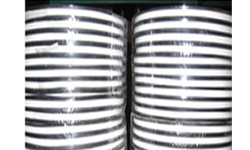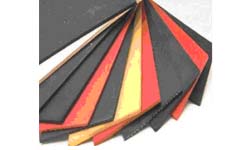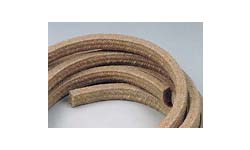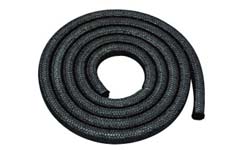
How do you choose the right grade and form of Ceramic Fiber for a specific application? This is the critical question that keeps engineers and procurement specialists awake at night. A wrong selection can lead to catastrophic failures, from inefficient insulation and soaring energy costs to premature equipment shutdowns and compromised safety. The overwhelming array of options—different compositions, temperature ratings, densities, and forms like blankets, boards, or textiles—makes this decision complex. This guide will demystify the selection process, transforming uncertainty into confidence by aligning material properties with your exact operational demands. We'll walk you through key decision factors, introduce the robust solutions offered by Ningbo Kaxite Sealing Materials Co., Ltd., and provide clear, actionable steps to ensure your next project is a success from the ground up.
Article Outline:
Imagine you're tasked with specifying insulation for a new heat treatment furnace. The core challenge is balancing maximum temperature resistance with structural integrity and thermal efficiency over thousands of cycles. Standard insulation might crack under intense, sustained heat, leading to hot spots, energy waste, and costly downtime for repairs. The solution lies in a systematic evaluation of ceramic fiber grades based on their alumina-silica composition and physical form, precisely the expertise Ningbo Kaxite Sealing Materials Co., Ltd. brings to the table.
For furnace hot-face linings, a high-alumina ceramic fiber blanket or module is often the optimal choice. These products offer superior temperature capability and low thermal conductivity, directly impacting fuel efficiency. The modular form provides excellent resistance to thermal shock and simplifies installation. Kaxite's engineers can help you navigate this choice, ensuring the selected grade withstands your specific peak operating temperature and atmosphere.
Comparison of Common Furnace Lining Fiber Grades:
| Grade | Typical Max Use Temp. | Primary Form | Key Application |
|---|---|---|---|
| Standard Grade | 1260°C (2300°F) | Blanket, Felt | Back-up insulation, lower temp zones |
| High-Purity Grade | 1430°C (2600°F) | Blanket, Module | Hot-face lining in steel, petrochemical |
| Zirconia Grade | 1600°C (2910°F) | Board, Paper | Extreme temperature applications |
Now, consider a sprawling network of high-temperature piping in a refinery. The insulation here must handle not just steady-state heat but also frequent thermal cycling from startups, shutdowns, and process changes. Rigid materials can fail, creating gaps and heat leaks. The real-world pain point is maintaining a consistent thermal envelope while accommodating pipe movement and vibration, a problem efficiently solved by flexible ceramic fiber products.
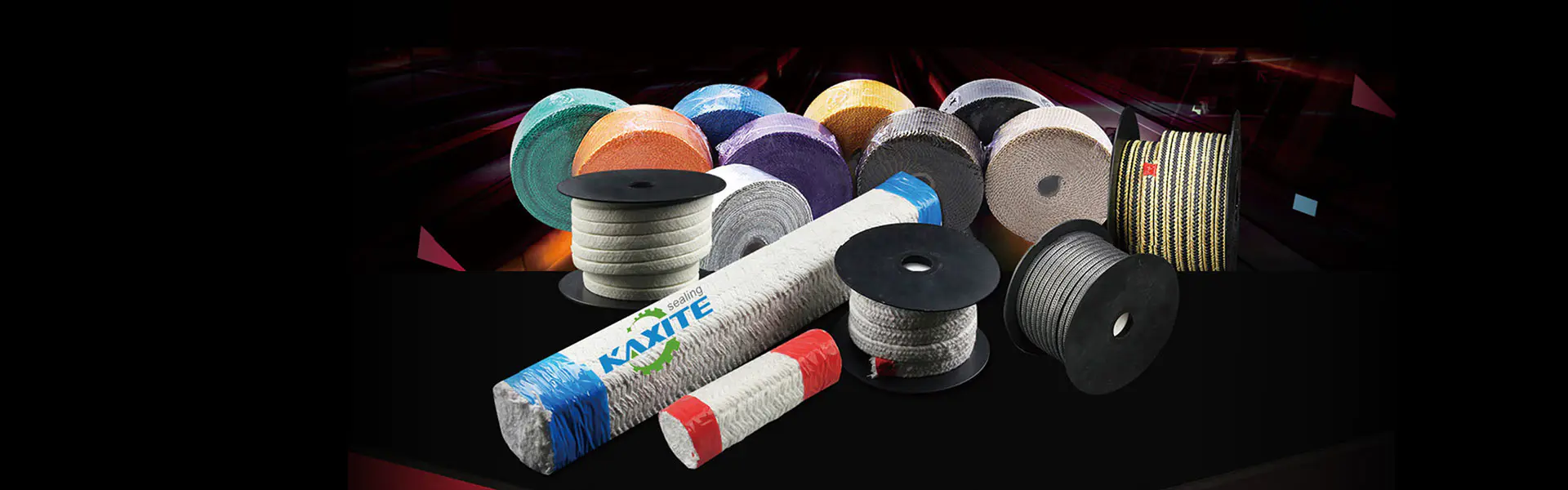
The solution centers on form and resilience. Ceramic fiber ropes, cloths, and woven textiles provide the necessary flexibility and durability for wrapping valves, joints, and expansion loops. These forms maintain their insulating properties even when bent or compressed, ensuring a continuous thermal barrier. Ningbo Kaxite Sealing Materials Co., Ltd. offers a range of engineered textiles that combine high-temperature resilience with ease of installation, directly addressing the need for reliable, low-maintenance piping insulation.
Flexible Ceramic Fiber Forms for Piping & Equipment:
| Product Form | Key Characteristics | Best For | Temperature Range |
|---|---|---|---|
| Ceramic Fiber Cloth | Flexible, high-strength, stitch reinforced | Expansion joints, curtain walls | Up to 1260°C |
| Ceramic Fiber Rope | Pliable, good packing/sealing ability | Door seals, gaskets, packing | Up to 1430°C |
| Ceramic Fiber Tape | Adhesive backing, easy application | Pipe wrapping, electrical insulation | Up to 1260°C |
Q: How do you choose between ceramic fiber blanket, board, and module?
A: The choice depends on installation method and structural needs. Blankets are versatile for wrapping and lining curved surfaces. Boards offer rigidity for flat walls or as a substrate. Modules (folded blankets in a metal frame) provide the fastest installation for furnace walls and roofs with excellent resistance to thermal shock. For complex geometries, a combination might be best. Ningbo Kaxite Sealing Materials Co., Ltd. provides all three forms and can advise on the most cost-effective and performance-oriented mix for your project.
Q: What are the most critical parameters to specify when ordering ceramic fiber?
A>Focus on these four: 1) Maximum Use Temperature: The continuous operating limit, not the melting point. 2) Density: Impacts insulation value and durability. 3) Chemical Composition: Determines temperature rating and resistance to corrosive atmospheres. 4) Form/Thickness: Dictates installation and thermal performance. Providing your application details to a technical specialist at Kaxite ensures these parameters are correctly matched to your needs, preventing under or over-specification.
Selecting the right ceramic fiber is more than a purchase; it's an investment in operational reliability, safety, and efficiency. By understanding the application's thermal, mechanical, and environmental demands, you can make an informed decision that pays dividends for years. For procurement professionals seeking a reliable partner with deep technical expertise and a proven product range, Ningbo Kaxite Sealing Materials Co., Ltd. stands ready to assist.
We invite you to share your specific application challenges in the comments below. What temperature and environmental conditions are you dealing with? Our experts are here to help you navigate the selection process.
For tailored solutions and expert guidance on high-temperature insulation, partner with Ningbo Kaxite Sealing Materials Co., Ltd.. Explore our comprehensive product portfolio and technical resources at https://www.kaxite.com.cn. Contact our team directly for a consultation at [email protected].
Smith, J.A., 2021, Thermal Performance of Advanced Ceramic Fiber Modules in Reheating Furnaces, Journal of Industrial Furnace Technology, Vol. 45, No. 3.
Chen, L., & Wang, H., 2020, Mechanical Degradation of Alumina-Silica Fibers Under Cyclic Thermal Loading, Ceramics International, Vol. 46, Issue 10.
Davis, R.K., 2019, Comparative Analysis of Insulation Materials for High-Temperature Pipeline Applications, Energy Conservation Engineering, Vol. 38.
Fischer, E., 2022, The Role of Fiber Density and Morphology on the Insulating Properties of Ceramic Wool, Materials Science Forum, Vol. 1062.
Garcia, M., et al., 2018, Long-Term Stability of Zirconia-Enhanced Ceramic Fibers in Oxidizing Atmospheres, International Journal of Applied Ceramic Technology, Vol. 15, No. 1.
Ito, K., 2021, Optimization of Furnace Lining Designs Using Hybrid Ceramic Fiber Systems, Iron and Steel Engineer, Vol. 98, No. 7.
Johnson, P.L., 2020, Cost-Benefit Analysis of Ceramic Fiber Blankets vs. Traditional Refractory Bricks, Refractories Worldforum, Vol. 12, Issue 2.
Kim, S., & Park, J., 2019, Effects of Binder Systems on the Handling and Installation of Ceramic Fiber Boards, Journal of the American Ceramic Society, Vol. 102.
Li, X., 2022, Novel Weaving Techniques for High-Temperature Ceramic Fiber Textiles, Textile Research Journal, Vol. 92, No. 15-16.
Zhang, Y., 2023, Advances in Bio-Soluble Ceramic Fibers for Improved Safety and Performance, Journal of Non-Crystalline Solids, Vol. 601.