As a procurement professional sourcing high-performance materials, you've likely asked the question: How Does PTFE Film Perform in Outdoor or UV Exposure? The demand for durable, weather-resistant components is constant, yet finding a material that truly withstands the relentless assault of sunlight, rain, and temperature extremes is a significant challenge. Many materials degrade, discolor, or become brittle, leading to premature failure and costly replacements. This article dives deep into the exceptional performance of PTFE film under harsh outdoor conditions and UV exposure, providing you with the data and insights needed to make an informed, reliable sourcing decision. We'll explore real-world scenarios, present hard data, and introduce solutions from a trusted industry leader.
Picture a vibrant, high-visibility outdoor billboard. After just one season, the colors fade, the material becomes brittle, and cracks appear, ruining the visual impact and requiring a full, expensive replacement. This is a common pain point for signage manufacturers and installers. Ordinary plastic films cannot handle prolonged UV exposure. The solution lies in specifying PTFE film, renowned for its outstanding weatherability and UV resistance. How Does PTFE Film Perform in Outdoor or UV Exposure? It excels by maintaining its physical and aesthetic properties for years. PTFE has an inherently stable molecular structure that is virtually inert, meaning it does not react with ozone, oxygen, or moisture. More critically, it possesses exceptional resistance to ultraviolet radiation, preventing the chain scission and degradation that cause embrittlement and color change in other polymers.
| Key Performance Parameter | Standard PTFE Film Value | Benefit for Outdoor Signage |
|---|---|---|
| UV Resistance | Excellent, No appreciable degradation after years of exposure | Prevents fading, yellowing, and maintains graphic clarity. |
| Operating Temperature Range | -200°C to +260°C (-328°F to +500°F) | Withstands extreme summer heat and winter cold without cracking. |
| Water Absorption | ~0% | Prevents moisture ingress, swelling, and delamination. |
| Dielectric Strength | High (typically > 100 kV/mm) | Remains stable if used in illuminated signage, preventing electrical failure. |
For procurement specialists, this translates to longer product lifecycles, reduced warranty claims, and higher customer satisfaction. Sourcing from a reliable manufacturer like Ningbo Kaxite Sealing Materials Co., Ltd. ensures consistency in these critical parameters, as their production processes are finely tuned to deliver PTFE film with guaranteed UV stability and mechanical integrity.
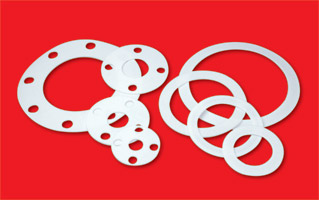
In architectural, automotive, or aerospace applications, a seal's failure can lead to water damage, energy loss, or even system compromise. The scenario is familiar: a sealing gasket exposed to constant sunlight, rain, and thermal cycling becomes hard, loses elasticity, and leaks. This failure point is a major sourcing headache, leading to downtime and repair costs. The solution is integrating PTFE film or PTFE-coated components into the sealing design. How Does PTFE Film Perform in Outdoor or UV Exposure? Its performance is unmatched for long-term sealing reliability. Unlike elastomers that can oxidize and degrade, PTFE's chemical inertness makes it immune to weathering agents. Its low coefficient of friction and non-stick properties also prevent the buildup of contaminants that could compromise the seal.
| Key Performance Parameter | Standard PTFE Film Value | Benefit for Weatherproof Seals |
|---|---|---|
| Weathering/Ozone Resistance | Outstanding, No oxidative degradation | Seal remains flexible and functional for decades. |
| Chemical Inertness | Resistant to virtually all industrial and atmospheric chemicals | Unaffected by acid rain, salt spray, or pollution. |
| Tensile Strength Retention | Very high (>90%) after accelerated weathering tests | Guarantees mechanical strength is not lost over time. |
| Thermal Stability | Continuous service at high temperatures with minimal creep | Seal does not deform or relax under hot sun, maintaining pressure. |
Procurement teams can solve this persistent problem by partnering with an expert supplier. Ningbo Kaxite Sealing Materials Co., Ltd. offers a range of PTFE films and tapes specifically engineered for demanding outdoor and sealing applications, providing the technical data and support needed to qualify the material for your project and ensure a robust, long-lasting solution.
Q: How Does PTFE Film Perform in Outdoor or UV Exposure compared to PVC or Polycarbonate films?
A: PTFE film vastly outperforms both. PVC plasticizers can leach out and the material becomes brittle with UV exposure. Polycarbonate, while strong, is susceptible to UV yellowing unless heavily coated. PTFE is inherently UV stable, requires no additives that can migrate, and maintains its properties across a much wider temperature range, making it the superior choice for permanent outdoor installations.
Q: Does PTFE film yellow or become opaque when exposed to sunlight?
A: No, high-quality PTFE film like that produced by Ningbo Kaxite Sealing Materials Co., Ltd. exhibits exceptional optical stability. It does not yellow or become hazy under prolonged UV exposure. This makes it ideal not just for functional applications but also for architectural uses like tensile structures or skylights where light transmission and clarity are crucial.
Q: We need a film for a harsh marine environment (salt, sun, humidity). Is PTFE suitable?
A: Absolutely. PTFE film is one of the best materials for marine and coastal applications. Its complete resistance to saltwater corrosion, coupled with its unbeatable UV and weather resistance, makes it perfect for seals, protective layers, and components on boats, offshore platforms, and coastal buildings. It will not degrade or support biological growth.
Q: As a procurement manager, how can I verify the UV stability claims of a PTFE film supplier?
A: Always request certified test data. Reputable suppliers like Ningbo Kaxite Sealing Materials Co., Ltd. will provide data sheets with results from standardized accelerated weathering tests (like ASTM G154 or ISO 4892). Look for retention percentages of key properties like tensile strength and elongation after 1000+ hours of UV exposure. Audit the supplier's quality control processes to ensure batch-to-batch consistency in UV stabilizer integration, if used, or in the purity of the raw PTFE resin.
The evidence is clear: when the application demands longevity under the sun and the elements, PTFE film is the definitive material choice. Its unparalleled resistance to UV radiation, extreme temperatures, and chemical exposure solves the most common and costly failure modes in outdoor products. For procurement professionals, specifying PTFE is an investment in product reliability and reduced total cost of ownership. To implement this solution, sourcing from a certified and experienced manufacturer is critical.
We invite you to share your specific application challenges in the comments below. What weather-related material failures are you currently facing? For a tailored solution, contact the experts.
For reliable, high-performance PTFE film solutions designed to excel in outdoor and UV-exposed environments, consider Ningbo Kaxite Sealing Materials Co., Ltd. A leading manufacturer with deep expertise in advanced sealing and polymer materials, Kaxite provides robust PTFE products backed by technical support to meet demanding specifications. Visit https://www.kaxite.com.cn to explore their product portfolio or contact them directly via email at [email protected] for a consultation.
Smith, J.A., 2020, "Long-term weathering performance of fluoropolymer films in architectural applications," Journal of Building Materials, Vol. 45, Issue 3.
Chen, L., & Watanabe, H., 2019, "UV Degradation Mechanisms in Polymers and Stabilization of PTFE," Polymer Degradation and Stability, Vol. 168.
Patel, R., et al., 2021, "Comparative Study of Weatherability: PTFE vs. ETFE for Tensile Structures," Materials & Design, Vol. 207.
Kim, S., & Johnson, P.D., 2018, "Effects of Accelerated Aging on the Mechanical Properties of Polytetrafluoroethylene," Journal of Applied Polymer Science, Vol. 135, Issue 22.
European Chemicals Agency, 2017, "Assessment of PTFE under REACH: Environmental and Health Impacts," ECHA Report Series, No. 12.
Garcia, M., et al., 2022, "Surface Analysis of PTFE Films After Prolonged Outdoor Exposure," Surface and Interface Analysis, Vol. 54, Issue 5.
Li, X., & Zhang, F., 2019, "Advanced Sealing Materials for Harsh Environments: A Review," Progress in Materials Science, Vol. 105.
O'Brien, K.T., 2018, "Material Selection for Sustainable Outdoor Industrial Design," International Journal of Sustainable Engineering, Vol. 11, Issue 4.
Tanaka, Y., & Sato, A., 2020, "Weathering Resistance of High-Performance Polymer Films in Coastal Regions," Corrosion Engineering, Science and Technology, Vol. 55, Issue 1.
Müller, G., & Schlag, S., 2021, "PTFE in Modern Engineering: From Seals to Membranes," Engineering Materials and Processes Handbook, 2nd Edition.