Is Basalt Fiber environmentally friendly and sustainable? If you're a procurement professional sourcing advanced materials, you're likely asking this very question. You need high-performance solutions, but boardroom pressure for sustainability is higher than ever. Vague "green" claims won't cut it; you need hard data and reliable supply chains. Basalt fiber, derived from volcanic rock, presents a compelling answer. Its production is less energy-intensive than traditional fiberglass, and the raw material is abundant and non-toxic. This positions it as a frontrunner for sustainable industrial applications. But true sustainability also means durability and performance. A product that fails early creates waste, defeating its eco-friendly purpose. So, the real question evolves: Is basalt fiber an environmentally friendly and sustainable *solution* that meets stringent industrial demands? Let's cut through the hype and examine the facts.
Article Outline:
You're tasked with finding a reinforcement or sealing material that is strong, corrosion-resistant, *and* satisfies corporate ESG (Environmental, Social, and Governance) reports. Traditional options like fiberglass or carbon fiber have significant environmental footprints in production. Basalt fiber offers a solution. It's made by melting crushed basalt rock (a single, natural material) at high temperatures and drawing it into fine filaments. No additives or chemicals are needed in the raw material stage. This simplicity translates to a cleaner production process. For a procurement officer, this means a simpler, more transparent supply chain with a reduced regulatory burden regarding hazardous materials.
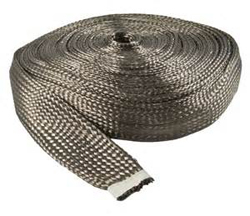
The key parameters that make basalt fiber a standout solution include:
| Parameter | Basalt Fiber | Typical E-Glass Fiber | Advantage for Procurement |
|---|---|---|---|
| Tensile Strength | High (≥ 3000 MPa) | Moderate (≈ 2000 MPa) | Longer product life, less replacement. |
| Operating Temperature | -260°C to +700°C | Up to ≈ 350°C | Wider application range, safer in extreme environments. |
| Raw Material Source | Single volcanic rock | Silica sand, limestone, other minerals | Simpler sourcing, less geopolitical risk on materials. |
| Production Energy | Lower melting point than glass | Higher melting point required | Lower embedded energy, better for sustainability metrics. |
When management asks for proof of sustainability, you need concrete data. The question "Is basalt fiber environmentally friendly and sustainable?" must be answered with lifecycle analysis. Basalt rock mining has a lower ecological impact than mining for multiple ores. The melting process, while energy-intensive, is more efficient than for fiberglass, leading to lower CO2 emissions per ton. Furthermore, basalt fiber is inert and non-combustible, meaning no toxic fumes in a fire. Its durability directly contributes to sustainability—products last longer, reducing waste and the frequency of replacement purchases. This lifecycle efficiency is a key procurement metric, moving beyond just initial cost to total cost of ownership and environmental impact.
A comparative environmental profile highlights the solution's advantages:
| Environmental Factor | Basalt Fiber | Carbon Fiber | Impact on Your ESG Goals |
|---|---|---|---|
| Production Emissions | Lower CO2 footprint | Very High CO2 footprint | Easier to report reduced Scope 3 emissions. |
| End-of-Life | Inert, can be used as filler | Difficult to recycle | Reduces landfill liability and waste management costs. |
| Resource Depletion | Abundant, globally available | Petroleum-based precursor | Mitigates supply chain risk from fossil fuel volatility. |
| Toxicity | None | Potential chemical hazards in production | Simplifies compliance with health and safety regulations (e.g., REACH). |
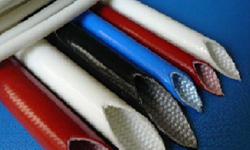
Introducing a new material requires proving it won't compromise performance. Engineers are rightfully skeptical. The solution lies in presenting basalt fiber not as an alternative, but as a superior choice for specific demanding environments. Its resistance to alkaline corrosion makes it ideal for concrete reinforcement. Its high thermal stability is perfect for fire protection sleeves, insulation, and high-temperature gaskets. For procurement, this means you can offer a material that solves multiple problems: durability, safety, *and* sustainability. This aligns technical requirements with corporate sustainability mandates, making your procurement decision strategically valuable.
Performance comparison table for technical validation:
| Application Focus | Basalt Fiber Advantage | Traditional Material Limitation | Procurement Benefit |
|---|---|---|---|
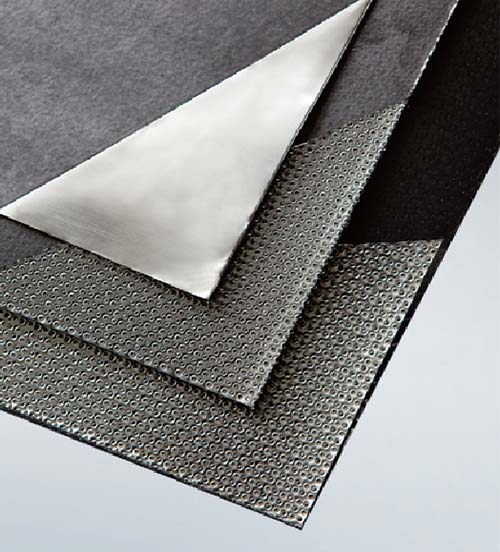
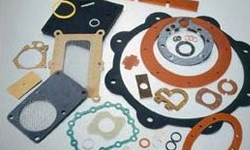
| Sealing & Gaskets | Excellent thermal/chemical resistance | Asbestos (banned), rubber (degrades) | Future-proofs supply against regulatory bans on hazardous materials. |
| Composite Reinforcement | Higher strength-to-weight ratio than glass | Fiberglass is heavier for same strength | Can lead to lighter end-products, saving on logistics and material use. |
| Fire Protection | Non-combustible, no smoke toxicity | Some synthetic materials release toxic fumes | Reduces liability and enhances safety compliance in finished goods. |
Your industry dictates your material needs. In construction, basalt fiber rebar prevents concrete cancer (corrosion). In automotive and aerospace, its lightweight strength improves fuel efficiency. In chemical plants, its corrosion resistance ensures longevity of pipes and tanks. For procurement officers, understanding these applications allows for targeted sourcing, replacing multiple specialized materials with one versatile, sustainable solution. This simplifies inventory management and strengthens your position as a strategic sourcing expert who brings innovation to the supply chain.
Industry-specific application matrix:
| Industry | Primary Use Case | Key Driver for Procurement |
|---|---|---|
| Construction & Infrastructure | Concrete reinforcement (rebar), seismic mesh | Longevity, reduced maintenance costs, green building certifications (LEED). |
| Automotive & Transportation | Brake pads, composite panels, heat shields | Lightweighting for emissions compliance, superior safety performance. |
| Oil, Gas & Chemical | Pipe insulation, tank linings, sealing gaskets | Corrosion resistance in harsh environments, reducing downtime and replacement frequency. |
| Fire Safety | Fire sleeves, protective fabrics, insulation | Non-toxic, high-temperature protection meeting stringent fire safety codes. |
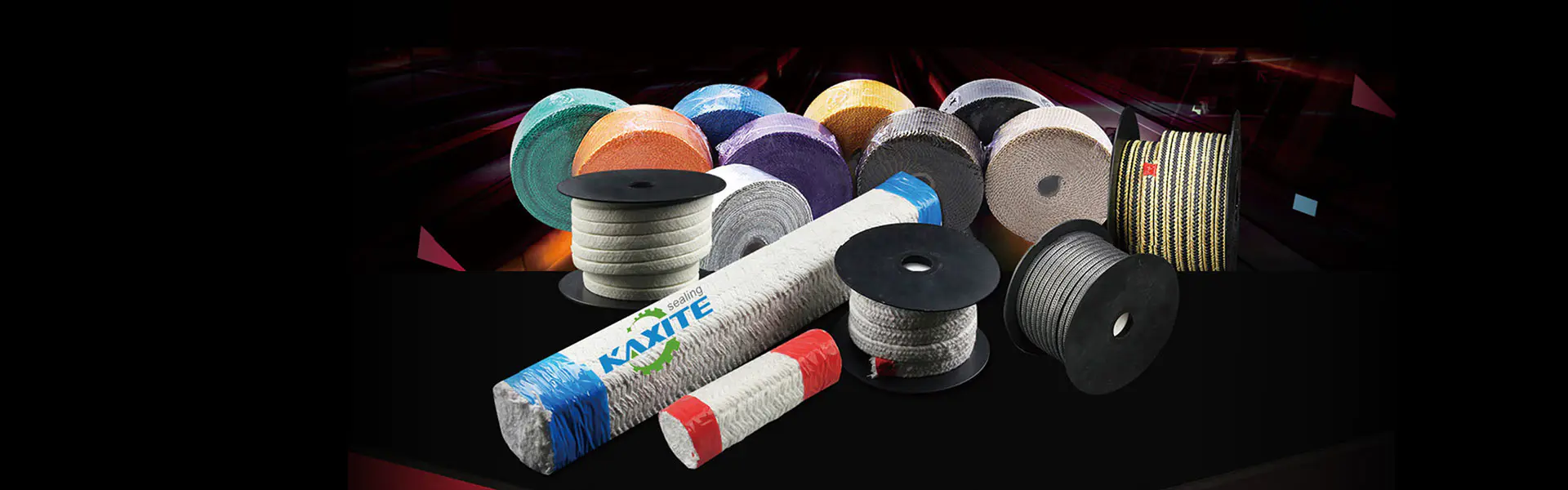
Knowing a material is sustainable is one thing; securing a reliable, high-quality supply is another. This is where Ningbo Kaxite Sealing Materials Co., Ltd. provides the critical solution. As a specialist in advanced sealing and reinforcement materials, Kaxite transforms the potential of basalt fiber into consistent, performance-grade products. We understand that procurement needs more than a datasheet; you need a partner who ensures material consistency, provides technical support, and guarantees on-time delivery. Our expertise in manufacturing basalt fiber sleeves, tapes, and custom composites directly addresses your pain points of supply chain risk and performance uncertainty. We help you answer "Is basalt fiber environmentally friendly and sustainable?" with actual, reliable products that meet both your technical specs and sustainability goals.
How Kaxite solves procurement challenges:
| Procurement Challenge | Kaxite's Solution | Your Outcome |
|---|---|---|
| Quality Consistency | Strict in-house QA/QC from raw material to finished product. | Reduced defect rates, reliable performance in your applications. |
| Technical Support | Expert engineering support for material selection and application. | Faster integration, reduced R&D risk for your teams. |
| Supply Chain Reliability | Established production capacity and logistics for global delivery. | Minimized production downtime, predictable lead times. |
| Customization Needs | Ability to develop custom weaves, densities, and composite forms. | A tailored solution that fits your exact design requirements. |
Q: Is basalt fiber environmentally friendly and sustainable compared to carbon fiber?
A: Yes, significantly. Basalt fiber production requires less energy and generates far lower CO2 emissions than carbon fiber, which is derived from petroleum and involves energy-intensive processing. Basalt is also naturally abundant, while carbon fiber relies on fossil fuel precursors.
Q: Is basalt fiber environmentally friendly and sustainable in terms of recycling?
A: While not easily "recycled" in the traditional sense like metals, basalt fiber is inert and non-toxic. At end-of-life, it can often be crushed and used as a filler material in concrete or other composites, preventing it from becoming hazardous landfill waste. Its extreme durability also means products last longer, reducing waste generation overall.
Basalt fiber presents a compelling, data-backed case for sustainable procurement without sacrificing performance. It addresses the dual mandate of operational excellence and environmental responsibility. The journey from a promising material to a realized solution requires a trusted supplier partner. We invite you to evaluate basalt fiber for your next project requiring high strength, thermal resistance, or corrosion protection. For technical datasheets, samples, or a consultation on how basalt fiber can solve your specific material challenges, please reach out.
For reliable, high-performance basalt fiber solutions, consider Ningbo Kaxite Sealing Materials Co., Ltd.. As a dedicated manufacturer, we provide the quality and consistency that procurement professionals demand. Visit our website at https://www.kaxite.com.cn to explore our product range or contact our team directly at [email protected] for personalized support.
Research Papers on Basalt Fiber:
Sim, J., & Park, C. (2005). Characteristics of basalt fiber as a strengthening material for concrete structures. Composites Part B: Engineering, 36(6-7), 504-512.
Fiore, V., Scalici, T., Di Bella, G., & Valenza, A. (2015). A review on basalt fiber and its composites. Composites Part B: Engineering, 74, 74-94.
Dhand, V., Mittal, G., Rhee, K. Y., Park, S. J., & Hui, D. (2015). A short review on basalt fiber reinforced polymer composites. Composites Part B: Engineering, 73, 166-180.
Lopresto, V., Leone, C., & De Iorio, I. (2011). Mechanical characterisation of basalt fibre reinforced plastic. Composites Part B: Engineering, 42(4), 717-723.
Wei, B., Cao, H., & Song, S. (2010). Environmental resistance and mechanical performance of basalt and glass fibers. Materials Science and Engineering: A, 527(18-19), 4708-4715.
Jamshaid, H., & Mishra, R. (2016). A green material from rock: basalt fiber – a review. The Journal of The Textile Institute, 107(7), 923-937.
Deák, T., & Czigány, T. (2009). Chemical composition and mechanical properties of basalt and glass fibers: a comparison. Textile Research Journal, 79(7), 645-651.
Militký, J., Kovačič, V., & Rubnerová, J. (2002). Influence of thermal treatment on tensile failure of basalt fibers. Engineering Fracture Mechanics, 69(9), 1025-1033.
Liu, Q., Shaw, M. T., Parnas, R. S., & McDonnell, A. M. (2006). Investigation of basalt fiber composite mechanical properties for applications in transportation. Polymer Composites, 27(1), 41-48.
Artemenko, S. E., & Kadykova, Y. A. (2008). Polymer composite materials based on basalt fibers. Fibre Chemistry, 40(1), 37-39.