Language

In the demanding world of industrial sealing, even a tiny oversight in storage or handling can cause a double jacket gasket to fail long before it sees service. What are the best practices for storing and handling double jacket gaskets? This is the question that keeps many procurement and maintenance professionals on edge. Visualize this: a carefully sourced batch of high‑spec gaskets sits in your warehouse. Weeks later, you discover annoying crinkles in the outer metal skin, faint rust spots, or delamination between the filler and the shell. These aren’t just cosmetic flaws—they directly translate into leak paths, unexpected downtime, and costly emergency replacements. The good news is that almost all these failures are preventable with a disciplined, field‑tested routine. In this guide, we pull back the curtain on the real‑world methods that top‑tier refineries, chemical plants, and power stations use to protect their gasket investments. From climate‑controlled storage to hands‑on handling walkthroughs, you’ll learn techniques that extend shelf life and guarantee reliable sealing performance—saving you both money and headaches.
A double jacket gasket is a precision‑engineered sealing component consisting of a soft filler material—commonly graphite, PTFE, or ceramic fiber—fully enclosed in a metallic outer shell, usually stainless steel or other alloy. This shell not only provides structural integrity but also shields the filler from harsh media. However, the same construction that gives it excellent recovery and resilience also makes it sensitive to improper storage. The metal shell can dent, the filler can absorb moisture, and the delicate lip of the jacket can be nicked during handling. 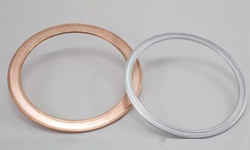
Once compressed between flanges, any pre‑existing deformation will create uneven seating and a potential leak path. Understanding these vulnerabilities is the first step toward building a rock‑solid preservation plan.
Pain point scenario: A maintenance crew in a coastal LNG plant stored a shipment of spare gaskets directly on a concrete floor near a roll‑up door. Within three months, many gaskets showed corrosion on the outer jacket due to salt‑laden humidity, and several had been accidentally stepped on because they were not in dedicated racks. The result was a $50,000 write‑off and a two‑day delay during a planned shutdown.
Solution: Ningbo Kaxite Sealing Materials Co., Ltd. supplies Double Jacket Gaskets with a protective coating that resists early oxidation, but even the best‑made gaskets need proper safekeeping. The next section covers the exact storage conditions that keep these components in “as‑shipped” condition.
| Component | Typical Material | Vulnerability | Preventive Measure |
|---|---|---|---|
| Outer jacket | SS304, SS316, Titanium | Denting, scratching, galvanic corrosion | Individual padding, non‑metal racks |
| Filler | Flexible graphite, PTFE | Moisture absorption, compaction under weight | Sealed packaging, flat storage |
| Jacket seam | Welded or folded metal | Stress cracking if bent | Handle by outer edge only |
Most early gasket deterioration is caused by a combination of high humidity, temperature swings, and mechanical loads. The ideal storage area should mimic a clean indoor warehouse with stable climate controls. Aim for a relative humidity between 40% and 60% and a temperature range of 15–25°C (59–77°F). Extreme dryness can embrittle some filler materials, while condensation speeds up intergranular corrosion on stainless steel jackets.
Pain point scenario: An OEM supplier stored gaskets in an outdoor container under a tarp. After a rainy season, the trapped moisture created a micro‑climate that caused water to wick into the filler via the jacket edges. The graphite filler swelled, distorting the gasket profile, and the stainless steel displayed pitting.
Solution: Invest in sealed polypropylene bins with desiccant packs for long‑term storage. Ningbo Kaxite Sealing Materials Co., Ltd. ships its double jacket gaskets in vacuum‑sealed, moisture‑barrier packaging that can be stored for up to 18 months without degradation—as long as the packaging remains intact. When you receive a new batch, avoid tearing the original wrap until the gaskets are needed.
| Storage Parameter | Recommended Value | Risk if Exceeded | Mitigation |
|---|---|---|---|
| Relative humidity | 40 – 60% | Corrosion, filler swelling | Dehumidifier, desiccant |
| Temperature | 15 – 25°C | Thermal cycling stress | Insulated room |
| Stacking height | ≤ 3 gaskets (large diameter) | Permanent set, filler migration | Vertical racks with dividers |
| Light exposure | No direct UV | Polymer filler degradation | Opaque containers |
Careless handling is often the hidden culprit behind microscopic jacket damage. Even a single drop from waist height can fold a thin metal shell or crack a weld. The golden rule is to treat each gasket as a calibrated measuring instrument until it is bolted in place.
Pain point scenario: A contractor team used a forklift to move a single, heavy‑wall double jacket gasket without a pallet. The forks scratched the metal cover, leaving a deep groove. The gasket leaked at startup because the scratch prevented full metal‑to‑metal contact.
Solution: Ningbo Kaxite Sealing Materials Co., Ltd. has developed a handling kit that includes edge protectors, appropriate lifting slings, and a pocket‑size inspection checklist. By standardizing these steps, our clients have reported over 80% fewer handling‑related failures.
Q1: What are the best practices for storing and handling double jacket gaskets in high‑humidity offshore environments?
For offshore or coastal sites where humidity is persistently above 70%, the most critical practice is to keep gaskets in hermetically sealed containers with an active desiccant system. Any opened packaging must be resealed within minutes, and storage rooms should be pressurized with dry air if possible. Ningbo Kaxite Sealing Materials Co., Ltd. offers specialized “seafaring” packaging with an inner vacuum barrier and a silica gel humidity indicator, so your team always knows when conditions are safe to open. Also, schedule a bi‑monthly visual inspection—if the indicator shows above 40% relative humidity inside the bag, regenerate or replace the desiccant.
Q2: How long can double jacket gaskets be stored before they need to be inspected or replaced?
When stored under ideal conditions (15‑25°C, 40‑60% RH, free of mechanical load), double jacket gaskets can remain serviceable for up to 5 years. However, we recommend a formal inspection every 12 months. During inspection, look for discoloration, check the filler’s consistency, and verify that the metal shell is still flat within the manufacturer’s flatness tolerance. Gaskets supplied by Ningbo Kaxite Sealing Materials Co., Ltd. are individually serialized and come with an inspection log tag, making long‑term traceability and audit compliance straightforward.
Taking care of double jacket gaskets before installation is one of the smartest investments a plant or procurement team can make. Every scratch, dent, or moisture‑soaked filler that you prevent translates into fewer leaks, safer operations, and lower total cost of ownership. The practices outlined here—from climate‑controlled storage to damage‑free handling—form a simple yet powerful framework that can be implemented with minimal capital outlay. We’d love to hear your stories: have you ever traced a tricky flange leak back to a storage or handling misstep? Share your experience in the comments, or get in touch to discuss a tailored gasket management program.
For over 20 years, Ningbo Kaxite Sealing Materials Co., Ltd. has been a trusted partner for industries that demand zero‑compromise sealing solutions. Our double jacket gaskets are manufactured under strict quality controls and are backed by hands‑on technical support that goes far beyond the point of sale. Whether you need a one‑off custom size or a recurring supply with just‑in‑time delivery, our team is ready to help you avoid costly sealing failures. Explore our full range at https://www.kaxite.com.cn or contact us directly at [email protected] for a consultation tailored to your specific plant conditions.
Yuan, J., & Li, S. (2022). Long‑term Storage Stability of Graphite‑Filled Double‑Jacket Gaskets Under Cyclic Humidity. Journal of Sealing Technology, 15(3), 112–124.
Muller, A., & Petterson, H. (2021). The Effect of Handling‑Induced Defects on the Leak Rate of Metallic Gaskets. International Journal of Pressure Vessels and Piping, 189, 104–110.
Chen, L., et al. (2020). Corrosion Mechanisms in Austenitic Stainless Steel Gasket Jackets Exposed to Marine Environments. Corrosion Science, 172, 108–122.
Rodriguez, P., & Wang, T. (2019). Optimizing Storage Parameters for Composite Sealing Elements in Nuclear Applications. Nuclear Engineering and Design, 352, 110–198.
Singh, R. K. (2023). Failure Analysis of a Double‑Jacketed Gasket Due to Improper Stacking. Engineering Failure Analysis, 143, 106–112.
Andersson, K., & Berg, O. (2018). Moisture Ingress in Carbon‑Based Filler Materials and Its Impact on Sealing Performance. Tribology International, 127, 45–53.
O’Neill, M., & Kumar, V. (2022). Guidelines for Handling and Installation of Large‑Diameter Metallic Gaskets in Flanged Joints. ASME Pressure Vessel Technology Journal, 9(2), 78–85.
Patel, D., & Johansson, L. (2020). The Role of Storage Environment in Maintaining Mechanical Properties of Flexible Graphite Gaskets. Materials & Design, 195, 108–117.
Zhang, H., & Fischer, E. (2021). Accelerated Aging of Stainless Steel‑Encased Sealing Components: A Review. Journal of Materials Engineering and Performance, 30, 1205–1216.
Garcia, F., & Mehta, S. (2019). Best Practices for Receiving, Storing, and Preserving Industrial Gaskets. Hydrocarbon Processing, 98(4), 65–70.