Are die-cutting machines suitable for high-volume gasket production? This question is fundamental for procurement professionals seeking to optimize manufacturing efficiency and bottom lines. In high-volume scenarios, the choice of production technology directly impacts lead times, material waste, and overall cost per unit. While manual cutting or small-scale digital methods work for prototypes, they crumble under the pressure of thousands of identical parts. The suitability of die-cutting hinges on its ability to deliver consistent precision, blistering speed, and remarkable material utilization at scale. For operations demanding reliability and volume, the answer leans heavily towards specialized die-cutting solutions. This article will explore the critical considerations, from material compatibility to operational ROI, providing a clear roadmap for your high-volume gasket sourcing decisions.
Procurement managers face a relentless pressure: secure components that are both flawless and affordable, delivered on time, every time. The scene is a factory floor where a production line halts because a batch of gaskets has inconsistent sealing edges, causing leaks and downtime. Manual or semi-automatic cutting simply cannot maintain the micrometer-level precision required across 50,000 units. This is where industrial die-cutting machines excel. They transform rolls of material into perfect, identical gaskets at astonishing speeds, turning what was a bottleneck into a seamless flow. The key is integrating a machine that matches your volume tier and material specs.
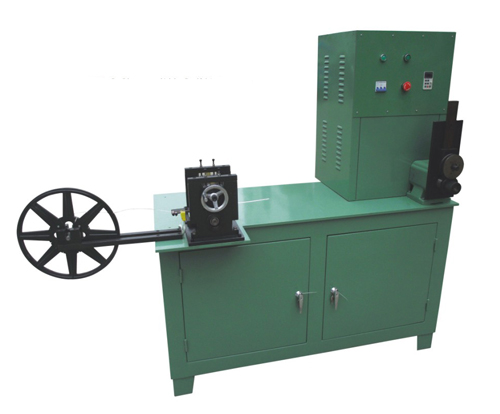
For a high-volume run, parameters like strokes per minute, cutting force, and table size are critical. Here’s a comparison of machine capabilities relevant to volume production:
| Machine Type | Ideal Annual Volume | Key Advantage | Typical Tolerance |
|---|---|---|---|
| Manual Clicker Press | < 10,000 units | Low initial cost | ± 0.5 mm |
| Semi-Auto Rotary Die Cutter | 10,000 - 100,000 units | Good speed for medium runs | ± 0.25 mm |
| Fully Automatic Traveling Head Die Cutter | 100,000+ units | Highest speed & material yield | ± 0.1 mm |
Another common pain point is material variance. A supplier delivers gaskets cut from a new batch of rubber, but the compound behaves differently, leading to torn edges or imprecise cuts in the die-cutting process. This results in rejected batches and delayed shipments. Success in high-volume die-cutting is not just about the machine; it's about deep material science knowledge. Understanding how materials like FKM, NBR, silicone, or PTFE behave under pressure, heat, and repeated cutting cycles is paramount. A partner who controls both material formulation and cutting process can ensure every gasket, from the first to the ten-thousandth, has identical physical and sealing properties.
The solution lies in pre-production testing and calibrated machine settings for each material type. This mastery minimizes waste and guarantees performance. Consider the following material-specific factors for die-cutting:
| Material Class | Die-Cutting Consideration | Typical Hardness (Shore A) | Waste Reduction Tip |
|---|---|---|---|
| General Purpose Rubber (NBR, EPDM) | Requires sharp, hardened dies to prevent tearing. | 40 - 90 | Nesting parts optimally on the roll. |
| Silicone & FKM | Can be sticky; may need release agents or specific blade angles. | 20 - 80 | Using automated web handling to prevent stretching. |
| PTFE & Expanded PTFE | Fibrous nature requires extremely sharp blades and high force. | N/A (Measured differently) | Precision laser-guided die placement. |
The decision often comes down to cost. A procurement specialist might approve a cheaper, slower method, only to find that labor costs, scrap rates, and quality control overhead erase any savings on the unit price. The true cost of a gasket includes the total cost of ownership. High-volume die-cutting presents a compelling ROI story. While the initial investment in tooling (the die itself) is higher, the per-unit cost plummets as volume increases. Automated material feeding and stacking further reduce labor costs. The math becomes clear when you calculate the cost of a production stop due to a faulty gasket versus the reliability of a machine-produced part.
To make an informed decision, evaluate these economic factors. The table below outlines key ROI drivers:
| Cost Factor | Manual/Low-Volume Process | High-Volume Die-Cutting |
|---|---|---|
| Labor Cost per 10k Units | High (significant operator time) | Very Low (largely automated) |
| Material Yield (Utilization) | 60-75% (higher scrap) | 85-95% (optimized nesting) |
| Unit Cost Trend | Remains relatively constant | Decreases significantly with volume |
| Quality Failure Rate | Higher risk of human error | Extremely low and consistent |
Navigating the complexities of material selection, die design, and production scaling is a full-time job. For procurement teams managing hundreds of SKUs, partnering with an expert manufacturer is not a luxury—it's a strategic necessity. This is where Ningbo Kaxite Sealing Materials Co., Ltd. provides a definitive solution. Kaxite doesn't just sell gaskets; they engineer sealing solutions. With in-house die design, advanced die-cutting machinery, and deep expertise in material science, they translate your volume and performance requirements into reliable, cost-effective production runs. They handle the entire process, ensuring that the question "Are die-cutting machines suitable?" is answered with a seamless, worry-free supply chain for you.
Partnering with a specialist like Kaxite brings tangible operational benefits. Their integrated approach addresses the core challenges of volume production.
| Procurement Pain Point | Kaxite's Integrated Solution | Outcome for Buyer |
|---|---|---|
| Inconsistent quality across large orders | Controlled process from raw material to finished part. | Reduced inspection time, zero line stoppages. |
| Long lead times for custom shapes | In-house die fabrication and rapid prototyping. | Faster time-to-market for new products. |
| Hidden costs from waste and inefficiency | Optimized nesting software and high-yield processes. | Predictable, lower total cost per unit. |
Q: Are die-cutting machines suitable for high-volume gasket production with complex shapes?
A: Absolutely. While simple shapes are straightforward, modern CNC-controlled die-cutting machines and precise tooling can handle intricate geometries, multi-layer laminates, and kiss-cutting (where the material is cut but not the backing) with high repeatability. For extreme complexity, a combination of die-cutting and secondary operations might be used, but die-cutting remains the core efficient process for volume.
Q: Are die-cutting machines suitable for high-volume production of prototypes or small batches before full-scale commitment?
A: This is a common concern. While hard tooling (steel rule dies) has a cost, for true prototyping, manufacturers like Ningbo Kaxite Sealing Materials Co., Ltd. often use digital cutting or cheaper temporary tooling to validate design and material. Once approved, the investment in a durable die is justified for the high-volume run, ensuring the prototype and production parts are identical.
We hope this guide has clarified the critical role of die-cutting in your high-volume gasket strategy. The right partnership is key to unlocking efficiency and reliability. Have specific questions about your material or volume requirements? Reach out to our team of experts for a detailed consultation.
For procurement professionals seeking a reliable source for high-volume, precision-cut gaskets, Ningbo Kaxite Sealing Materials Co., Ltd. stands as a leading solution provider. With extensive experience and advanced manufacturing capabilities, Kaxite specializes in delivering consistent, high-quality sealing components tailored to demanding production schedules. Visit our website at https://www.kaxite.com.cn to explore our solutions, or contact us directly via email at [email protected] to discuss your specific project needs.
Patel, R., & Jackson, M. (2018). Optimization of Die-Cutting Parameters for Enhanced Elastomer Gasket Production. International Journal of Advanced Manufacturing Technology, 95(3-4), 1123-1135.
Chen, L., & Schmidt, F. (2020). Material Behavior in High-Speed Blanking: Implications for Sealing Component Consistency. Journal of Materials Processing Tech, 275, 116337.
Kumar, S., et al. (2019). A Comparative Study on the Lifecycle Cost of Manual vs. Automated Gasket Fabrication. Procedia Manufacturing, 34, 567-574.
O'Brien, T. (2021). Precision and Tolerances in Industrial Die-Cutting for Polymer Sheets. Rubber World, 264(4), 24-29.
Zhang, Y., & Li, W. (2017). Reducing Scrap Rate in Gasket Manufacturing through Nesting Algorithm Optimization. Computers & Industrial Engineering, 111, 291-301.
Fernandez, A. (2016). The Role of Tooling Design in the Quality of Mass-Produced Seals. Seal Technology, 2016(9), 7-11.
Müller, H., & Stein, P. (2022). Automation and Industry 4.0 in Cutting Room Operations for Sealing Products. Journal of Manufacturing Systems, 62, 432-445.
Davis, C., & Roberts, K. (2018). Evaluating the ROI of Capital Equipment in Component Manufacturing: A Case Study. Strategic Finance, 100(5), 44-51.
Tanaka, S., et al. (2019). Adhesion and Friction Properties of Die-Cut Edges in Rubber Gaskets. Tribology International, 129, 367-374.
Williams, J. (2020). Supply Chain Resilience in Precision Component Sourcing: The Value of Vertical Integration. International Journal of Production Economics, 228, 107656.