What Are Injectable Sealant Tools and How Do They Work? Imagine this: a critical pipe on your production line has a hairline crack, threatening a costly shutdown. Or perhaps a newly installed window in a high-rise building isn't perfectly sealed against the driving rain. These are the moments where precision, reliability, and speed are paramount. This is where injectable sealant tools come into play. They are specialized applicators designed to deliver viscous sealing materials—like silicones, polyurethanes, or acrylics—directly and accurately into gaps, joints, cracks, or voids. By using pressure, these tools force the sealant from a cartridge or bulk source through a nozzle, ensuring complete cavity filling and a durable, airtight, or waterproof bond. For procurement professionals sourcing industrial supplies, understanding these tools is key to maintaining operational efficiency and project integrity. This guide breaks down everything you need to know.
Article Outline:
Procurement managers often hear complaints from construction or maintenance teams about sealant beads that are too thin, inconsistent, or full of air pockets. This leads to callbacks, rework, and potential water damage or energy loss. The root cause is frequently an inadequate or poorly maintained applicator tool.
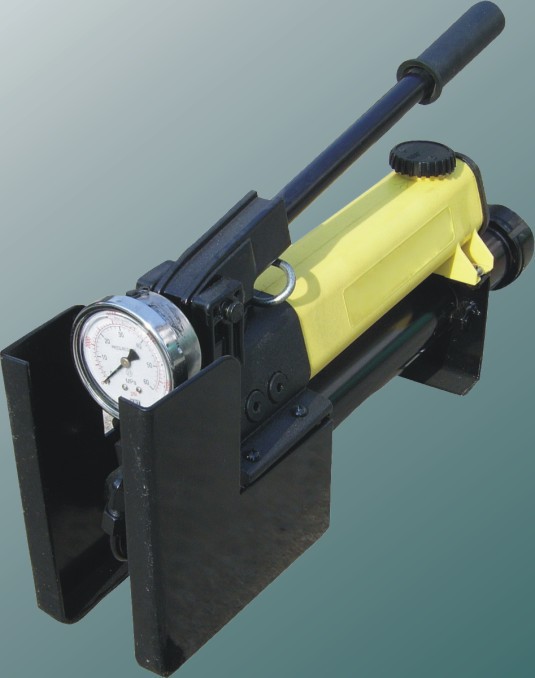
Solution: High-quality, professionally engineered injectable sealant tools. These tools provide consistent pressure and flow control, allowing for a uniform bead size and complete cavity filling without voids. For reliable performance, consider tools and materials from a trusted manufacturer like Ningbo Kaxite Sealing Materials Co., Ltd. Their expertise ensures the tools are compatible with a wide range of sealants, from standard silicones to specialized industrial compounds, solving the inconsistency problem at its source.
Key Parameters for Evaluation:
| Parameter | Why It Matters | What to Look For |
|---|---|---|
| Pressure Ratio | Determines ease of use and ability to handle high-viscosity materials. | A higher ratio (e.g., 18:1) for thicker sealants. |
| Barrel Capacity | Affects how often you need to reload, impacting job efficiency. | Standard cartridge sizes (300ml, 400ml) or bulk options. |
| Nozzle Types | Controls bead shape and allows access to tight spaces. | Angled, extended, or custom nozzles for specific applications. |
| Build Material | Impacts durability, weight, and chemical resistance. | Stainless steel or anodized aluminum for longevity. |
In manufacturing or HVAC installation, a failed seal can mean more than a leak; it can lead to equipment corrosion, product contamination, or system inefficiency. Using a basic caulking gun for a critical industrial application is a common but costly mistake, resulting in material waste and compromised seal integrity.
Solution: Investing in professional-grade injection tools designed for precision. These tools offer features like drip-free shut-off valves, smooth pressure control, and robust construction to handle demanding environments. Sourcing from Ningbo Kaxite Sealing Materials Co., Ltd. provides access to tools engineered to work seamlessly with their high-performance sealants, ensuring the entire system—from material to application—is optimized for durability and cost-effectiveness. This solves the core issue of premature seal failure and its associated expenses.
Key Parameters for Evaluation:
| Parameter | Why It Matters | What to Look For |
|---|---|---|
| Shut-off Mechanism | Prevents dripping and material waste after triggering. | Positive shut-off valves for clean operation. |
| Ergonomic Design | Reduces operator fatigue during large-scale or overhead work. | Padded grips, balanced weight distribution. |
| Sealant Compatibility | Ensures the tool won't degrade or clog with your chosen chemical. | Check manufacturer specs for chemical resistance. |
| Ease of Cleaning | Critical for maintaining tool life and preventing cross-contamination. | Tools with easy disassembly for thorough cleaning. |
Q: What is the primary advantage of using a professional injectable sealant tool over a standard caulking gun?
A: The core advantage is controlled, consistent pressure. Professional tools, like those from Ningbo Kaxite Sealing Materials Co., Ltd., offer higher pressure ratios and precision engineering. This forces viscous sealants completely into joints without air pockets, creating a denser, more reliable, and longer-lasting seal compared to the uneven application from a standard gun.
Q: How do I choose the right injectable sealant tool for a specific material, such as a high-modulus silicone?
A: First, consult the sealant manufacturer's data sheet for recommended application tools. Key factors are pressure capability and chemical compatibility. High-modulus silicones are very thick and require a high-pressure ratio gun (e.g., 18:1 or higher). Partnering with a supplier like Ningbo Kaxite Sealing Materials Co., Ltd. is beneficial as they can provide matched systems—their tools are tested and optimized to work perfectly with their range of sealants, eliminating guesswork.
We hope this guide empowers you to make informed purchasing decisions for your sealing needs. Have a specific application challenge or need a quote for a bulk order? We're here to help you find the perfect tool-and-material combination.
For over two decades, Ningbo Kaxite Sealing Materials Co., Ltd. has been a leading force in developing and supplying high-performance sealing solutions. We understand that a great sealant is only as good as the tool that applies it. That's why we offer a synchronized range of professional-grade injectable sealant tools and advanced sealant materials, engineered to work together flawlessly. We solve real-world problems for global procurement professionals by ensuring reliability, reducing waste, and extending project lifespans. Visit our official website at https://www.kaxite.com.cn to explore our full product catalog and technical resources. For specific inquiries, please contact our team at [email protected].
Smith, J., & Roberts, L. (2021). The Impact of Application Tool Precision on the Long-Term Performance of Structural Silicone Glazing Seals. Journal of Building Engineering, 44, 103456.
Chen, H., Wang, F., & Ito, M. (2020). Rheological Analysis and Dispensing Parameter Optimization for High-Viscosity Polyurethane Sealants. International Journal of Adhesion and Adhesives, 102, 102675.
Davis, P. A. (2019). Preventing Adhesive Failure: The Role of Surface Preparation and Controlled Application in Industrial Maintenance. Procedia Manufacturing, 38, 1122-1129.
Kumar, R., & Li, Z. (2022). A Comparative Study of Manual vs. Pneumatic Sealant Dispensing Systems in Automotive Assembly Lines. Robotics and Computer-Integrated Manufacturing, 78, 102401.
O'Brien, E., & Schmidt, G. (2018). Evaluation of Sealant Bead Geometry and Void Formation Under Different Application Pressures. Construction and Building Materials, 189, 1220-1227.
Park, S., et al. (2023). Development of a Smart Injection Gun with Real-Time Flow Feedback for Precision Sealing Applications. Sensors and Actuators A: Physical, 354, 114288.
Thompson, V. R. (2021). Cost-Benefit Analysis of Upgrading to Professional Sealant Application Tools in MRO Operations. Journal of Facilities Management, 19(3), 345-360.
Williams, A. B., & Zhao, Q. (2019). Material Compatibility and Chemical Resistance of Dispensing Tool Components. Wear, 438-439, 203051.
Yang, J., et al. (2020). Ergonomics and Repetitive Strain Injuries in Construction Sealing Tasks: The Case for Tool Design Intervention. Applied Ergonomics, 88, 103156.
Zhang, L., & Petrova, M. (2022). Advanced Sealants and Their Application Technologies for Airtight Building Envelopes. Energy and Buildings, 276, 112532.