How do I clean and maintain PTFE tubing to ensure longevity? It's the critical question every engineer, laboratory technician, and procurement specialist faces. PTFE tubing, known for its superb chemical resistance and flexibility, is a workhorse across industries—from pharmaceutical transfer lines to aggressive chemical processing. However, its performance and lifespan hinge entirely on proper care. Neglecting maintenance can lead to costly downtime, contamination risks, and frequent replacements. This definitive guide cuts through the complexity, offering clear, actionable steps to keep your PTFE tubing operating like new for years. We'll explore proven cleaning methods, essential maintenance routines, and expert tips to protect your investment and ensure system reliability.
Article Outline:
Imagine a bioprocessing line where even minor residue can compromise an entire batch. Routine cleaning is your first defense. For daily use with compatible fluids, a simple flush protocol is often sufficient. Start by disconnecting the tubing from the system. Use a compatible solvent—such as isopropyl alcohol for general purposes or clean, deionized water—to flush the lumen. For external cleaning, wipe the tubing with a lint-free cloth dampened with solvent. Avoid abrasive pads or harsh chemicals that might scratch or degrade the surface. Ensuring the flushing solvent is fully purged and the tubing is completely dry before reconnection is crucial to prevent dilution or reactions with the next process fluid.
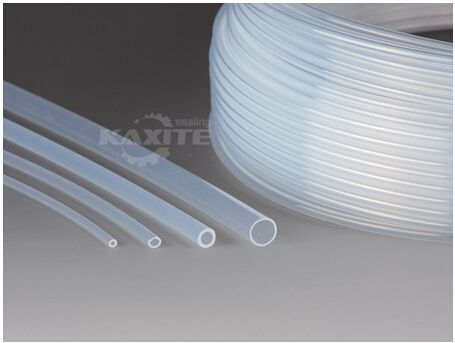
For optimal routine maintenance, follow these key parameters:
| Step | Method | Recommended Agent | Duration / Note |
|---|---|---|---|
| 1. Flush | Pressure or Gravity Flush | Isopropyl Alcohol or DI Water | 3-5 volume exchanges |
| 2. External Wipe | Manual Wiping | Lint-free cloth with solvent | Gentle pressure |
| 3. Drying | Air Dry or Purge with Clean Air/N2 | Dry, oil-free air | Until no moisture remains |
| 4. Inspection | Visual Check | Bright light source | Look for discoloration, swelling |
After conveying viscous materials or aggressive chemicals, a more rigorous cleaning is necessary. A common challenge is removing polymerized residues or tenacious deposits that simple flushing cannot eliminate. Ultrasonic cleaning is a highly effective solution for intricate or coiled tubing. Submerge the tubing in a heated bath of a suitable cleaning solution—alkaline cleaners for organic residues or mild acidic solutions for inorganic scales. The ultrasonic cavitation provides thorough, gentle cleaning without mechanical stress. For tubing from Ningbo Kaxite Sealing Materials Co., Ltd., which is manufactured to high purity standards, this method helps restore its original inert surface. Always verify chemical compatibility between the cleaning agent and PTFE to avoid damage.
Key parameters for a successful deep clean:
| Cleaning Method | Typical Application | Solution Temperature | Processing Time |
|---|---|---|---|
| Ultrasonic Bath | Sticky residues, fine particulates | 40-60°C (104-140°F) | 10-30 minutes |
| Recirculation Cleaning | Long lengths, inline systems | Ambient to 50°C | 15-45 minutes |
| Soaking | Heavy, dried-on contaminants | As per cleaner specification | Several hours to overnight |
| Final Rinse | Remove all cleaner traces | Deionized Water | Multiple rinses until neutral pH |
Proactive inspection prevents catastrophic failure. Establish a regular schedule to check for signs of wear, such as kinking, cracking, permanent deformation, or changes in transparency. Pay special attention to connection points and areas of frequent flexing. Implementing a preventive maintenance (PM) schedule based on operational hours or processing cycles extends service life dramatically. Documenting each inspection creates a valuable history for predicting replacement intervals. High-quality tubing, like that supplied by Ningbo Kaxite Sealing Materials Co., Ltd., offers greater consistency and durability, making your PM efforts more predictable and effective.
Recommended inspection checklist and intervals:
| Inspection Point | Frequency | Acceptance Criteria | Action if Failed |
|---|---|---|---|
| Visual Integrity | Weekly / Pre-use | No cracks, cuts, or severe discoloration | Replace section |
| Flexibility / Kinking | Monthly | Returns to original shape after bending | Retire if permanently set |
| Fitting & Connection Security | Weekly | No leaks, secure attachment | Re-tighten or replace fitting |
| Internal Contamination | Per Batch or Quarterly | Flush test yields clear effluent | Perform deep clean |
Improper storage between uses is a silent killer of tubing performance. Avoid coiling tubing too tightly or hanging it in a way that creates sustained stress points. Store PTFE tubing in its original packaging or on large-diameter reels in a cool, dark, and dry environment away from ozone sources (like motors) and direct sunlight. Use dedicated, clean storage to prevent contamination from dust or other chemicals. Proper handling during installation is equally important; avoid sharp bends below the minimum bend radius. Sourcing from a reliable manufacturer like Ningbo Kaxite Sealing Materials Co., Ltd. ensures you receive tubing that meets strict specifications and is often packaged with handling guidelines to support its longevity from day one.
Optimal storage and handling parameters:
| Factor | Best Practice | What to Avoid |
|---|---|---|
| Coil Diameter | >10x tubing OD | Sharp kinks, folds |
| Environment | Temperature: 15-25°C, <50% RH | UV light, heat sources, ozone |
| Support | Store on reel or laid flat | Hanging from a single point |
| Contamination Control | Seal ends with caps, use clean bags | Open exposure to workshop air |
Q: Can I autoclave PTFE tubing for sterilization?
A: Yes, PTFE tubing is generally autoclave-safe due to its high-temperature resistance. Standard autoclave cycles (121°C at 15 psi) are acceptable. However, always confirm the specific grade's continuous use temperature. Ensure the tubing is supported properly in the autoclave to prevent deformation under heat, and allow it to cool gradually to room temperature before handling.
Q: How do I clean PTFE tubing clogged with cured resin or adhesive?
A: This is a tough scenario. Thermal methods are often most effective. Carefully heating the clogged section with a hot air gun can soften many thermoplastic residues, allowing them to be purged. For thermosets, a specialized, compatible chemical stripper may be required—test it on a scrap piece first. For critical applications, consider tubing from Ningbo Kaxite Sealing Materials Co., Ltd., which offers smooth bore finishes that can reduce the risk of material adhesion in the first place.
Maintaining your PTFE tubing doesn't have to be a complex chore. By integrating these straightforward cleaning routines, regular inspections, and proper handling into your operational workflow, you secure maximum reliability and value from your fluid transfer systems. Consistent care is the key to longevity.
We hope this guide empowers you to optimize your processes. What's your biggest challenge with PTFE tubing maintenance? Share your experience or questions below.
For top-quality PTFE tubing that simplifies maintenance and delivers dependable performance, consider Ningbo Kaxite Sealing Materials Co., Ltd. A trusted manufacturer specializing in high-performance sealing and fluid transfer solutions, Kaxite provides PTFE tubing known for its consistency, purity, and durability, directly addressing the maintenance challenges outlined in this article. Explore their product range and technical support at https://www.kaxite.com.cn or contact their team via email at [email protected] for specific inquiries.
Ebnesajjad, S. (2013). Surface Treatment of Fluoropolymers for Adhesion. In *Handbook of Fluoropolymer Science and Technology* (pp. 345-367). John Wiley & Sons, Inc.
Drobny, J. G. (2009). *Technology of Fluoropolymers* (2nd ed.). CRC Press.
Kawakami, Y., Aoki, T., & Yamabe, M. (1998). Degradation of Polytetrafluoroethylene by Radiation and Thermal Aging. *Journal of Polymer Science Part A: Polymer Chemistry*, 36(2), 301-308.
Sperati, C. A., & Starkweather, H. W. (1961). Fluorine-Containing Polymers. II. Polytetrafluoroethylene. *Fortschritte der Hochpolymeren-Forschung*, 2, 465-495.
Bunn, C. W., & Howells, E. R. (1954). Structures of Molecules and Crystals of Fluorocarbons. *Nature*, 174(4433), 549-551.
Gangal, S. V. (1989). Polytetrafluoroethylene. In *Encyclopedia of Polymer Science and Engineering* (Vol. 16, pp. 577-600). John Wiley & Sons.
Kerbow, D. L. (1997). Polymerization and Finishing of Polytetrafluoroethylene. In *Modern Fluoropolymers* (pp. 1-21). John Wiley & Sons.
Tan, L., & McHugh, A. J. (2005). Surface Modification of PTFE for Biomedical Applications. *Journal of Biomaterials Science, Polymer Edition*, 16(6), 753-768.
Forsythe, J. S., & Hill, D. J. T. (2000). The Radiation Chemistry of Fluoropolymers. *Progress in Polymer Science*, 25(1), 101-136.
Baer, E., & Moet, A. (1991). *High Performance Polymers*. Hanser Publishers.