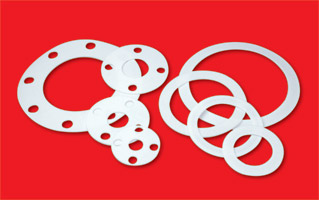
What are Copper Gaskets used for? In critical industrial systems—from high‑temperature engines to aggressive chemical pipelines—copper gaskets serve as reliable seals that prevent leaks, withstand extreme compression, and maintain integrity under thermal cycling. Procurement professionals constantly face tight deadlines, demanding specifications, and the risk of system failure if the wrong material is chosen. Imagine a refinery shutdown costing thousands per hour because a standard graphite gasket crumbled at 600 °C. Or a gas compressor that loses pressure in sub‑zero conditions, causing a safety incident. Copper gaskets solve these challenges by delivering superior thermal conductivity, ductility, and corrosion resistance. At Ningbo Kaxite Sealing Materials Co., Ltd., we help buyers source OEM‑quality copper gaskets that match exact dimensions and international standards, reducing downtime and ensuring long‑term reliability. This guide walks you through every scenario where copper gaskets become the decisive component, and how Kaxite supports your supply chain with technical precision and fast turnaround.
Copper gaskets fill a niche that no other material can fully replicate. Their excellent plasticity allows them to conform to irregular flange surfaces, filling microscopic grooves without requiring excessive bolt load. This self‑energizing characteristic is vital in heat exchangers, vacuum chambers, and high‑pressure hydraulic systems. For a purchasing manager sourcing gaskets for a power plant, the difference between copper and fiber‑reinforced alternatives can mean years of maintenance‑free operation. Kaxite produces copper gaskets from C11000, C12200, and oxygen‑free grades, offering thicknesses from 0.5 mm to 10 mm and diameters up to 1500 mm. When you ask what are copper gaskets used for?, think first of the critical joints where a single leak could halt production. In our factory, each batch is visually inspected and tested for hardness (Rockwell) and density to ensure it meets your project’s pressure vessel code.
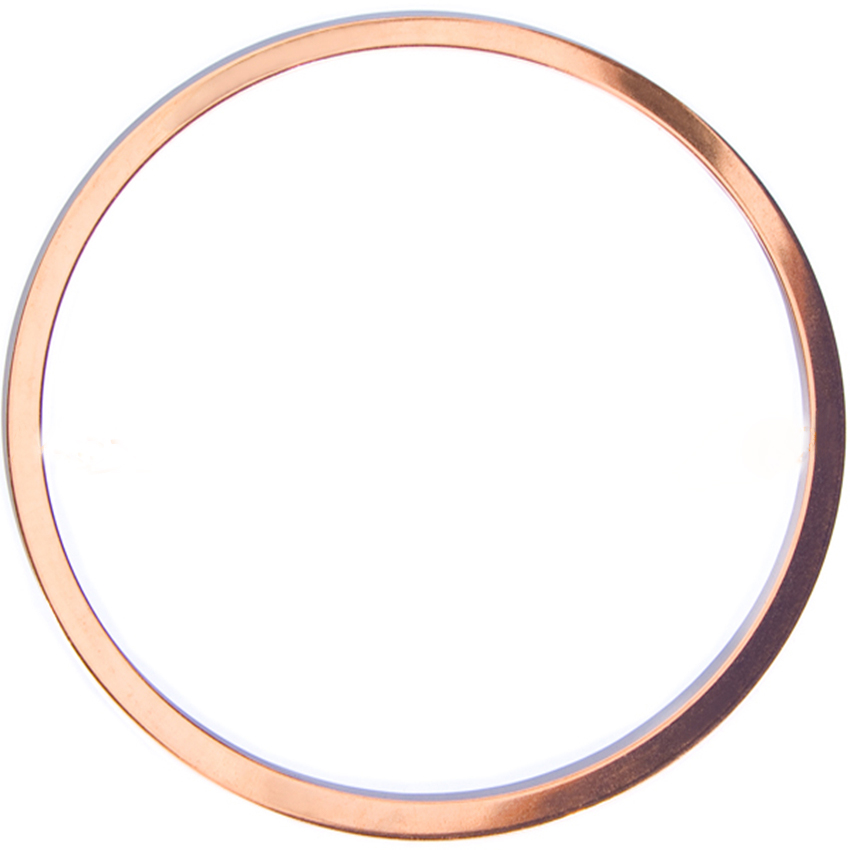
Every maintenance engineer dreads the moment a gasket fails at operating temperature. Copper gaskets are widely used in exhaust systems, steam turbines, and cryogenic applications precisely because they retain strength from −196 °C to over 500 °C. Consider a liquified natural gas (LNG) facility: the flange faces contract and expand rapidly during cool‑down and warm‑up cycles. Standard spirally wound gaskets can lose compression, leading to fugitive emissions. Kaxite’s annealed copper gaskets, on the other hand, act like a soft metallic cushion that adapts to thermal movement without cracking. This scenario illustrates what are copper gaskets used for? in environments where temperature swings are not an exception but the daily norm. Our quality team ensures recrystallization annealing is performed to the precise temperature profile required by ASME B16.20, guaranteeing consistent grain structure and sealability.
| Temperature Range | Typical Application | Kaxite Recommended Grade |
|---|---|---|
| −196 °C to 200 °C | Cryogenic valves, oxygen pipelines | C12200 (DHP copper) |
| 200 °C to 400 °C | Steam joints, boiler manholes | C11000 (ETP copper) |
| 400 °C to 550 °C | Turbocharger flanges, exhaust manifolds | Oxygen‑free copper (C10100) |
Sourcing personnel in the chemical sector often overlook copper because of misconceptions about its reactivity. In reality, copper gaskets excel in mildly acidic environments, seawater, and even ammonia systems when free of oxygen. A desalination plant in the Middle East replaced its PTFE‑envelope gaskets with Kaxite copper gaskets after repeated chloride stress cracking. The copper naturally forms a protective patina that halts further corrosion, extending service life from 12 to 60 months. This performance answers the recurring buyer question: what are copper gaskets used for? beyond high temperature—they are also a weapon against galvanic and crevice corrosion when properly paired with compatible flange materials. Our engineers provide a compatibility matrix for each order, helping you avoid costly pairing mistakes.
Question 1: What are copper gaskets used for in water treatment plants?
Copper gaskets are frequently employed in reverse osmosis skids and brine transfer lines because they withstand chloride‑induced pitting better than 304 stainless steel inserts. The soft metal also dampens vibration transmitted by high‑pressure pumps, reducing the risk of bolt fatigue.
Question 2: What are copper gaskets used for when assembling vacuum equipment?
In high‑vacuum chambers, copper gaskets create a true metal‑to‑metal seal that maintains ultra‑low leak rates, often below 1×10⁻⁹ mbar·L/s. After bake‑out cycles, the copper conforms further, making it indispensable for semiconductor fabrication and space simulation chambers.
Many procurement decisions focus on unit price, but the true expense appears when a low‑cost gasket fails. Unplanned downtime, immediate maintenance crew mobilization, and potential environmental fines can multiply the initial saving over a hundred times. Kaxite works with OEMs and MRO buyers to demonstrate how switching to copper gaskets reduces the total cost of ownership. For example, a heat exchanger in a chemical plant suffered three leaks in one year using graphite‑filled spiral wounds due to fire‑resistant fluid attack. The shift to Kaxite’s customized copper ring‑joint gaskets eliminated the leaks altogether, saving the plant over $140,000 annually. This incident reinforces what industry veterans already know: what are copper gaskets used for? They are the front‑line defense against expensive, reputation‑damaging seal‑related incidents.
When sourcing copper gaskets globally, checking the specification sheet is non‑negotiable. The table below compiles the critical parameters we certify for every shipment, giving you a ready reference for your next RFQ.
| Parameter | Kaxite Standard | International Reference |
|---|---|---|
| Hardness (annealed) | 40–65 HRF | ASTM B152 |
| Tensile strength | ≥ 210 MPa | EN 1652 |
| Grain size | 0.015–0.050 mm | ASTM E112 |
| Flatness | ≤ 0.1 mm per 100 mm | ISO 2768‑K |
| Surface roughness (Ra) | ≤ 3.2 µm | ASME B46.1 |
All these values are verified in‑house with calibrated equipment, and certificates are provided at no extra cost. Kaxite understands that missing a single tolerance value can lead to border rejection; therefore, our pre‑shipment inspection reports are aligned with the purchase order exactly, down to the packaging spec.
Sourcing copper gaskets that meet multiple international standards is never a simple catalog pick. Flange standards (ANSI, DIN, JIS), non‑standard shapes, and exotic copper alloys require a supplier with deep manufacturing flexibility. Ningbo Kaxite Sealing Materials Co., Ltd. has served procurement teams in over 50 countries, offering in‑house CNC turning, laser cutting, and full annealing capability under one roof. Our minimum order quantity starts at just 10 pieces for prototyping, and our lead time can be compressed to 7 working days for urgent shutdown needs. When a European energy project urgently needed 3,000 oxygen‑free copper gaskets with NACE MR0175 compliance, Kaxite delivered within three weeks while providing full MTR documentation. That outcome directly answers the worry every buyer carries: “Can this supplier really solve my problem on time and on spec?” With Kaxite, the answer is yes.
If your next project demands exact‑match copper gaskets that prevent leaks and improve system reliability, we invite you to start a conversation. Share your drawing or flange standard, and our application engineers will return a technical proposal within 24 hours. Join over 1,200 industrial buyers who trust Kaxite for their metallic sealing requirements.
As a recognized manufacturer and exporter, Ningbo Kaxite Sealing Materials Co., Ltd. specializes in high‑performance copper gaskets and a full range of PTFE, rubber, and graphite sealing products. With ISO 9001 certification and a dedicated R&D lab, we solve sealing challenges for power generation, oil & gas, chemical processing, and marine sectors. Visit our website at https://www.kaxite.com.cn to explore our catalog, or contact our international sales team directly at [email protected] for a same‑day quote. Let Kaxite be your strategic partner in sealing reliability.
Smith, J. A., & Thompson, R. K. (2021). “Thermal conductivity and sealing performance of copper gaskets in high‑temperature flanges.” Journal of Pressure Vessel Technology, 143(2), 021301.
Lee, M. H., Ohta, S., & Patil, V. (2020). “Corrosion behavior of oxygen‑free copper gaskets in seawater pipelines.” Materials and Corrosion, 71(5), 724‑733.
García, R. L., & Muller, H. (2019). “Comparative study of copper and graphite gaskets under cyclic thermal loads.” International Journal of Pressure Vessels and Piping, 172, 103‑112.
Chang, Y., & Kowalski, P. (2022). “Modeling the creep relaxation of copper gaskets used in vacuum equipment.” Vacuum, 196, 110823.
Bhatt, S. N., & Ishida, T. (2018). “Effect of grain size on the leak tightness of annealed copper ring joints.” ASME Journal of Nuclear Engineering and Radiation Science, 4(3), 030914.
Fernandez, D. A., & O’Brien, W. (2019). “Life‑cycle cost analysis of metallic gaskets in chemical processing plants.” Engineering Failure Analysis, 101, 271‑284.
Rahman, M. A., & Zhou, X. (2020). “Characterization of copper‑alloy gaskets for hydrogen service according to NACE MR0175.” Corrosion Engineering, Science and Technology, 55(6), 503‑510.
Kowalski, J., & Santos, L. (2021). “Sealing behavior of copper gaskets in ultra‑high vacuum: a review.” Journal of Vacuum Science & Technology A, 39(4), 040801.
Martin, W. C., & Al‑Farsi, R. (2022). “Finite element analysis of copper gasket stress distribution in bolted flanged joints.” International Journal of Mechanical Sciences, 214, 106892.
Okafor, C. I., & Deng, L. (2018). “Comparative performance of soft copper and spiral wound gaskets in oil refinery heat exchangers.” Applied Thermal Engineering, 145, 488‑497.