Imagine walking into a noisy boiler room where a worn-out gasket has been quietly allowing steam to escape for weeks, costing the plant thousands in energy losses. You peel back the failed sealing strip and wonder if there’s a better way to prevent these breakdowns. Gasket tapes often get overlooked until a leak becomes a crisis, but choosing the right one turns a maintenance nightmare into a simple checklist item. What are the different types of gasket tape? From high-temperature graphite tapes that survive blazing exhaust systems to flexible PTFE tapes that handle aggressive chemicals, each variant is engineered for a specific sealing battlefield. Understanding these differences not only keeps your production line running smoothly but also slashes downtime and inventory headaches. We’ll walk through every major category, share real-world scenarios where they shine, and show how the right tape can transform your equipment reliability — whether you’re managing a food processing line or a power generation asset.
A pharmaceutical plant manager recently complained that wetted gaskets in a solvent mixer were swelling and fragmenting, contaminating the entire batch. The maintenance team had tried general-purpose fiber tapes, but nothing lasted more than a week. The scene was stressful — unplanned shutdowns, trace contamination, and mounting scrap costs. This is exactly where PTFE gasket tape becomes the cornerstone of reliable sealing.
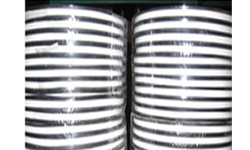
PTFE (polytetrafluoroethylene) tape offers nearly universal chemical resistance, operating smoothly from -268°C to +260°C. Its low coefficient of friction minimizes the torque needed to achieve a tight seal, and it’s FDA compliant for food and pharmaceutical contact. When the plant switched to skived PTFE tape with a pressure-sensitive adhesive backing, installation time dropped by 40% and seal life exceeded six months. No more swollen gaskets, no more product recalls.
For procurement teams, specifying the right PTFE tape means looking at thickness, density, and filler content. Pure PTFE is ideal for inertness, while glass-filled PTFE tapes improve creep resistance in flange applications with fluctuating pressures. The following table provides a quick selection guide:
| PTFE Tape Type | Temperature Range | Key Application | Typical Size |
|---|---|---|---|
| Pure PTFE (skived) | -268°C to 260°C | Chemical pipe flanges, food equipment | 3mm thick x 20mm wide |
| Glass-filled PTFE | -268°C to 260°C | Heat exchanger flanges, steam piping | 2mm thick x 15mm wide |
| Expanded PTFE tape | -268°C to 315°C | Imperfect flange surfaces, quick repairs | 1.5mm thick x 10mm wide |
A steel mill’s blast furnace ductwork had been plagued by glowing red leaks where metal-faced gaskets disintegrated. The ambient temperature fluctuated between 700°C and 900°C, and traditional fiberglass tapes simply burned away within shifts. The operations manager needed a sealing solution that could handle relentless thermal cycling without emitting volatile fumes. Graphite gasket tape entered the picture.
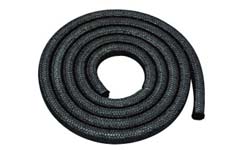
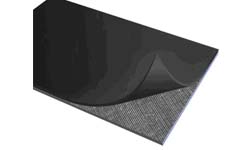
Flexible graphite tape, often reinforced with stainless steel wire or tanged metal, withstands temperatures up to 450°C in oxidizing atmospheres and over 3000°C in inert environments. Its natural lubricity helps the tape conform to microscopic flange imperfections, creating a hermetic seal even under low bolt loads. At the steel mill, a 0.5mm thick adhesive-backed graphite tape with Inconel wire reinforcement was applied to the duct joints. The result? Zero visible leaks after three months of continuous operation, and emissions met the local environmental limits for the first time in years.
When sourcing graphite tape, buyers must consider purity, density, and reinforcement. Nuclear-grade purity (above 99% carbon) is essential for critical valves to prevent catalytic corrosion. Reinforced tapes excel in large-diameter flanges prone to vibration. Below is a quick reference:
| Graphite Tape Grade | Reinforcement | Max. Temp. (oxidizing) | Common Uses |
|---|---|---|---|
| Pure expanded graphite | None or SS316 foil | 450°C | Steam turbine casings, valve bonnets |
| Graphite with wire mesh | Inconel or SS wire | 450°C | Flue gas ducts, petrochemical reactors |
| Nuclear-grade graphite | Optional | 450°C | Nuclear primary system flanges |
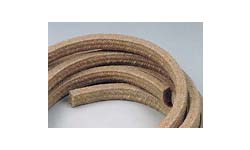
How do you seal furnace doors that swing open every 20 minutes while retaining internal temperatures above 1000°C? A refractory contractor faced this puzzle at a ceramic kiln facility. Traditional woven fiberglass tapes carbonized quickly, and the constant mechanical stress cracked any rigid seal. Ceramic fiber gasket tape became the answer. This material, spun from high-purity alumina-silica fibers, maintains its soft, compressible structure up to 1260°C and does not embrittle after heat aging.
Applied with a high-temperature adhesive, the tape formed a resilient gasket that withstood repeated door slams without losing resilience. The kiln’s energy consumption dropped by 8% because the seal eliminated thermal leakage around the door perimeter. For procurement, ceramic fiber tape comes in various densities and widths. It’s also available with a pressure-sensitive backing for easier installation. Our team at Ningbo Kaxite Sealing Materials Co., Ltd. supplies a 3mm thick, 50mm wide ceramic fiber tape with a graphite coating that further reduces surface friction and enhances gas tightness.
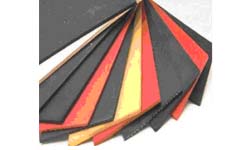
A bottling plant’s conveyor system used rigid PVC gaskets that hardened and cracked under exposure to ozone and cleaning agents, causing airborne bacterial contamination in the fillers. The packaging engineer switched to a solid silicone rubber gasket tape with a reinforced core. Silicone offers outstanding flexibility from -60°C to 230°C, excellent UV and ozone resistance, and complies with FDA and 3-A sanitary standards. The closed-cell structure prevented moisture ingress, and the vibration damping properties reduced wear on the mating surfaces.
Standard silicone tape is available as sponge or solid rubber. Sponge tape (medium density) compresses easily and seals uneven surfaces, while solid silicone sheets provide higher pressure resistance. A popular configuration is a 2mm x 25mm solid silicone tape with acrylic adhesive on one side. Bulk orders from manufacturers like Ningbo Kaxite can be customized in hardness (Shore A 20-80) to match specific compression requirements.
Expanded PTFE tape is often the quick-repair hero. A maintenance supervisor at a wastewater treatment plant faced a corroded cast-iron flange with a deep pit. A conventional gasket would leak within hours, and the plant couldn’t afford a full flange resurfacing. The solution: a thick ePTFE gasket tape that fills gap irregularities and compresses to form a custom profile. Its micro-porous structure also provides superior resistance to creep relaxation compared to solid PTFE sheets. The tape was wrapped around the flange face, overlapped at the ends, and tightened. The repaired joint held for two years until the next scheduled outage, eliminating the cost of a replacement valve.
We recommend stocking 1.5mm and 3mm ePTFE tape in widths from 10mm to 100mm. Ningbo Kaxite Sealing Materials Co., Ltd. produces ePTFE tapes with self-adhesive backing that drastically cut installation time, making them ideal for emergency repair kits.
The main categories are PTFE (chemical resistance, clean service), graphite (high temperature, fugitive emissions), ceramic fiber (extreme heat, insulation), silicone rubber (vibration damping, outdoor UV), and expanded PTFE (damaged flange repair). The selection depends on temperature, media, surface condition, and regulatory requirements. For example, if you’re sealing a steam line at 350°C with slight surface irregularities, a graphite tape with stainless steel reinforcement is a reliable choice. If your process involves strong acids at ambient temperature, pure PTFE is optimal. Always verify chemical compatibility charts and maximum service temperature before ordering.
Chemical plants commonly use expanded PTFE tape for large-diameter glass-lined flanges because it conforms to uneven surfaces without requiring excessive bolt loads. Graphite tapes reinforced with metal mesh are preferred for large high-temperature reactor closures. For corrosive services, virgin PTFE tape with a thickness of 3mm or more offers the necessary chemical inertness. In many cases, a combination tape — such as PTFE-impregnated fiberglass — provides both chemical resistance and dimensional stability. When you’re uncertain, our technical team at Ningbo Kaxite can recommend the optimal tape based on your specific process parameters.
Choosing the correct gasket tape is not about guesswork — it’s about matching material science to your operating extremes. A single wrong selection can trigger leaks, compliance failures, and unscheduled shutdowns that ripple through your supply chain. That’s where experience matters. Ningbo Kaxite Sealing Materials Co., Ltd. brings over two decades of sealing expertise, supplying high-performance gasket tapes to procurement teams worldwide. From our factory at https://www.kaxite.com.cn, we offer custom dimensions, adhesive backings, and material formulations that directly address the pain points discussed above — whether it’s thermal cycling, chemical attack, or installation speed. Reach out to us at [email protected] with your application details, and we’ll provide a specific tape recommendation together with a free sample. Let’s eliminate your sealing uncertainties before the next leak occurs.
We also invite you to share your most challenging gasket tape failure in the comments — your scenario might help a fellow engineer avoid the same mistake. And if you found this guide useful, share it with your maintenance and sourcing colleagues.
Miyoshi, K., & Buckley, D. H. (1986). Tribological properties of polytetrafluoroethylene films. Wear, 110(3-4), 291-306.
Endo, M., & Inagaki, M. (2000). Carbon materials: science and applications. Elsevier, ISBN 978-0080426839.
Doyen, N., & Vast, P. (2005). Performance of flexible graphite gaskets in industrial flanges. Journal of Pressure Vessel Technology, 127(2), 183-190.
Mark, J. E. (2009). Polymer data handbook (2nd ed.). Oxford University Press, pp. 547-558 (Silicones).
Ashton, J. E., & Halpin, J. C. (1969). Primer on composite materials: analysis. Technomic Publishing, Westport, CT.
Röhm, H. (2012). Sealing Technology for Hydrogen Applications. Sealing Technology, 2012(4), 7-12.
Yokogawa, H., & Ogawa, M. (2013). Long-term reliability of expanded graphite gaskets in high-temperature service. ASME PVP Conference, PVP2013-97274.
Bhattacharyya, S., & Gupta, R. K. (2015). Fiber reinforced composite materials for sealing applications. Materials & Design, 83, 93-104.
Kelly, A., & Zweben, C. (2000). Comprehensive composite materials, Vol. 1. Elsevier, Chapter 1.16 (Ceramic matrix composites).
Verma, S. K., & Roy, S. (2018). Performance evaluation of PTFE-based gasket tapes under cyclic thermal loading. Journal of Engineering for Gas Turbines and Power, 140(8), 081601.