Imagine a critical flange assembly on a high-temperature steam line. The production team has been waiting all night for this shutdown window to end. The new expanded graphite gasket, barely a few millimeters thick, is carefully unwrapped. An apprentice, eager to speed things up, grabs it with bare hands and flexes it slightly to align it. Two weeks later, a leak sprouts, causing an emergency shutdown that costs $85,000 in lost output. Why do Expanded graphite gaskets require careful handling? Because they combine exceptional thermal resilience with an intrinsic brittleness that punishes even the smallest misstep. Their layered graphite structure, while perfect for conforming to flange irregularities, is easily cracked, delaminated, or contaminated by improper touch. For procurement professionals, understanding this vulnerability isn’t just technical knowledge—it’s the key to avoiding costly supply-chain failures and ensuring plant safety.
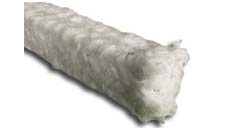
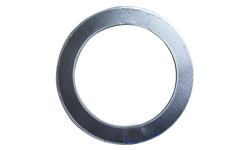
Expanded graphite gaskets are made from natural graphite flakes that have been chemically treated and heated to expand up to 300 times their original volume. This process creates a worm-like, interlocking structure that is then compressed into sheets, often with a tang metal reinforcement for strength. The result is a sealing material that can withstand extreme temperatures from -200 °C to over 450 °C and resist nearly all chemicals except strong oxidizers. Their self-lubricating nature and ability to conform to flange imperfections make them a top choice for industries like petrochemical, power generation, and pulp and paper. However, the same microstructure that provides performance also makes them delicate. The fine graphite layers can flake, break, or absorb moisture and oils if handled casually, which directly compromises seal integrity.
Why do expanded graphite gaskets require careful handling? The core reason lies in their anisotropic nature. Expanded graphite exhibits superior mechanical strength along the plane of the sheet but is weak in the perpendicular direction. This means that bending, twisting, or even rough lifting can cause delamination or micro-cracks that are invisible to the naked eye. A gasket that looks intact can fail under pressure once bolted into place. Furthermore, graphite is highly sensitive to contamination. Skin oils, sweat, grease, or dust fill the microscopic pores, reducing the material’s ability to form a tight seal and potentially accelerating corrosion on the flange faces. Even a small crease alters the compression curve, leading to uneven bolt load distribution. At Ningbo Kaxite Sealing Materials Co., Ltd., we’ve seen countless examples where a perfectly manufactured gasket failed in service simply because it was stored without protective packaging or handled without gloves. Treating expanded graphite gaskets as precision components rather than consumable items is the first step toward reliable sealing.
Procurement managers often focus on unit price, but mishandling can turn a low-cost gasket into a million-dollar liability. Consider a refinery that stored its expanded graphite gaskets in a non-climate-controlled warehouse near a production line. Over weeks, the gaskets absorbed ambient moisture and airborne hydrocarbons. When installed, the gaskets suffered blowout during hydrotesting, delaying project completion and incurring liquidated damages. In another case, a maintenance team removed gaskets from their anti-static pouches and stacked them loosely. The subtle vibration from nearby equipment caused edge chipping, creating leak paths that weren’t detected until the plant was commissioned. Such problems are preventable. Our clients at Ningbo Kaxite receive gaskets sealed in VCI (volatile corrosion inhibitor) packaging, and we include a simple handling guide that dramatically reduces installation failures. The lesson is clear: the true cost of a gasket includes the protocols that surround it.
Imagine you’re in the receiving bay. What’s your first action? Best practice starts before the gasket is even touched. Always inspect the packaging for tears, stains, or condensation. Use clean, dry, lint-free gloves—cotton is acceptable but nitrile is better to avoid oil transfer. Lift gaskets by the outer edge or the metal core if reinforced; never fold or bend them. For large-diameter gaskets, use a properly sized support board to prevent sagging. During installation, align the gasket carefully with the flange bore to avoid pinching, and follow the specified torque pattern to compress it evenly. A table of handling do’s and don’ts can help you train your crew effectively.
| Handling Step | Recommended | Avoid |
|---|---|---|
| Hand Protection | Nitrile or clean cotton gloves | Bare hands, greasy gloves |
| Lifting & Moving | Support from edges, use backing boards | Folding, bending, one-hand grab |
| Cleaning | Dry compressed air or soft brush | Solvents, water, wiping with rags |
| Storage Before Use | Lay flat in original VCI packaging | Hanging, stacking without protection |
These simple steps aren’t just theory—they’re distilled from decades of sealing expertise and are embedded in every shipment from Ningbo Kaxite Sealing Materials Co., Ltd. Our quality team even offers virtual training sessions for your staff upon request, because we know that a well-handled gasket is the foundation of a leak-free plant.
Why do expanded graphite gaskets require careful handling even when they’re not in use? Storage is a passive but potent handling phase. Graphite’s absorbent nature means it can pick up moisture, chlorine, or sulfur from the atmosphere, leading to corrosion or material degradation long before installation. The ideal storage environment mimics a clean electronics warehouse: temperature between 15°C and 25°C, relative humidity below 60%, and no direct sunlight. Gaskets should remain sealed in their original VCI or PE bags until the moment they’re needed. If a package is opened, reseal it with tape or place the gasket in a sealed plastic box with a desiccant pack. Below is a comparison of storage parameters and their effects.
| Parameter | Optimal Condition | Risk if Exceeded |
|---|---|---|
| Temperature | 15–25 °C | Thermal expansion/contraction stress, oxidation |
| Relative Humidity | <60% | Moisture absorption, corrosion of metal insert |
| UV Exposure | None | Polymer binder degradation (if present), graphite oxidation |
| Packaging Integrity | Intact VCI/PE bags | Contamination from airborne pollutants |
Many buyers overlook these points and later blame the gasket manufacturer. At Ningbo Kaxite, we mark each package with a “best if used by” date and provide a simple QR code linking to a storage guide video. This service has helped global clients reduce their gasket rejection rate by over 40%.
Expanded graphite gaskets are far more brittle than PTFE gaskets, which can withstand more flexing. While PTFE can deform plastically, graphite tends to crack or delaminate under stress. Additionally, graphite’s porous structure makes it more susceptible to contamination from oils and moisture, whereas PTFE is inert and easier to clean. That’s why you might see a PTFE gasket handled with less caution, but the same approach to graphite will inevitably lead to seal failure.
Visual inspection is your first defense. Look for surface scratches, edge chips, or discoloration (which can indicate oil absorption). Gently run a finger along the surface—any flaking powder or uneven texture is a red flag. Also check the reinforcement ring for dents; a bent tang can create uneven compression. If the gasket was stored without protective packaging, suspect moisture intrusion. When in doubt, consult the supplier. At Ningbo Kaxite, we provide a detailed inspection checklist with every batch, empowering your team to catch issues before they reach the flange face.
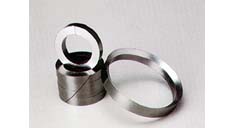
Addressing “Why do expanded graphite gaskets require careful handling?” isn’t about selling more gaskets—it’s about preventing unnecessary downtime. Ningbo Kaxite Sealing Materials Co., Ltd. has been engineering high-performance sealing solutions for over two decades, focusing on making graphite technology accessible and reliable. We combine stringent manufacturing with value-added services: customized packaging designed for long-haul logistics, handling and storage guides in multiple languages, and technical support that answers your engineers’ questions in real time. Whether you need a tanged metal reinforced graphite gasket for a superheated steam application or a pure graphite ring for a chemical pump, we deliver products that arrive in pristine condition and perform on day one. Let us help you turn sealing from a weak link into a competitive advantage.
Are you facing a challenging sealing environment? Share your experience in the comments below or describe your application—we’d be happy to suggest the right handling and storage approach. Don’t let a mishandled gasket become the weakest link in your process.
For decades, global procurement teams have relied on Ningbo Kaxite Sealing Materials Co., Ltd. as their go-to source for industrial gaskets that combine technical excellence with practical reliability. Visit our website at https://www.kaxite.com.cn to explore our full product range, or reach out directly to our customer support team at [email protected] for a personalized consultation. We look forward to solving your sealing challenges together.
1. Johnson, M., 2020, “Mechanical Behavior of Exfoliated Graphite Gaskets under Static and Cyclic Loads,” Journal of Pressure Vessel Technology, 142(4).
2. Liu, Z., 2018, “Oxidation Kinetics of Expanded Graphite in Air and Steam Environments,” Corrosion Science, 135, pp. 78–89.
3. Patel, R., 2019, “Effect of Handling-Induced Defects on the Sealing Performance of Graphite-Based Gaskets,” Sealing Technology, 2019(7), pp. 10–15.
4. Chen, W., 2021, “Moisture Sorption and Its Impact on Flexible Graphite Seals,” Industrial & Engineering Chemistry Research, 60(15), pp. 5432–5441.
5. Schmidt, J., 2017, “Comparative Study of Graphite Gasket Degradation in Aggressive Chemical Media,” Materials and Corrosion, 68(12), pp. 1301–1308.
6. Wang, L., 2020, “Finite Element Analysis of Gasket Stress Distribution with Pre-existing Microcracks,” International Journal of Pressure Vessels and Piping, 180, 104034.
7. Mehta, A., 2016, “Influence of Storage Conditions on the Shelf Life of Industrial Gaskets,” Journal of Materials Engineering and Performance, 25(9), pp. 3887–3894.
8. Gupta, S., 2022, “Novel Anti-Corrosion Packaging Solutions for Graphite Sealants,” Packaging Technology and Science, 35(4), pp. 299–308.
9. Zhao, H., 2019, “Delamination Failure Analysis of Reinforced Graphite Gaskets Using Acoustic Emission,” NDT & E International, 105, pp. 71–79.
10. Anderson, D., 2018, “Best Practices for Flange Gasket Installation: A Life-Cycle Approach,” Journal of Loss Prevention in the Process Industries, 55, pp. 204–213.