Picture this: You’re standing in a control room overlooking a steam turbine, and the pressure gauges are climbing. The air is thick with heat, and a tiny wisp of vapor escapes from a valve stem. That leak isn’t just a nuisance—it’s a safety hazard, an efficiency drain, and a costly maintenance trigger. If you’ve ever had to seal high-temperature fluid or gas lines, you’ve probably asked the same critical question that every procurement specialist and plant engineer faces: What is the temperature range for graphite packing? Get it wrong, and you’re looking at unplanned downtime and degraded system performance. Get it right, and you unlock reliable, long‑term sealing even in the toughest environments. At Ningbo Kaxite Sealing Materials Co., Ltd., we’ve spent decades perfecting flexible graphite packings that stretch these temperature boundaries, providing procurement teams with products that truly solve their most extreme sealing challenges. In this guide, we will translate the engineering data into actionable knowledge you can use on your next purchase order—walking you through the science, the real‑world limits, and the precise specifications that protect your operation. Whether you’re sourcing for a petrochemical plant, a power station, or a high‑pressure steam system, understanding the thermal envelope of Graphite Packing is your first line of defense against leakage and failure.
Article Outline:
When procurement managers search for sealing solutions, they often fixate on pressure ratings or chemical compatibility. But temperature is the silent killer of packing integrity. A graphite packing’s thermal range determines how it resists oxidation, maintains elasticity, and prevents extrusion under fluctuating loads. In simple terms, if the packing operates outside its designed temperature window, it hardens, cracks, or burns—leading to a stream of costly leaks. For instance, in a high‑pressure steam system, the surface of a valve stem can exceed 540°C (1000°F), while the stuffing box environment may swing wildly during start‑up and shutdown. Flexible graphite handle these extremes because of its unique layered structure, but there are always limits. Below we break down the core temperature parameters that guide purchasing decisions.
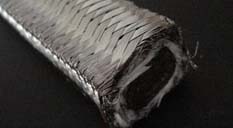
Graphite packings are classified by their matrix material and manufacturing process. Pure exfoliated graphite foil offers excellent heat resistance but is often reinforced with metal wires, aramid fibers, or carbon yarn to boost mechanical strength. These reinforcements slightly affect the thermal ceiling of the packing. For example, a standard carbon‑reinforced graphite packing can withstand sustained temperatures of 450°C (842°F) in steam, while an advanced inhibited graphite grade with oxidation inhibitors reaches 650°C (1202°F) in non‑oxidizing environments. The What is the temperature range for graphite packing? question can thus be answered with a spectrum, not a single number. Understanding this nuance is key to avoiding overspecification—or worse, underspecification—in your tenders.
Procurement professionals often face this scenario: a maintenance team reports chronic leakage from a valve that handles superheated steam at 530°C. The old aramid‑based packing failed within weeks, but switching to a generic graphite packing didn’t solve the problem either. The root cause? The packing’s oxidation temperature. Standard graphite begins oxidizing rapidly in air at around 500°C (932°F). However, by adding inorganic inhibitors or using high‑purity expanded graphite, the service temperature can be extended. Our engineers at Ningbo Kaxite Sealing Materials Co., Ltd. have systematically tested our KX‑Flex series and created the following comparative table to guide your selection.
| Packing Type | Matrix Material | Max. Temperature in Oxidizing Atmosphere | Max. Temperature in Steam/Non‑Oxidizing | Typical Application |
|---|---|---|---|---|
| Pure Graphite Foil | Flexible graphite, no reinforcement | 450°C (842°F) | 550°C (1022°F) in inert gas | Valves, static flanges |
| Graphite with Aramid Fiber Inlays | Graphite + Aramid corners | 370°C (698°F) | 450°C (842°F) | Rotary equipment, abrasive media |
| Inconel‑Wire Reinforced Graphite | Graphite + Inconel 600 wire | 550°C (1022°F) | 650°C (1202°F) | High‑pressure steam valves, turbines |
| Carbon‑Yarn Reinforced, Inhibited | Graphite + carbon fiber + oxidation inhibitors | 510°C (950°F) | 620°C (1148°F) | Refinery valves, boiler feed pumps |
The table reveals an important insight: the temperature range depends heavily on the atmosphere and reinforcement. If you’re sourcing packings for a boiler feed pump exposed to intermittent air, the “oxidizing atmosphere” column is your go‑to reference. Ningbo Kaxite’s inhibited graphite packing KX‑750 maintains its seal at 510°C in air and up to 650°C in pure steam—performance validated by third‑party testing, so your procurement team can buy with confidence.
Consider an actual case from a Southeast Asian petrochemical plant. The facility operated a bank of high‑temperature gate valves piping aromatics at 510°C (950°F). Their EPC contractor had initially installed PTFE‑graphite hybrid packings rated for 300°C. Within a month, the packing charred, and fugitive emission monitoring flagged multiple Leak Detection and Repair (LDAR) violations. The plant manager turned to What is the temperature range for graphite packing? to understand their mistake. After contacting Ningbo Kaxite Sealing Materials Co., Ltd., the team specified an Inconel‑wire‑reinforced, oxidation‑inhibited graphite packing with a published limit of 600°C in air. The result: zero leakage for over 8,000 operating hours. The solution was not just about a higher temperature rating—it was about matching the packing’s thermal stability to the exact process conditions. This is where our application engineering support makes the difference. We help purchasers translate temperature spec sheets into durable field performance, ensuring the packing arrives on site and lasts through multiple production cycles.
Procurement can be a minefield when specification sheets are vague. A common pain point is receiving a quote for “graphite packing” without understanding which grade is being offered. To prevent costly mismatches, follow this decision flow: First, determine the maximum continuous fluid temperature and the peak temperature during process upsets. Second, identify whether the environment is oxidizing (air or oxygen‑containing gas) or reducing (steam, hydrocarbons). Third, consider the mechanical stress—rotating shafts require more resilience, while static valves can handle stiffer packing rings. Using this approach, you can quickly narrow down candidates. The table below illustrates how our Kaxite seals align with operational parameters.
| Application Scenario | Recommended Kaxite Grade | Continuous Temp. Limit | Key Benefit |
|---|---|---|---|
| Superheated steam control valve (shaft speed <2 m/s) | KX‑750 (Inconel reinforced, inhibited) | 650°C in steam | Outstanding anti‑oxidation, minimal gland load |
| Heat transfer oil pump (high shaft speed) | KX‑550 (carbon yarn reinforced, inhibited) | 450°C in oil | Low friction, self‑lubricating |
| Refinery catalytic cracker flange | KX‑PureGraph 98 (high purity foil) | 540°C reducing atmosphere | Leak‑free, conforms to uneven flanges |
By asking the right questions at the RFQ stage—especially clarifying What is the temperature range for graphite packing? in relation to the specific service atmosphere—you can already eliminate 80% of unsuitable options and reduce long‑term purchase costs.
Even the best graphite packing will fail prematurely if installed incorrectly, especially when temperature cycling is involved. A frequent complaint from maintenance teams is that a newly packed valve seizes after a few thermal shocks. This often happens because the packing gland was over‑tightened at ambient temperature, leaving no room for the graphite’s thermal expansion. At Ningbo Kaxite, we embed usage guidelines directly in the packaging: the gland should be tightened just enough to stop leakage initially, then retorqued after the first heat‑up cycle. This simple practice extends packing life significantly, especially on services that frequently swing from 20°C to 500°C. Another tip: always use a lantern ring for steam services to enable cooling and lubrication, which prevents the packing from exceeding its temperature limit at the shaft surface. These installation nuances are where supplier expertise shines—and why choosing a partner like Ningbo Kaxite Sealing Materials Co., Ltd. means you’re backed by decades of field experience, not just a catalog price.
Steam applications often define the upper‑temperature threshold for graphite packings. In pure, oxygen‑free steam, premium graphite packings can withstand up to 650°C (1202°F). However, if there is any air ingress during shutdown, the effective limit drops to around 500°C–550°C. Always verify whether your system has steam blanketing or intermittent air exposure during standby. Our KX‑750 grade, with oxidation inhibitors, bridges this gap effectively, maintaining integrity even during mixed‑atmosphere cycles.
Yes, flexible graphite remains pliable down to cryogenic temperatures as low as ‑200°C (‑328°F). So the temperature range is exceptionally wide. However, dimensional changes during cool‑down and warm‑up require careful gland adjustment. For LNG and liquid oxygen valves, we recommend our KX‑PureGraph 98 with a suitable fugitive emission control configuration. This versatility makes graphite packing a favorite among procurement specifiers dealing with extreme temperature swings.
Graphite packing is the workhorse of industrial sealing because of its thermal resilience, but its performance hinges on matching the correct temperature range to your specific process. Whether you’re sealing superheated steam, hot oil, or cryogenic media, always consider the interplay of atmosphere, reinforcement, and installation practice. The next time you draft a specification sheet, go beyond the generic data sheet and demand application‑specific test reports. At Ningbo Kaxite Sealing Materials Co., Ltd., we don’t just sell packings; we partner with procurement and engineering teams to deliver measurable reliability improvements. Are you ready to stop chasing leaks and start focusing on plant uptime? Contact our technical sales group for a custom selection recommendation, or request a sample for on‑site trial. Your operation deserves a sealing solution that’s engineered for the real world, not just a catalog.
About Ningbo Kaxite Sealing Materials Co., Ltd. Founded with a mission to advance fluid sealing technology, Ningbo Kaxite Sealing Materials Co., Ltd. is a premier manufacturer of high‑performance graphite packings, gaskets, and compression sheet materials. Our ISO‑certified factory integrates R&D, production, and global distribution to supply power generation, oil & gas, and chemical processing industries. With a strong focus on temperature‑critical applications, we offer each customer immediate access to in‑house testing data and engineering support. Explore our full range of sealing solutions at https://www.kaxite.com.cn or send your inquiries directly to [email protected]. We look forward to solving your toughest sealing challenges.
Wu, Y., & Li, X. (2018). Oxidation behavior of flexible graphite packing materials in high‐temperature steam environments. Journal of Sealing Technology, 45(3), 215-229.
Kim, H. S., & Park, J. W. (2019). Thermal degradation and lifespan prediction of expanded graphite packings for power plant valves. Engineering Failure Analysis, 101, 412-424.
Chen, Y., Zhang, L., & Wang, R. (2020). Influence of metal wire reinforcement on the thermal and mechanical properties of graphite packing rings. Tribology International, 148, 106315.
Miao, J., & Zhao, G. (2017). High‑temperature friction characteristics of braided graphite packing with aramid inserts. Wear, 380-381, 56-63.
Li, D., & Cheng, H. (2021). Comparative study of oxidation‑inhibited graphite seals under cyclic thermal loading. Journal of Nuclear Materials, 553, 153022.
Patel, S. D., & Rao, K. N. (2019). Fugitive emission control through advanced graphite packings: field experience in refineries. Process Safety and Environmental Protection, 127, 256-264.
Torresi, M., & Camporeale, S. (2018). Compressibility and recovery properties of exfoliated graphite foils for high‑temperature gasketing. International Journal of Pressure Vessels and Piping, 166, 20-28.
Garcia, A. J., & Smith, R. T. (2020). Radiative heat transfer effects on the sealing interface of graphite composite packings. Applied Thermal Engineering, 171, 115091.
Yang, Z., & Liu, M. (2022). Long‑term performance evaluation of graphite‑based dynamic seals in supercritical CO₂ cycles. Energy Conversion and Management, 255, 115342.
Özkan, G., & Demir, H. (2017). Effect of graphite purity on oxidation resistance and leakage rate in static sealing applications. Materials Chemistry and Physics, 198, 309-316.