Language
In the realm of industrial sealing, Asbestos Gaskets hold a significant, though complex, historical position. For decades, they were the benchmark for sealing applications demanding exceptional resistance to extreme temperatures, pressure, and corrosive media. While modern alternatives have emerged due to health and safety regulations, understanding the specifications and legacy applications of asbestos gaskets remains crucial for industries managing older equipment or specific, non-regulated processes. At Kaxite Sealing, we combine deep historical knowledge of traditional materials with cutting-edge sealing technology, providing expert guidance and superior products for all your industrial needs.
Traditional asbestos gaskets are not made from pure asbestos alone. They are composite materials where asbestos fibers provide the primary structural and thermal resistance, bonded with various fillers and elastomers to achieve specific properties. The typical composition includes:
The performance of an asbestos gasket is defined by a set of critical parameters. Below is a detailed breakdown of these specifications, which are essential for proper material selection and application engineering.
| Parameter | Typical Range / Value | Significance & Application Impact |
|---|---|---|
| Temperature Resistance | -40°C to +500°C (-40°F to +932°F) | Excels in high-heat environments like boilers, exhaust systems, and high-temperature piping. Short-term peaks can be higher. |
| Pressure Rating | Up to 1500 psi (103 bar) | Suitable for medium to high-pressure steam, water, and chemical lines. Specific ratings depend on thickness and construction. |
| pH Range (Chemical Resistance) | 2 - 12 (Moderate) | Resists many alkalis, hot water, steam, and moderate acids. Not recommended for strong oxidizing acids or harsh solvents. |
| Tensile Strength | 10 - 20 MPa (1450 - 2900 psi) | Indicates the material's resistance to pulling forces, crucial for handling internal pressure and installation stress. |
| Compression Set | 25% - 40% | Measures the material's ability to recover after compression. A lower percentage indicates better long-term sealing retention. |
| Density | 1.8 - 2.2 g/cm³ | Affects the gasket's weight, sealability, and mechanical properties. Higher density often correlates with better temperature resistance. |
| Thickness Range | 0.5mm (1/64") to 6.0mm (1/4") | Available in sheets, strips, or custom-cut shapes to fit various flange designs and gap-filling requirements. |
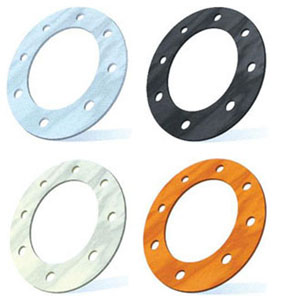
Kaxite Sealing provides a range of asbestos-based gasket materials, each formulated for specific service conditions. It is critical to consult with our engineering team to ensure compliance with all local safety regulations before selection.
Q: Are asbestos gaskets still legal to use?
A: The legality varies significantly by country and region. Many countries have banned or severely restricted the use of asbestos due to proven health risks associated with inhalation of asbestos fibers. However, some jurisdictions may permit their use in specific, contained industrial applications or for maintaining legacy equipment. It is the absolute responsibility of the end-user to know and comply with all applicable regulations (like OSHA in the USA, REACH in the EU). Kaxite Sealing strongly advocates for and supplies safer, modern alternatives wherever possible.
Q: What are the primary dangers of handling asbestos gaskets?
A: The main danger occurs when the gasket material becomes friable—dry, brittle, and easily crumbled—releasing microscopic asbestos fibers into the air. If inhaled, these fibers can lodge in the lungs and cause serious diseases such as asbestosis, lung cancer, and mesothelioma, often decades after exposure. Intact, undamaged gaskets in service pose a lower risk unless disturbed.
Q: How can I safely remove an old asbestos gasket?
A: Safe removal is paramount and should only be performed by trained and certified asbestos abatement professionals. The area must be isolated. Technicians must wear appropriate personal protective equipment (PPE) including respirators. The gasket should be thoroughly wetted with amended water to suppress dust, carefully removed intact if possible, and placed in clearly labeled, sealed leak-tight containers for disposal as hazardous waste according to local laws. Never dry scrape, sand, or use power tools on asbestos gaskets.
Q: What are the best modern alternatives to asbestos gaskets?
A: Excellent non-asbestos sealing materials have been developed. Kaxite Sealing offers a full range, including Aramid Fiber (e.g., Kevlar™), Glass Fiber, Graphite, and PTFE-based gaskets. These materials often match or exceed the thermal and mechanical performance of asbestos without the associated health hazards. For example, flexible graphite gaskets can withstand temperatures beyond 450°C and provide superior chemical resistance.
Q: How do I identify if an existing gasket contains asbestos?
A: Visual identification is unreliable and dangerous, as many non-asbestos materials look similar. The only definitive method is laboratory analysis by a certified facility using Polarized Light Microscopy (PLM) or Transmission Electron Microscopy (TEM). If in doubt, assume it contains asbestos and handle it with extreme caution until proven otherwise.
Q: Can I cut or shape asbestos gasket sheets myself?
A: Cutting or machining raw asbestos sheet material is highly hazardous and is not recommended. If absolutely necessary and compliant with regulations, it must be done in a controlled environment with dust extraction systems, wet methods, and full PPE. The preferred and safer practice is to order pre-cut gaskets from a supplier like Kaxite Sealing, who can manufacture them to your exact specifications in a controlled industrial setting.
Q: Why would someone consider using an asbestos gasket today?
A> The use today is extremely limited and generally not recommended. In rare cases, it might be considered for specific legacy equipment where the original design specifications called for asbestos and a direct replacement with an alternative material has not been certified, or for specialized high-temperature applications in controlled, regulated industries where alternatives have been evaluated and deemed unsuitable. Our engineers at Kaxite Sealing can help navigate these complex scenarios and recommend compliant, high-performance solutions.
At Kaxite Sealing, we believe in providing not just products, but comprehensive solutions backed by expertise. Our team possesses extensive knowledge of historical sealing materials like asbestos gaskets, enabling us to offer accurate technical support for assessment and replacement projects. More importantly, we are at the forefront of advanced sealing technology, offering a vast portfolio of high-performance, non-asbestos gasket materials that ensure safety, reliability, and regulatory compliance. Whether you are maintaining legacy systems or designing new installations, contact Kaxite Sealing for expert guidance and superior sealing products tailored to your specific operational challenges.