Language
As a foundational component in countless industrial, commercial, and residential applications, the humble Rubber sheet is far more than just a simple slab of material. It is a precisely engineered product designed to seal, protect, insulate, and cushion. At Kaxite Sealing, with decades of expertise in polymer science and manufacturing, we understand that the right rubber sheet can be the difference between a project's success and failure. This guide delves into the technical specifications, material types, and crucial selection criteria for rubber sheets, positioning Kaxite Sealing as your trusted partner for high-performance sealing solutions.
Rubber sheets are manufactured from various elastomers, each offering a unique set of properties tailored to specific environmental and operational challenges. Selecting the correct material is the first and most critical step.
Our sheets are manufactured to stringent quality controls, ensuring consistency, durability, and performance. Below are the key parameters that define our product range.
| Parameter | Standard Range / Options | Description & Importance |
|---|---|---|
| Material Type | NBR, CR, EPDM, Silicone, NR, FKM, SBR, IIR, AFLAS® | Determines chemical, thermal, and environmental resistance. Kaxite Sealing offers the full spectrum. |
| Standard Thickness | 0.5mm (0.020") to 50mm (2.0") | Available in imperial and metric sizes. Custom thicknesses can be manufactured to order. |
| Standard Sheet Size | 1m x 1m, 1.2m x 1.2m, 1.5m x 1.5m, Rolls up to 25m length | Flexible sizing to minimize waste and fit project requirements. |
| Hardness (Shore A) | 30° to 90° Shore A | Measures material softness/hardness. Softer sheets (30-50°A) for sealing; harder (70-90°A) for abrasion resistance. |
| Tensile Strength | 5 MPa to 25 MPa (Material Dependent) | Indicates the maximum stress the material can withstand while being stretched before breaking. Critical for dynamic applications. |
| Elongation at Break | 100% to 800% (Material Dependent) | The % increase in length before rupture. Higher elongation indicates greater flexibility and elasticity. |
| Temperature Range | -60°C to +300°C (Material Dependent) | Continuous service temperature range. Silicone and FKM excel at extremes. |
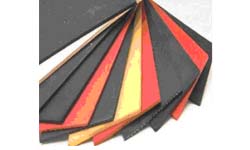
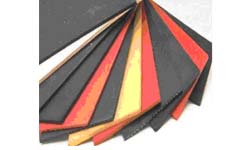
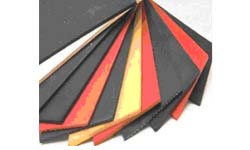
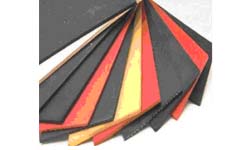
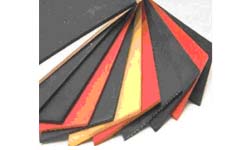
| Color | Black (Standard), Red, White, Blue, Green, Custom | Standard black contains carbon black for UV protection. Colors available for coding, safety, or aesthetic purposes. |
| Surface Finish | Smooth, Fabric-Inserted, Embossed, Diamond Pattern | Affects grip, friction, and sealing capability. Fabric insertion reinforces strength. |
| Material | Hardness (Typical) | Tensile Strength (Min) | Elongation at Break (Min) | Key Resistances |
|---|---|---|---|---|
| Nitrile (NBR) | 70° Shore A | 14 MPa | 300% | Oils, Fuels, Abrasion |
| Neoprene (CR) | 60° Shore A | 10 MPa | 350% | Weather, Ozone, Moderate Oils |
| EPDM | 70° Shore A | 11 MPa | 350% | Weather, Ozone, Steam, Hot Water |
| Silicone | 50° Shore A | 8 MPa | 400% | Extreme Temperatures, Oxidation |
| Fluoroelastomer (FKM) | 75° Shore A | 15 MPa | 200% | High Temp, Chemicals, Oils |
Q: How do I choose the right rubber sheet material for my application?
A: The selection depends on three primary factors: the media the sheet will contact (e.g., oil, water, chemicals), the operating temperature range, and the required physical properties (like hardness or compression set). For example, use NBR for oil resistance, EPDM for outdoor/weather exposure, and FKM for aggressive chemicals at high temperatures. The Kaxite Sealing technical team can provide detailed compatibility charts and expert guidance.
Q: What is the significance of Shore A hardness?
A: Shore A hardness measures the indentation resistance of the rubber, indicating its softness or firmness. A lower number (e.g., 30°A) is very soft and conformable, ideal for sealing irregular surfaces. A higher number (e.g., 80°A) is firm and offers better mechanical strength and abrasion resistance for applications like liners or wear pads. Selecting the correct hardness is crucial for effective sealing and product longevity.
Q: Can Kaxite Sealing rubber sheets be customized?
A: Absolutely. Beyond our extensive standard range, Kaxite Sealing specializes in custom-engineered solutions. We can customize sheet dimensions (length, width, thickness), hardness, color, and surface finish. We also develop custom-compounded materials to meet specific chemical, temperature, or regulatory requirements (e.g., FDA, UL, NSF).
Q: What is the difference between a rubber sheet and a rubber gasket?
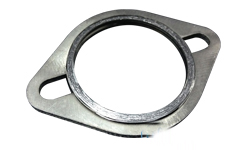
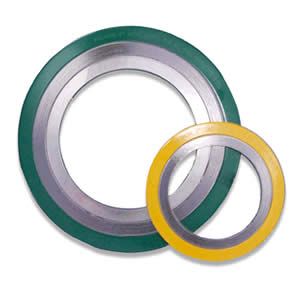
A: A rubber sheet is the raw, bulk material sold in rolls or flat sheets. A gasket is a finished, pre-cut component made from a rubber sheet (or other materials) designed to fit a specific flange or joint to create a seal. Kaxite Sealing provides both: the raw sheet material for in-house fabrication and precision-die-cut or waterjet-cut gaskets ready for installation.
Q: How should I store rubber sheets to ensure their shelf life?
A> Proper storage is essential to prevent premature aging. Store sheets in a cool, dry, dark place away from direct sunlight, ozone sources (like electric motors), and heat. Ideally, maintain a temperature between 10°C and 25°C (50°F and 77°F). Do not store under tension, compression, or folded. Keep them in their original packaging until use to protect from dust and contamination. With proper storage, most rubber sheets from Kaxite Sealing have a shelf life of several years.
Q: Are Kaxite Sealing rubber sheets suitable for food contact or potable water applications?
A> Yes, we offer specific grades of materials compliant with relevant regulations. For example, we supply FDA-compliant silicone and EPDM sheets for food contact and NSF/ANSI 61 certified compounds for potable water applications. It is vital to specify these requirements when ordering to ensure you receive the correct, certified material.
Q: How can I fabricate or cut the rubber sheet myself?
A> Rubber sheets can be cut using utility knives, rotary cutters, band saws, or waterjet cutters for precision. For punching holes, clicker presses or arch punches are effective. Always use a sharp blade and ensure the sheet is securely clamped. For complex shapes or high-volume production, Kaxite Sealing offers professional die-cutting services to ensure clean, accurate, and consistent parts.
The versatility of rubber sheets makes them indispensable. With Kaxite Sealing products, engineers and fabricators solve complex challenges.