Language
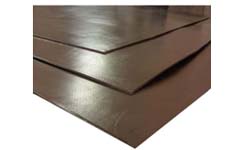
In the world of high-performance sealing and thermal management, Graphite Sheet, often referred to as flexible graphite sheet or expanded graphite sheet, stands as a cornerstone material. Engineered for excellence, this material offers a unique combination of properties that make it indispensable across a vast array of demanding industrial applications. At Kaxite Sealing, we specialize in the manufacture and supply of premium-grade graphite sheets, leveraging decades of material science expertise to deliver products that consistently exceed industry standards for reliability, durability, and performance.
Our graphite sheets are manufactured from high-purity natural graphite flakes. Through a process of intercalation and high-temperature expansion, the graphite's layered structure is expanded, creating a flexible, accordion-like material. This expanded graphite is then calendered into sheets of uniform density and thickness without the use of binders. This unique structure is the source of its exceptional characteristics: superior thermal conductivity, excellent compressibility and recovery, outstanding chemical resistance, and effective sealing capabilities even under extreme conditions.
Understanding the precise specifications of graphite sheet is crucial for selecting the correct material for your application. Kaxite Sealing provides a comprehensive range of grades tailored to meet specific operational requirements. Below are the detailed parameters that define our product line.
| Grade Code | Density (g/cm³) | Standard Thickness (mm) | Standard Sheet Size (mm) | Primary Reinforcement | Typical Application Focus |
|---|---|---|---|---|---|
| KS-GS100 | 1.0 | 0.15, 0.25, 0.5, 1.0, 1.5 | 1000 x 500, 1200 x 600 | None (Pure) | General Gasketing, Thermal Interface Materials |
| KS-GS150 | 1.5 | 0.5, 0.8, 1.0, 2.0 | 1200 x 600, 1500 x 1000 | None (Pure) | High-Pressure Flange Gaskets, Heat Spreaders |
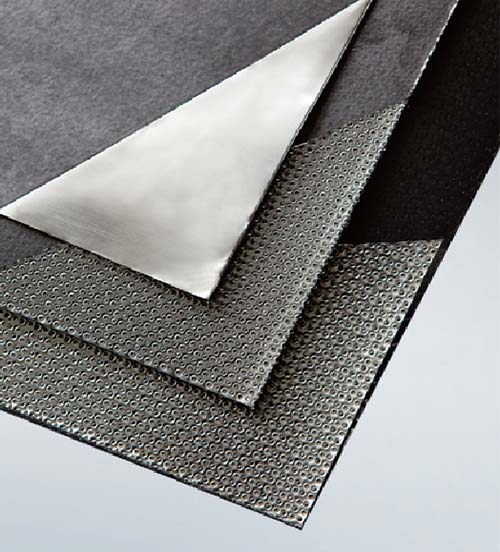
| KS-GS110-FS | 1.1 | 0.5, 1.0, 1.6 | 1000 x 500 | 304 Stainless Steel Foil (Single-sided) | Enhanced Handling, EMF Shielding |
| KS-GS120-PTFE | 1.2 | 1.5, 2.0, 3.0 | 1500 x 1000 | PTFE Impregnation | Aggressive Chemical Service, Low Creep |
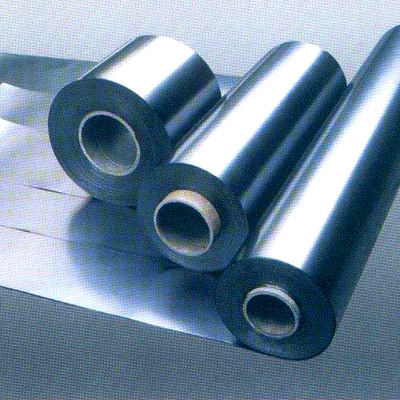
| KS-GS105-RA | 1.05 | 0.25, 0.4, 0.8 | Rolls: 500mm wide x 20m long | None (Pure) | Furnace & High-Temp Seals, Flexible Wrap |
| Property | Test Method | Typical Value Range (Kaxite Sealing Grades) | Notes |
|---|---|---|---|
| Tensile Strength | ASTM F152 | 4.5 - 7.0 MPa (In-plane) | Sufficient for handling and installation; not a load-bearing structural material. |
| Stress Relaxation | ASTM F38 | < 15% after 24h at RT | Low relaxation ensures long-term bolt load retention in gasketed joints. |
| Leak Rate (Helium) | ASTM F37 | < 1.0 x 10⁻⁶ atm·cc/sec | Exceptionally low, suitable for critical sealing in vacuum and gas systems. |
| pH Value (Aqueous Extract) | ASTM E70 | 5.0 - 7.0 | Neutral, non-corrosive to most flange materials. |
| Emissivity | ASTM E408 | 0.75 - 0.85 (at 100°C) | High emissivity enhances radiative heat dissipation in thermal systems. |
The versatility of Kaxite Sealing's graphite sheet makes it a preferred solution in numerous sectors. Its primary functions are to seal, conduct heat, and protect against corrosion and extreme temperatures.
Q: What is the main advantage of using a pure, binder-free graphite sheet like those from Kaxite Sealing?
A: The primary advantage is superior performance consistency and reliability at high temperatures. Binder-free manufacturing ensures the sheet does not outgas, crack, or lose sealing force due to binder degradation when exposed to thermal cycling or extreme heat. This results in longer service life, especially in critical applications like chemical processing or power generation.
Q: Can graphite sheet be used as a gasket for all types of fluids and chemicals?
A: Graphite sheet is highly chemically inert and performs exceptionally well with a vast range of media, including strong acids, alkalis, hydrocarbons, and solvents. However, caution is advised with strongly oxidizing acids (e.g., nitric acid, sulfuric acid at high concentrations) and certain halogens at high temperatures. Consulting Kaxite Sealing's chemical compatibility guide is recommended for specific service conditions.
Q: How does the thermal conductivity of graphite sheet compare to metals?
A: The in-plane thermal conductivity of graphite sheet (150-400 W/m·K) rivals that of many metals (e.g., copper is ~400 W/m·K, aluminum is ~240 W/m·K). However, its through-plane conductivity is much lower. This anisotropic property makes it an excellent heat spreader, moving heat laterally across a surface very efficiently, which is often more useful in electronics cooling than simply conducting heat through a thickness.
Q: Is graphite sheet electrically conductive?
A: Yes, graphite is an electrical conductor. This property is beneficial for applications requiring electrical grounding or EMI shielding but must be considered to prevent short circuits in electrical assemblies. Kaxite Sealing offers versions laminated with insulating layers if electrical isolation is required.
Q: How do I handle and cut graphite sheet material?
A: Kaxite Sealing graphite sheets are semi-rigid and easy to handle. They can be cut with standard tools: utility knives or scissors for thinner sheets, and die-cutting, laser cutting, or waterjet cutting for precise, high-volume production of gaskets. Always wear appropriate PPE (gloves, mask) as fine graphite particles can be generated during cutting.
Q: What is the difference between your KS-GS110-FS and standard pure grades?
A: The KS-GS110-FS grade features a laminated layer of 304 stainless steel foil on one side. This reinforcement provides several benefits: increased tensile strength for easier handling and installation, prevention of graphite particle shedding, improved resistance to erosion in high-velocity gas/vapor streams, and added capability for electromagnetic shielding.
Q: Can graphite sheets be used in food-grade or pharmaceutical applications?
A: While pure graphite is biologically inert, standard industrial grades may not meet specific regulatory requirements for direct food or pharmaceutical contact without validation. Kaxite Sealing can provide specialized grades with certified high-purity raw materials and controlled manufacturing processes for such sensitive applications upon request.
Q: How do I determine the correct density and thickness for my gasket application?
A: Selection depends on flange conditions (surface finish, flatness), bolt load, internal pressure, and media. As a general rule, lower density (1.0-1.2 g/cm³) sheets offer better conformability for uneven flanges, while higher density (1.5+ g/cm³) sheets provide greater strength and blow-out resistance for high-pressure services. Thickness is chosen based on flange gap and required seal compression. Kaxite Sealing's engineering team can provide detailed selection support.