Language
In the world of high-performance insulation and thermal management, few materials are as versatile and reliable as the Mica sheet. At Kaxite Sealing, we specialize in engineering premium-grade mica sheets that meet the rigorous demands of modern industry. A mica sheet is a naturally occurring or synthetically produced insulating material composed of silicate minerals. Its unique layered structure grants it exceptional properties, including superb thermal resistance, excellent dielectric strength, and remarkable chemical stability. These characteristics make it an indispensable component in applications ranging from household appliances like toasters and hair dryers to heavy industrial equipment such as furnaces, heaters, and power generation systems. Kaxite Sealing leverages decades of expertise to process and refine mica into sheets that offer unparalleled performance, durability, and safety, ensuring your equipment operates efficiently and reliably under extreme conditions.
Choosing Kaxite Sealing mica sheets means investing in quality and performance. Our products are designed to deliver consistent results in the most challenging environments.
By integrating these features, Kaxite Sealing mica sheets provide a reliable solution that enhances product lifespan, safety, and efficiency.
To ensure you select the perfect mica sheet for your application, Kaxite Sealing offers a range of products with precise specifications. Below are the detailed parameters for our standard and high-performance series.
| Parameter | Muscovite Mica Sheet | Phlogopite Mica Sheet | Synthetic Mica Sheet |
|---|---|---|---|
| Material Type | Natural Muscovite (Potassium Mica) | Natural Phlogopite (Magnesium Mica) | Fluorophlogopite (Synthetic) |
| Continuous Operating Temp. | Up to 600°C (1112°F) | Up to 1000°C (1832°F) | Up to 1100°C (2012°F) |
| Dielectric Strength (kV/mm) | 15 - 25 | 15 - 22 | 20 - 35 |
| Thickness Range | 0.05mm - 3.0mm | 0.1mm - 5.0mm | 0.03mm - 2.0mm |
| Density (g/cm³) | 2.6 - 2.9 | 2.5 - 2.8 | 2.7 - 3.0 |
| Thermal Conductivity (W/m·K) | 0.35 - 0.5 | 0.25 - 0.45 | 0.4 - 0.6 |
| Typical Applications | Electrical insulation in consumer electronics, small heaters. | Industrial furnaces, welding equipment, high-temp gaskets. | Aerospace, high-frequency electronics, precision instruments. |
| Parameter | Mica Paper Sheet (with silicone resin) | Rigid Mica Plate (with epoxy resin) | Flexible Mica Sheet (with glass cloth backing) |
|---|---|---|---|
| Binder/Reinforcement | Silicone Resin | Epoxy Resin | Fiberglass Cloth & Silicone |
| Continuous Operating Temp. | Up to 800°C (1472°F) | Up to 500°C (932°F) | Up to 600°C (1112°F) |
| Dielectric Strength (kV/mm) | 18 - 30 | 20 - 40 | 15 - 25 |
| Thickness Range | 0.1mm - 2.0mm | 1.0mm - 50mm | 0.2mm - 1.5mm |
| Tensile Strength (MPa) | 80 - 120 | 100 - 150 | 90 - 130 (with backing) |
| Key Advantage | Excellent flexibility, uniform thickness. | High mechanical strength, machinable. | Superb handling strength, tear-resistant. |
| Typical Applications | Electric motor slot insulation, flexible heaters. | Structural insulation in busbars, switchgear. | Curved surface insulation, gaskets for uneven surfaces. |
Q: What is the primary difference between Muscovite and Phlogopite mica sheets?
A: The core difference lies in their composition and thermal endurance. Muscovite, or white mica, is a potassium-aluminum silicate. It offers excellent dielectric properties but has a lower continuous temperature resistance (up to ~600°C). Phlogopite, or amber mica, is a magnesium-aluminum silicate. It can withstand much higher temperatures (up to ~1000°C) and has better resistance to heat shock, making it preferable for high-temperature industrial applications. Kaxite Sealing provides both types, guiding customers to the optimal choice based on their specific thermal and electrical requirements.
Q: Can mica sheets be cut, punched, or machined into custom shapes?
A: Yes, absolutely. One of the practical advantages of mica sheets is their machinability. They can be precisely cut with laser cutters, die-punched, stamped, or even machined with CNC routers for complex geometries. Kaxite Sealing offers custom fabrication services, delivering mica components pre-cut to your exact drawings and specifications. This saves production time, reduces material waste, and ensures a perfect fit for your assembly.
Q: How does a synthetic mica sheet differ from a natural one, and when should I choose it?
A: Synthetic mica, typically fluorophlogopite, is manufactured in a controlled process, resulting in a product with higher purity, more uniform properties, and often superior thermal and electrical performance compared to natural mica. It is completely free of hydroxyl groups, giving it even better high-temperature stability and lower electrical loss. Choose synthetic mica from Kaxite Sealing for applications demanding the highest performance consistency, such as in aerospace, advanced electronics, or precision laboratory equipment where any variation in material properties is unacceptable.
Q: Are mica sheets safe to use in food-grade or medical equipment?
A: Pure mica minerals are inherently inert, non-toxic, and do not release harmful fumes under high heat. This makes certain grades suitable for use in appliances where indirect food contact or high-temperature hygiene is a concern, like in toasters or certain heating elements. However, the safety of the final product also depends on any binders or reinforcements used. Kaxite Sealing can provide composite sheets with FDA-compliant or other relevant safety-certified resins for specific applications. It is crucial to discuss your application's regulatory requirements with our technical team to ensure compliance.
Q: What are the best practices for storing and handling mica sheets?
A: To preserve the quality of Kaxite Sealing mica sheets, store them in a cool, dry environment away from direct moisture and extreme temperature swings. While mica is robust, thin sheets can be brittle. Handle them with care to avoid cracking or delaminating. Stack sheets flat to prevent warping. For composite sheets with resin binders, also avoid prolonged exposure to direct sunlight (UV) which could potentially degrade the resin over time. Always wear appropriate personal protective equipment like gloves when handling to prevent oils from skin contact affecting performance.
Q: How do I determine the correct thickness of mica sheet needed for my application?
A: Selecting the right thickness involves balancing electrical insulation needs, thermal management, mechanical space, and cost. Key factors include the operating voltage (thicker sheets provide higher dielectric breakdown protection), the temperature gradient (thickness impacts heat flow), and the physical space constraints in your assembly. As a general rule, higher voltage and temperature applications require greater thickness. Kaxite Sealing's engineering support team is available to review your application parameters and recommend the optimal thickness and material grade to ensure safety, performance, and cost-effectiveness.
Q: Can Kaxite Sealing mica sheets be used as a gasket material?
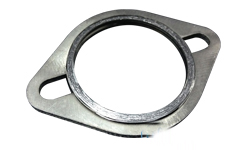
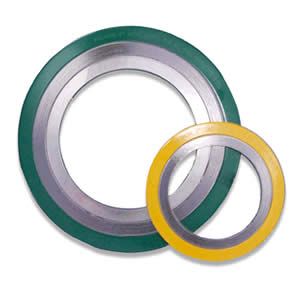
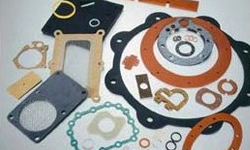
A: Yes, mica sheets are an excellent choice for high-temperature gasketing applications. Their thermal stability, resistance to compression set, and chemical inertness make them ideal for sealing flanges in furnaces, boilers, exhaust systems, and chemical processing equipment. Kaxite Sealing offers mica sheets that can be fabricated into custom gaskets, often supplied with or without additional reinforcements (like metal foil laminates) to enhance sealing performance and handling strength under extreme pressure and temperature cycles.