Language
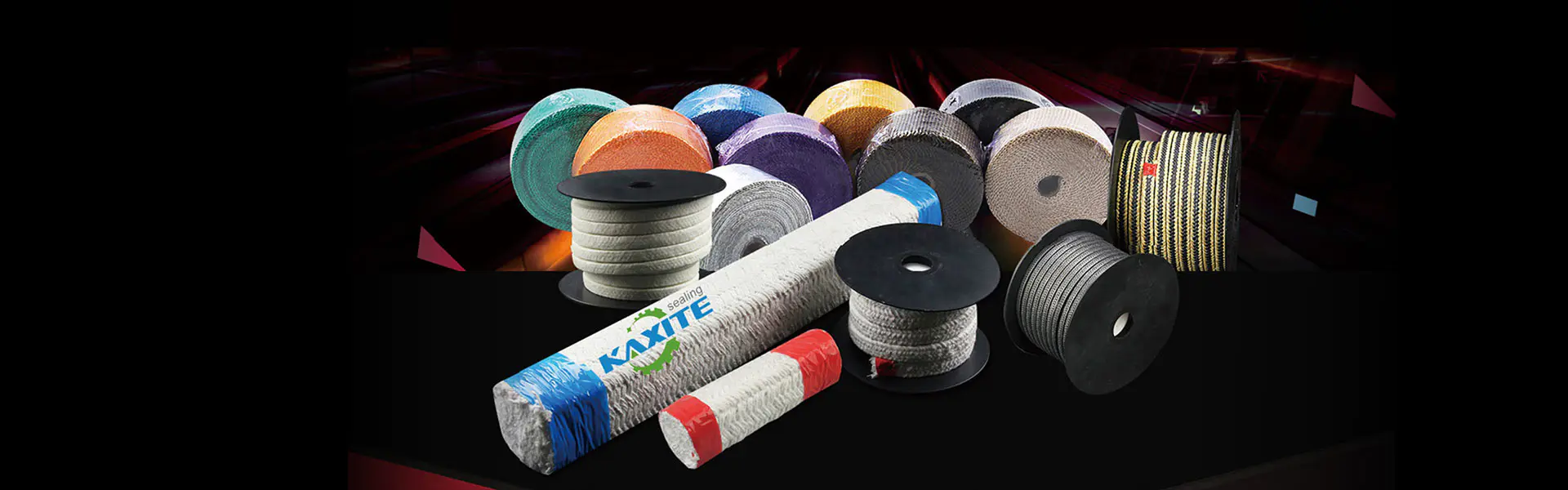
In the demanding world of industrial sealing, reliability and precision are not just desired—they are required. A Molded Packing Ring represents a critical advancement in sealing technology, engineered to provide superior performance under extreme pressures, temperatures, and chemical exposures. Unlike traditional cut or spiral-wound gaskets, molded rings are manufactured as a single, homogeneous piece, ensuring consistent density and eliminating weak points that can lead to failure. At Kaxite Sealing, we have dedicated decades to perfecting the formulation and production of these essential components, understanding that the integrity of your system hinges on the quality of its seals.
The core advantage of a molded packing ring lies in its custom fabrication. Each ring is produced in a controlled molding process, which allows for exact dimensional accuracy and uniform distribution of sealing materials throughout the component. This process is vital for applications requiring a flawless seal in complex or irregular geometries, such as pumps, valves, compressors, and hydraulic systems. Kaxite Sealing utilizes state-of-the-art molding techniques and premium-grade materials to deliver products that meet the most stringent international standards, ensuring leak-free operation and extended service life for your equipment.
Selecting the correct molded packing ring requires a detailed understanding of its specifications. The performance of the ring is determined by a combination of material composition, physical properties, and design dimensions. Below is a detailed breakdown of the critical parameters that define a high-quality molded packing ring from Kaxite Sealing.
The choice of material is the foremost determinant of a ring's suitability for an application. Kaxite Sealing offers a range of compounds to handle diverse media and conditions.
| Property | Standard Test Method | Typical Range for Kaxite Sealing Rings | Significance |
|---|---|---|---|
| Density | ASTM F1315 | 1.6 - 2.2 g/cm³ (Graphite) 2.1 - 2.3 g/cm³ (CNAF) |
Indicates material compaction; higher density often correlates with better sealing force and creep resistance. |
| Compression Recovery | ASTM F36 | ≥ 40% (Graphite) ≥ 15% (CNAF) |
Measures the ability to regain thickness after compression; critical for maintaining seal during thermal cycling and pressure fluctuations. |
| Thermal Conductivity | ASTM E1461 | 10 - 150 W/m·K (Graphite) | High conductivity dissipates heat from the sealing interface, preventing thermal degradation of the seal and adjacent components. |
| Maximum Service Pressure | Based on Design | Up to 3000 psi (Graphite/PTFE) Up to 5000 psi (Metal-Reinforced) |
The maximum continuous pressure the ring is designed to seal effectively without extrusion or failure. |
| pH Range Compatibility | N/A | 0 - 14 (PTFE) 1 - 11 (Graphite, non-oxidizing) |
Defines the acidity/alkalinity of media the material can withstand without significant corrosion or degradation. |
| Nominal Pipe Size (NPS) | Inner Diameter (ID) mm | Outer Diameter (OD) mm | Thickness (T) mm | Common Style |
|---|---|---|---|---|
| 1/2 | 21.0 | 35.0 | 1.5 / 3.0 | Full Face, Inner Ring |
| 2 | 54.0 | 92.0 | 1.5 / 3.0 | Full Face, Inner Ring |
| 8 | 203.0 | 280.0 | 3.0 / 4.5 | Full Face |
| 12 | 303.0 | 400.0 | 3.0 / 4.5 | Full Face, Spiral Wound Filler |
| Custom | As per Drawing | As per Drawing | As per Drawing | Any configuration available |
Kaxite Sealing manufactures rings to all standard dimensions (ANSI, DIN, JIS, BS) and provides complete custom molding services for non-standard or OEM-specific applications. Dimensional tolerances are strictly controlled, typically within ±0.1mm for IDs/ODs and ±0.05mm for thickness, ensuring perfect fit and seal.
What is a Molded Packing Ring and how does it differ from a cut gasket?
A Molded Packing Ring is a sealing component formed in a precision mold under high heat and pressure, creating a single-piece structure with uniform density and properties throughout. In contrast, a cut gasket is die-cut from a larger sheet of material. The molded process eliminates layered or jointed seams, which are potential leak paths in cut gaskets. This results in superior consistency, better creep relaxation resistance, and more reliable performance in demanding cyclic service.
What are the main advantages of using a Kaxite Sealing Molded Packing Ring?
Kaxite Sealing Molded Packing Rings offer several key advantages: Unmatched consistency in density and dimensions due to controlled molding processes; Enhanced sealing performance from homogeneous material structure without voids or seams; Superior resistance to extrusion and blow-out under high pressure; Excellent thermal and chemical stability from our rigorously tested material formulas; and Longer service life, reducing downtime and maintenance costs. Our rings are traceable and certified, providing assurance of quality and reliability.
For which types of applications are Molded Packing Rings most suitable?
Molded Packing Rings are the preferred choice for critical and severe-service applications. These include: High-pressure and high-temperature flanged connections in oil & gas, power generation, and chemical plants; Aggressive chemical service in reactors, columns, and piping where material integrity is paramount; Rotary equipment like pump and mixer shafts where uniform density prevents uneven wear; Applications with strict hygiene standards, such as in food, beverage, and pharmaceutical industries, where non-porous, cleanable surfaces are required; and OEM machinery where exact, repeatable dimensions are crucial for assembly and performance.
How do I select the right material for my application?
Material selection depends on three primary factors: the media being sealed (chemical compatibility), the operating temperature, and the pressure. First, consult chemical compatibility charts for the sealing media—Kaxite Sealing provides detailed charts for all our materials. Second, ensure the material's continuous and peak temperature ratings exceed your process temperatures. Third, verify the ring's pressure rating and consider reinforcement (e.g., metal inserts) for very high pressure. Always review the flange surface finish, bolt load, and cycling conditions. Our technical support team can assist with this analysis.
What is the correct procedure for installing a Molded Packing Ring?
Proper installation is critical for optimal performance. First, ensure the flange faces are clean, undamaged, dry, and free of old gasket material. Verify the surface finish is within specification (typically 125-250 µin Ra for soft gaskets). Carefully place the ring onto the flange, ensuring it is centered and not twisted. For rings with an inner or outer guide ring, align it correctly. Insert and hand-tighten all bolts. Follow a cross-pattern bolting sequence (star pattern) to apply preload in stages (e.g., 30%, 60%, 100% of final torque). Use a calibrated torque wrench and adhere to the recommended bolt torque values provided by Kaxite Sealing or the equipment manufacturer. Never reuse a molded packing ring after it has been compressed in service.
Can Kaxite Sealing produce custom-sized or shaped Molded Packing Rings?
Absolutely. Customization is a core strength at Kaxite Sealing. We can manufacture molded packing rings to any size, shape, or cross-section based on your engineering drawings or samples. This includes rings with complex profiles, unusual IDs/ODs, special thickness requirements, or integration of multiple materials (co-molding). We also offer custom material formulations to meet unique chemical or thermal challenges. The process begins with a detailed application review by our engineering team to ensure the custom design meets all performance requirements.
What causes a Molded Packing Ring to fail, and how can it be prevented?
Common failure modes include: Extrusion (due to excessive clearance or pressure exceeding rating), Creep Relaxation/Stress Loss (from insufficient bolt load or material overheating), Chemical Attack (from incompatible media), and Blow-out (from sudden pressure surges or incorrect installation). Prevention involves: Correctly selecting the ring material and pressure class for the application; Ensuring proper flange alignment, surface finish, and bolt loading; Following precise installation procedures; and Implementing a regular maintenance schedule to check for leaks and re-torque bolts if necessary, especially after initial heat cycles.
How does temperature affect the performance of a Molded Packing Ring?
Temperature has a profound effect. High temperatures can cause softening, oxidation, or decomposition of some binder materials, leading to creep relaxation and seal loss. Extreme cold can make some materials brittle. Thermal cycling (repeated heating and cooling) can cause fatigue and loss of sealing stress. Kaxite Sealing materials are chosen for their thermal stability. For instance, our expanded graphite rings handle extreme temperatures with minimal creep, while our specially compounded PTFE retains flexibility across a wide range. Always ensure the selected ring's temperature range fully encompasses both the operating and any potential upset conditions of your system.
Are Kaxite Sealing Molded Packing Rings compliant with industry standards and certifications?
Yes. Kaxite Sealing products are manufactured in facilities with stringent quality control systems. Our rings comply with relevant international standards such as ANSI/ASME B16.20, B16.21, API 601, and DIN/EN standards for gaskets. We can provide material certifications (C of C) with traceability to raw material batches. For specific industries, we offer rings made from FDA-compliant, USP Class VI, or EU 10/2011 food-contact listed materials, as well as those suitable for NACE MR0175 sour service environments. Compliance documentation is available upon request.