Language
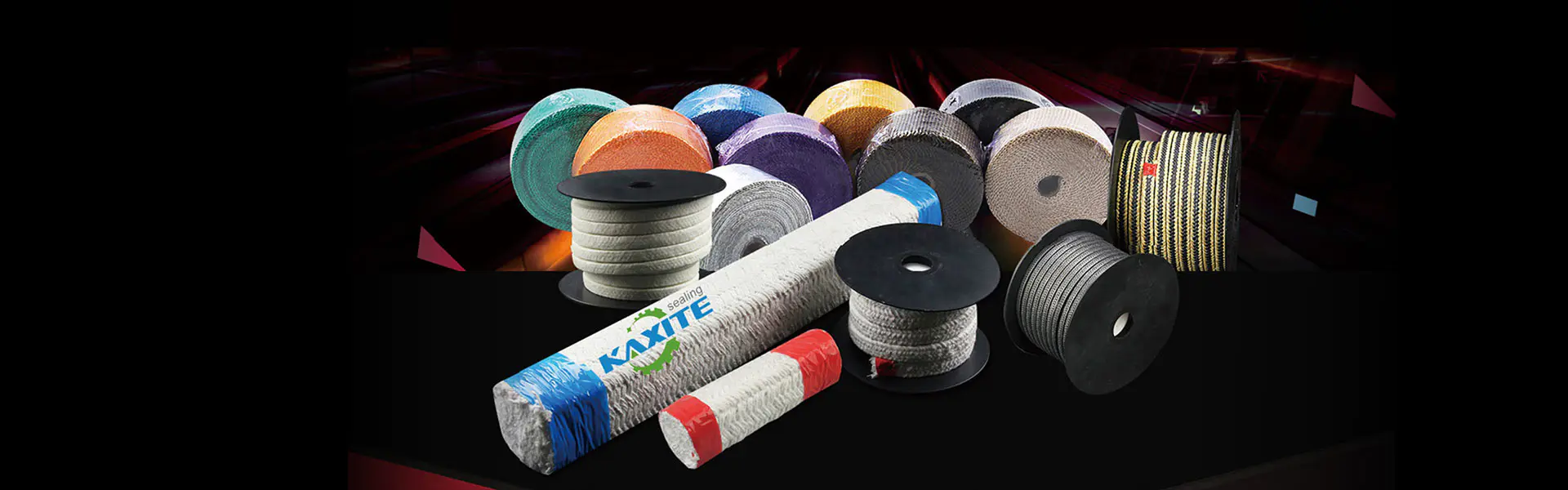
Dust free asbestos represents a significant advancement in industrial safety materials. For decades, the dangers of traditional asbestos fibers became tragically apparent, leading to its ban in many countries. However, the unique properties of asbestos—its exceptional heat resistance, insulating capability, and durability—left a gap in many high-temperature industrial applications. Dust free asbestos products, also known as encapsulated or non-friable asbestos, are engineered to provide those essential performance characteristics while dramatically reducing the airborne fiber release that poses a severe health risk. At Kaxite Sealing, we specialize in manufacturing premium-grade dust free asbestos sealing solutions that meet the most demanding industrial standards without compromising on worker safety.
The core innovation lies in the encapsulation process. Traditional asbestos is friable, meaning it can be easily crumbled by hand pressure, releasing microscopic fibers into the air. Dust free asbestos materials are treated and bound within a matrix of polymers, resins, or other binding agents. This process effectively "locks" the asbestos fibers in place, creating a composite material that retains the beneficial properties but prevents the fibers from becoming airborne during handling, cutting, or installation. This makes it a viable and much safer option for gaskets, seals, packings, and insulation in environments where fire safety and thermal management are non-negotiable.
Understanding the technical specifications is crucial for engineers and procurement specialists. Below are the detailed parameters that define the quality and application scope of Kaxite Sealing's dust free asbestos products.
| Parameter | Value / Rating | Test Standard | Significance |
|---|---|---|---|
| Continuous Operating Temperature | -100°C to +550°C (-148°F to +1022°F) | ASTM D865 | Defines the safe range for long-term use without degradation. |
| Peak Temperature Resistance | Up to 750°C (1382°F) for short periods | ASTM E136 | Critical for emergency or flare-up situations. |
| Thermal Conductivity | 0.12 - 0.15 W/m·K | ASTM C177 | Measures insulation efficiency; lower values are better. |
| Fire Resistance Rating | A1 (Non-combustible) | EN 13501-1 | Highest rating for building materials; will not contribute to fire. |
| Compression Set | < 15% @ 24hrs, 21°C, 14 MPa | ASTM F36 | Indicates ability to recover and maintain seal under load. |
| Property | Specification | Details |
|---|---|---|
| Tensile Strength | ≥ 8.0 MPa | Provides durability and resistance to tearing during handling. |
| pH Resistance Range | 3 - 11 | Suitable for use with mild acids and alkalis, common in industrial processes. |
| Oil & Fuel Resistance | Excellent | Swelling is minimal when exposed to hydrocarbons (ASTM Oil No. 3). |
| Steam & Hot Water Resistance | Excellent | Ideal for boiler applications, gaskets on steam lines, and heat exchangers. |
| Dust & Fiber Emission | Negligible (Non-friable) | Passes rigorous membrane filter test for airborne fiber concentration. |
The robust parameter profile makes our dust free asbestos suitable for a wide array of critical applications. It is specifically engineered for sealing and insulating components in high-temperature environments where safety and reliability are paramount.
Q: Is dust free asbestos truly safe to handle and use?
A: Yes, when produced and used correctly. The key difference from traditional asbestos is the encapsulation technology. Kaxite Sealing's dust free asbestos is non-friable, meaning the hazardous fibers are bonded within a matrix and cannot easily become airborne during normal handling, cutting, or under vibration. This drastically reduces the inhalation risk. However, safety precautions like using dust suppression when cutting (e.g., water spray) and good workshop hygiene are still recommended as best practices.
Q: How does the performance of dust free asbestos compare to traditional asbestos or modern alternatives like ceramic fiber or aramid?
A: Dust free asbestos closely matches the thermal performance and sealing integrity of traditional asbestos, which is why it remains specified for certain legacy or extreme applications. Compared to some modern alternatives, it often has superior compressibility and sealability, conforming better to imperfect flange surfaces. Ceramic fibers may have higher temperature ratings but can be more brittle. Aramid fibers (e.g., Kevlar) are excellent but can be significantly more expensive. Dust free asbestos offers a balanced solution of performance, safety, and cost.
Q: Can I cut and shape Kaxite Sealing's dust free asbestos material on-site?
A: Absolutely. One of the advantages of our product is its workability. It can be cut with standard tools—knives, scissors, or die-cutters. For the safest practice and to minimize any potential particulate, we advise using wet methods or tools equipped with local exhaust ventilation (LEV). The material is designed to be fabricated into custom gaskets and shapes easily, just like traditional non-asbestos materials.
Q: Is this material legal to use in my country? What regulations apply?
A: Regulations vary significantly by country and region. In many places, the use of dust free asbestos (encapsulated/asbestos-containing materials) is strictly regulated but permitted in specific industrial contexts, often where no technically suitable substitute exists. It is crucial to consult your local occupational safety and health regulations (e.g., OSHA in the USA, HSE in the UK, SafeWork Australia). Kaxite Sealing provides full Material Safety Data Sheets (MSDS/SDS) and compliance documentation to support regulated use.
Q: What is the shelf life and how should I store dust free asbestos products?
A: When stored correctly, Kaxite Sealing dust free asbestos products have a shelf life of over 10 years. Store in a cool, dry, and well-ventilated area away from direct sunlight, extreme heat, and moisture. Keep the material in its original packaging until use to prevent accidental damage or contamination. Avoid stacking heavy objects on top of sheet materials to prevent compression set.
Q: How do I properly dispose of waste or used dust free asbestos material?
A: Even though it is non-friable, waste material should be treated with care and disposed of in accordance with local regulations for asbestos-containing materials. This typically means wetting the waste, sealing it in leak-tight, labeled containers or heavy-duty plastic bags, and disposing of it at a licensed hazardous waste facility. Never dispose of it with general industrial or domestic waste. Always follow local jurisdiction guidelines.
Q: Why should I choose Kaxite Sealing over other suppliers of dust free asbestos?
A: Kaxite Sealing brings decades of expertise in high-performance sealing solutions. Our dust free asbestos is manufactured under stringent quality controls with a proprietary encapsulation process that ensures consistency and safety. We offer extensive technical support, custom fabrication to precise drawings, and guarantee that our products meet the published specifications. Our commitment is to provide a reliable, high-performance product that allows industries to operate safely and efficiently.