Language

In the realm of fluid handling and critical sealing, material selection is paramount. PTFE (Polytetrafluoroethylene) tubing stands as an unparalleled solution, offering a unique combination of chemical resistance, thermal stability, and non-stick properties. At Kaxite Sealing, we engineer and manufacture premium-grade PTFE tubing designed to meet the rigorous demands of industries ranging from semiconductor manufacturing and chemical processing to food and beverage and pharmaceuticals. Our commitment to precision manufacturing and material purity ensures that every length of tubing delivers reliable, long-term performance in even the most aggressive environments.
This guide provides a comprehensive overview of our PTFE tubing products, detailing their specifications, benefits, and ideal applications to help you make an informed selection for your specific needs.
Our tubing is manufactured from 100% virgin PTFE resins, ensuring consistent quality and performance. The key benefits include:
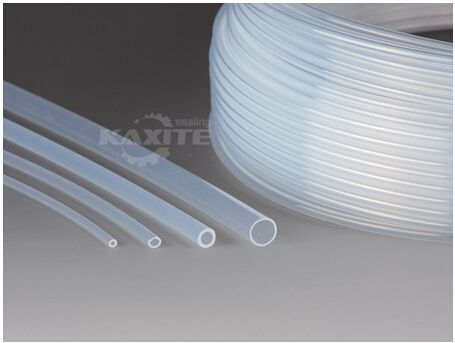
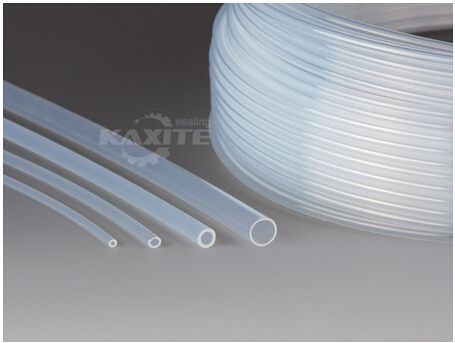
Kaxite Sealing offers a range of PTFE tubing in various sizes, colors, and configurations. Below are the standard specifications for our clear, natural PTFE tubing.
| Inner Diameter (ID) | Outer Diameter (OD) | Standard Wall Thickness | Pressure Rating (approx. @ 20°C) | Standard Lengths | Color |
|---|---|---|---|---|---|
| 1/16" (1.6 mm) | 1/8" (3.2 mm) | 1/32" (0.8 mm) | 150 PSI | 1m, 5m, 25m, 50m coils | Natural (Clear) |
| 1/8" (3.2 mm) | 1/4" (6.4 mm) | 1/16" (1.6 mm) | 125 PSI | 1m, 5m, 25m, 50m coils | Natural (Clear) |
| 1/4" (6.4 mm) | 3/8" (9.5 mm) | 1/16" (1.6 mm) | 100 PSI | 1m, 5m, 25m coils | Natural (Clear) |
| 3/8" (9.5 mm) | 1/2" (12.7 mm) | 1/16" (1.6 mm) | 75 PSI | 1m, 5m, 25m coils | Natural (Clear) |
| 1/2" (12.7 mm) | 5/8" (15.9 mm) | 1/16" (1.6 mm) | 50 PSI | 1m, 5m coils | Natural (Clear) |
Note: Pressure ratings decrease with increasing temperature. Custom sizes, colors (black, red, blue, etc.), and lengths are available upon request. We also offer heat-shrinkable PTFE tubing and convoluted (flexible) PTFE hose for specialized applications.
| Property | Test Method | Typical Value |
|---|---|---|
| Tensile Strength | ASTM D638 | 3,000 - 5,000 PSI |
| Elongation at Break | ASTM D638 | 200 - 400% |
| Dielectric Strength | ASTM D149 | 500 V/mil |
| Volume Resistivity | ASTM D257 | >10^18 Ω·cm |
| Coefficient of Friction | ASTM D1894 | 0.05 - 0.10 |
| Water Absorption | ASTM D570 | < 0.01% |
Q: What is the primary difference between PTFE, FEP, and PFA tubing?
A: All are fluoropolymers with excellent chemical resistance. PTFE has the highest continuous use temperature (260°C) but is opaque and more difficult to bond. FEP is translucent, melt-processable, and has a lower use temp (200°C). PFA is similar to FEP but offers higher clarity, better high-temperature properties (260°C like PTFE), and greater stress crack resistance. Kaxite Sealing can supply all types based on your application's specific needs for clarity, flexibility, and temperature.
Q: Can Kaxite Sealing PTFE tubing be used for potable water or food contact?
A: Yes, provided the specific grade is certified for such use. Our natural, additive-free PTFE tubing is manufactured from FDA-compliant resins and is suitable for food, beverage, and pharmaceutical applications where fluid purity is critical. We can provide documentation, including FDA and USP Class VI compliance statements, upon request.
Q: How do I connect or fit PTFE tubing? It seems very slippery.
A: PTFE's non-stick nature requires specific connection methods. Common techniques include using compression fittings with ferrules specifically designed for soft tubing (like our matching Kaxite Sealing fittings), flaring the tube end for face-seal fittings, or using barbed fittings with hose clamps for low-pressure applications. For permanent, leak-proof joints, heat bonding (for FEP/PFA) or specialized adhesives (after surface treatment for PTFE) are used. Our technical team can advise on the best connection method for your system.
Q: What are the temperature limits, and can it be used for cryogenics?
A: Kaxite Sealing PTFE tubing performs exceptionally across a vast thermal range. It can be used continuously from -268°C (-450°F) up to +260°C (+500°F). Its flexibility and toughness are maintained even at cryogenic temperatures, making it an ideal choice for liquid nitrogen, liquid helium, and other cryogenic fluid transfer lines. Avoid rapid temperature cycling where possible to maximize service life.
Q: Is the tubing permeable to gases or liquids?
A: PTFE has a very low permeability to most gases and liquids compared to many other plastics. However, it is not a complete barrier, especially to small molecule gases like helium or hydrogen. For applications requiring an absolute barrier, multi-layer composite hoses with PTFE as the inner liner and an outer barrier layer (like PVDF or metal braiding) are recommended. We can provide guidance on permeability rates for specific media.
Q: How do I clean PTFE tubing?
A: Its chemical inertness makes cleaning straightforward. For most contaminants, flushing with compatible solvents (like IPA or acetone) or hot water and detergent is effective. For stubborn deposits, soaking in a heated alkaline or acid bath (which PTFE easily withstands) can be used. Its non-stick surface typically allows for complete residue removal. Always ensure cleaning agents are fully purged before returning to service.
Q: Can I get custom-colored or printed/marked tubing from Kaxite Sealing?
A: Absolutely. We offer tubing in a variety of standard colors for coding and identification purposes. We can also provide custom color matching. Permanent printing or laser marking of part numbers, lot codes, flow direction arrows, or company logos is a standard service we offer to enhance traceability and assembly ease for our clients.