Language
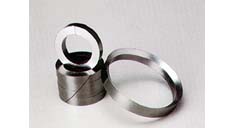
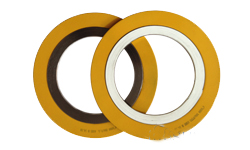
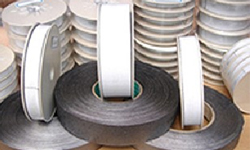
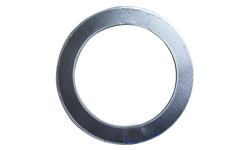
In the demanding world of industrial sealing, where extreme temperatures, aggressive media, and relentless pressure are the norm, component failure is not an option. For over two decades, Kaxite Sealing has been at the forefront of developing sealing solutions that deliver unwavering reliability. Our flagship Die-formed Graphite Ring represents the pinnacle of this engineering excellence. Unlike conventional machined rings, our rings are manufactured using a proprietary high-pressure die-forming process. This method transforms high-purity, flexible graphite foil into a dimensionally precise, structurally homogeneous, and mechanically robust sealing element. The result is a product with superior consistency, enhanced density, and optimized performance characteristics that directly translate to longer service life, reduced maintenance downtime, and improved operational safety across countless applications.
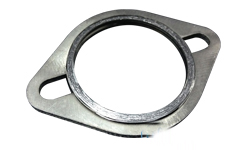
The Kaxite Sealing Die-formed Graphite Ring is the definitive choice for engineers and maintenance professionals dealing with flange connections in critical systems. Whether it's in chemical processing, power generation, oil & gas extraction, or pharmaceutical manufacturing, this ring provides a leak-tight seal that stands up to the test of time and environment.
To ensure proper selection and application, please refer to the detailed technical parameters of the Kaxite Sealing Die-formed Graphite Ring below.
| Property | Test Standard | Typical Value | Unit |
|---|---|---|---|
| Density (Minimum) | ASTM F777 | 1.5 | g/cm³ |
| Tensile Strength | ASTM F152 | 8.0 | MPa |
| Compression Strength | ASTM D695 | 130 | MPa |
| Recovery (after 100 MPa) | ASTM F36 | 45% | - |
| Creep Relaxation | ASTM F38 | < 15% | - |
| Thermal Conductivity | ASTM E1461 | 70 - 120 (in-plane) | W/m·K |
| Maximum Service Temp (Air) | - | 450 | °C |
| pH Range | - | 0 - 14 | - |
Kaxite Sealing offers a vast inventory of standard ASME B16.21 and DIN 2695 sizes. Custom sizes are available on request.
| Nominal Pipe Size (NPS) | Inside Diameter (mm) | Outside Diameter (mm) | Thickness (mm) | Tolerance (Width/Thickness) |
|---|---|---|---|---|
| ½" to 2" | 15.7 - 60.3 | 34.9 - 82.6 | 1.5 / 3.0 | ±0.15 mm / ±0.1 mm |
| 2½" to 6" | 73.0 - 168.3 | 104.8 - 200.0 | 1.5 / 3.0 | ±0.2 mm / ±0.1 mm |
| 8" to 12" | 219.1 - 323.9 | 266.7 - 371.5 | 2.0 / 3.0 | ±0.25 mm / ±0.15 mm |
| 14" to 24" | 355.6 - 609.6 | 406.4 - 660.4 | 2.0 / 3.0 | ±0.3 mm / ±0.15 mm |
What is the primary difference between a die-formed graphite ring and a spiral-wound gasket with a graphite filler?
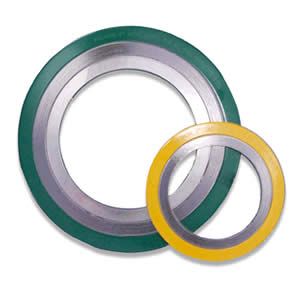
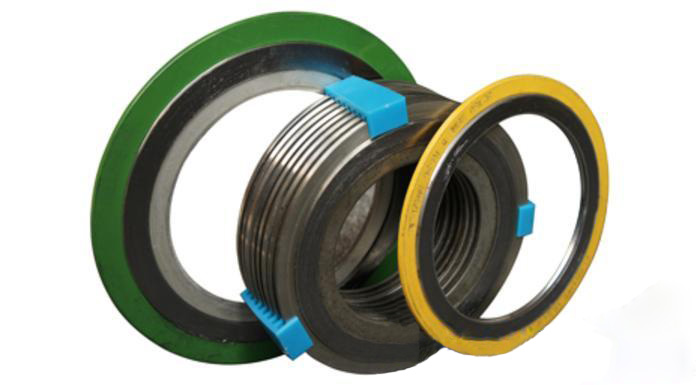
A die-formed ring is a single, homogeneous piece of compressed graphite created in a mold. A spiral-wound gasket is a V-shaped metal strip wound with a graphite filler strip. The die-formed ring offers more consistent density, better creep resistance, and is a one-piece seal, while spiral-wound gaskets rely on the metal winding for mechanical strength and can be more susceptible to relaxation and installation error if not handled correctly. For many standard flange applications, the die-formed ring provides a simpler, often more cost-effective, and equally reliable solution.
Can Kaxite Sealing Die-formed Graphite Rings be used in steam service?
Yes, they are exceptionally well-suited for steam service. Pure flexible graphite is highly resistant to steam oxidation up to its maximum recommended temperature in air (450°C). Its natural lubricity allows for thermal cycling without adhering to the flange faces, making it ideal for steam lines, turbines, and heat exchangers where thermal movement is expected.
How do I select the correct thickness for my application?
The standard thicknesses are 1.5mm and 3.0mm. For raised face flanges (RF) with a standard serrated finish, the 1.5mm thickness is typically sufficient to fill the flange imperfections. For male-and-female (M&F) or tongue-and-groove (T&G) flanges, the 3.0mm thickness is standard to fit the groove. The required thickness also depends on flange flatness, pressure, and the specific sealing surface finish. Consulting Kaxite Sealing's technical datasheets or our engineering team is recommended for non-standard conditions.
Are these rings suitable for highly corrosive services like hydrofluoric acid or strong oxidizers?
For pure hydrofluoric acid (HF) service, special grades of flexible graphite with very low ash content (like Kaxite's HP-Ultra grade) are recommended to minimize interaction with impurities. For strong oxidizers (e.g., red fuming nitric acid, chlorine trifluoride) at high temperatures, graphite can be susceptible to oxidation. In such extreme cases, alternative materials like PTFE or specific metal gaskets should be evaluated. Always consult our chemical resistance guide and application engineers for aggressive media.
What is the recommended flange surface finish and bolt torque for installation?
A flange surface finish between 125 and 500 microinches Ra (3.2 to 12.5 µm Ra) is ideal. A smooth, flat surface is critical. The recommended bolt torque should be calculated based on the target seating stress (typically 10,000 to 20,000 psi or 70 to 140 MPa for graphite) and the flange/bolt specifications (ASME PCC-1 or EN 1591-1 guidelines). It is crucial to use a cross-pattern tightening sequence in multiple steps to ensure even compression and avoid distorting the flange or the die-formed graphite ring.
Can I reuse a Kaxite Die-formed Graphite Ring after disassembly?
It is generally not recommended to reuse any compressed fiber or graphite gasket, including die-formed rings. Once compressed, the material has undergone plastic deformation and creep relaxation to conform to the flange imperfections. Reusing it may not provide the same level of seal integrity as a new ring, as the material may not recover sufficiently to fill the micro-gaps again. For critical services, always install a new, unused die-formed graphite ring.
Do you offer rings with anti-stick coatings?
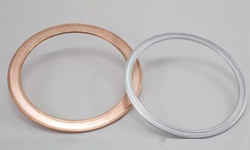
Yes, Kaxite Sealing can provide die-formed graphite rings with various anti-stick coatings on one or both sides. These coatings, such as a proprietary polymer or a thin metal foil layer, prevent the graphite from adhering to the flange faces, especially in high-temperature services or where galling of stainless steel flanges is a concern. This facilitates easier disassembly and cleanup during maintenance.