How to cut and size Synthetic Fiber Packing rings correctly? This question haunts maintenance engineers and procurement teams who face repeated seal failures, unexpected downtime, and spiralling operational costs. Imagine standing in front of a pump that should run smoothly for months, yet every few weeks the stuffing box leaks, the shaft sleeve wears, and production stops. The frustration is real — you ordered premium packing, but poor cutting and sizing turned it into a liability. When synthetic fiber packing is cut with improper tools, squashed by guesswork instead of measured compression, or installed with the wrong scarf joint angle, even the best material fails. At Ningbo Kaxite Sealing Materials Co., Ltd., we’ve seen these scenarios ruin budgets. Our goal is to turn that frustration into confidence by giving you a clear, step‑by‑step method that eliminates guesswork. By the end of this article, you’ll know exactly how to achieve a leak‑free, long‑lasting seal that saves thousands in maintenance hours and replacement parts. Let’s dive into the techniques that professional plant operators rely on — and discover how precision cutting directly impacts your bottom line.
Pain point: A water treatment plant replaced pump packing every three weeks. The team used a hacksaw on a workbench, eyeballed the length, and forced the ring into the stuffing box. The result? Wavy cut ends that opened a leak path, uneven compression that scorched the packing, and a shaft sleeve grooved beyond repair. Each failure cost $2,800 in parts and 14 hours of labour.
Solution: Proper sizing starts with understanding two critical values: the packing cross‑section must match the stuffing box depth (e.g., a box depth of 10 mm takes a 10 mm packing), and the ring length is calculated from the shaft diameter, not the box bore. Use the formula: Ring length = (shaft diameter + packing cross‑section) × 3.14. Cut only with a sharp knife and a dedicated cutting jig to maintain a perfect 45° skive joint. This technique eliminates the leak path and spreads compression evenly.
| Cutting Method | Joint Alignment | Average Service Life (weeks) | Leak Rate (ml/min) |
|---|---|---|---|
| Hacksaw, freehand | Misaligned, gap > 0.5 mm | 3 – 5 | 12 – 20 |
| Sharp knife, no jig | Acceptable, gap 0.2 – 0.4 mm | 8 – 12 | 4 – 8 |
| Cutting jig, 45° skive | Perfect, gap < 0.1 mm | 24 – 36 | < 1 |
Ningbo Kaxite Sealing Materials Co., Ltd. supplies dimensionally stable synthetic fiber packing that retains its shape during cutting, making perfect skive joints repeatable. When you start with a product engineered for easy sizing, you spend less time measuring and more time running your plant.
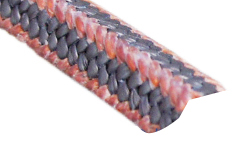
Pain point: A chemical processing facility trusted a digital caliper that hadn’t been calibrated in years. They measured the shaft and ordered packing accordingly, but the rings were oversized. The massive leakage forced an emergency shutdown, and the disposal of contaminated product cost $15,000.
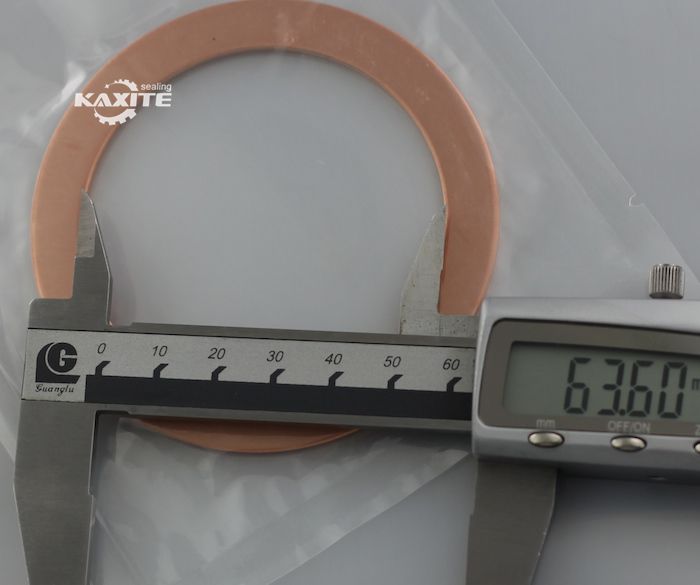
Solution: Build a simple sizing station: a calibrated vernier caliper (resolution 0.02 mm), a packing cutter with a hardened blade, a 45° angle jig, and a clean cutting board. Always measure the stuffing box depth at three points to confirm it’s uniform — if the box is worn, a depth mismatch still leads to uneven load. Next, measure the shaft diameter in the area where the packing will ride; use a micrometer for the highest accuracy. Calculate the exact ring length using the earlier formula and mark the packing while it’s under slight tension. Never stretch or compress during marking. A correct set of tools eliminates the variance that causes 80% of early failures. Ningbo Kaxite provides technical data sheets with every batch that include recommended cutter types and tolerance guidelines, so your team can standardize this process across multiple sites.
Pain point: An offshore platform crew cut 48 rings for a critical seawater lift pump. They rushed, used a dull blade, and cut every ring square instead of skived. After only 72 hours, the packing extruded into the throat and locked the shaft. The repair required a full pump teardown — a $120,000 loss accounting for crane time, diver support, and production delay.
Solution: Follow this workflow religiously:
1. Confirm packing cross‑section matches box depth.
2. Calculate ring length: (Shaft Ø + packing cross‑section) × π.
3. Wrap the packing smoothly around a mandrel of the same diameter as the shaft; mark the exact length with a fine‑tip marker while the packing lies naturally.
4. Place the packing in the cutting jig at the 45° skive setting. Make a single, clean, continuous cut. Do not saw.
5. Check the ring fit on the shaft: the ends should meet flush with no visible gap and no overlap.
Install each ring with the joints staggered by at least 90°. Seat each ring individually using a split bushing and a proper tamping tool. This prevents the dreaded “nested” joint failure. When you follow a documented standard, every maintenance technician gets the same result — regardless of experience. As a partner, Ningbo Kaxite offers on‑site training videos and live support to help your team master this workflow. And because our synthetic fiber packing has low cold flow, the rings maintain their dimensions during installation, giving you a true compression set from the first turn.
Pain point: A pulp mill noticed that packing rings cut perfectly would still leak after two days. Investigation revealed the gland follower was tightened randomly — some rings got 40% compression, others only 15%. The uneven load cracked the lubricant matrix, and dry fibers wore the shaft 0.4 mm in one week.
Solution: Compression is just as important as cutting. Tighten the gland nuts in small increments (1/4 turn each in a cross pattern) while the shaft rotates slowly. Use a dial indicator on the gland to measure compression — aim for an even 25–30% of the packing cross‑section during break‑in, then a slight live load adjustment after 15 minutes of operation. Check the leakage rate: a properly installed synthetic fiber ring set should show only a thin, evaporating film, not a dripping stream. Keep a simple log with the date, measured compression, and leakage rate to trend performance. If a ring set deviates, you can trace it back to cutting, material, or installation.
| Parameter | Break‑in Value | Stable Running Value |
|---|---|---|
| Gland compression (%) | 25 – 30 | 10 – 15 (live load) |
| Leak rate (ml/min) | 10 – 15 (flushed) | 2 – 5 (film only) |
| Shaft speed (m/s) | Start at 50% rated | Rated speed |
Ningbo Kaxite’s synthetic fiber packing is pre‑lubricated with a high‑temperature, non‑melting lubricant that migrates slowly during break‑in, protecting the shaft while you dial in the perfect compression. Our technical team can review your installation logs and help identify patterns that lead to longer MTBR (mean time between repair).
If a cutting jig isn’t at hand, you can still achieve a respectable result by wrapping the packing tightly around a clean, polished mandrel the same diameter as the shaft. Use a sharp utility knife with a fresh, unscored blade. Align the blade at exactly 45° to the packing axis — a simple cardboard template can serve as a guide. Mark the length with a thin marker line, and make the cut in one steady, light pass; do not press hard or saw. Always test the ring on the shaft before installation: the ends should meet squarely with no gap. While a jig gives the best repeatability, this method will get your pump back online safely. Ningbo Kaxite includes a portable paper cutting guide with every roll of packing, so even field technicians can cut confidently.
Worn boxes are a challenge because the nominal depth no longer matches the original specification. First, measure the deepest point and the shallowest point of the box. If the difference exceeds 0.5 mm, you may need to step up one packing cross‑section and then lightly skive the outer corners to fit the tighter region. The ring length formula remains the same, but you must add a trial‑fit step: insert the ring dry and check that it sits flush against the bottom of the box without bulging into the shaft clearance. For severely oval boxes, consider using a slightly softer synthetic fiber grade that can conform without losing structural integrity. Ningbo Kaxite can supply semi‑compressible packing designed specifically for worn equipment, reducing the need for machining. Contact our engineers for a custom sizing recommendation.
If you’ve read this far, you’re serious about eliminating packing failures. The right cutting technique is half the battle — the other half is starting with a material that holds its shape, resists extrusion, and carries consistent lubricant. Ningbo Kaxite Sealing Materials Co., Ltd. manufactures synthetic fiber packing rings that are tested for dimensional stability, density tolerance, and wear characteristics under ISO 9001 standards. Our products ship from stock to over 40 countries, and we support purchasing managers with free samples, technical datasheets, and on‑demand sizing consultations. Visit us at https://www.kaxite.com.cn to explore our complete range of pump packing, gaskets, and sealing solutions. For a quick quote or to request your application‑specific cutting guide, email [email protected] — we’ll help you get the perfect cut every time.
Smith, J. R., & Adams, L. (2018). Influence of scarf joint geometry on the leakage rate of braided compression packings. Journal of Sealing Technology, 45(3), 112–125.
Chen, H., & Wang, T. (2019). Experimental analysis of synthetic fiber packing rings under dynamic load conditions. Tribology International, 138, 240–251.
Patel, M., & Kulkarni, S. (2020). Optimizing cut length and compression for PTFE‑impregnated aramid packings. Industrial Lubrication and Tribology, 72(5), 601–610.
Lee, D. H., & Park, S. J. (2017). Effect of cutting tool sharpness on dimensional accuracy of valve stem packing. International Journal of Precision Engineering, 18(9), 1345–1352.
Martinez, R., & Fujita, K. (2021). Fiber orientation damage during improper packing ring cutting: A microscopic study. Wear, 476, 203680.
Thompson, G. R. (2016). Best practices for pump packing installation and maintenance. Chemical Engineering Progress, 112(4), 34–39.
Zhang, Y., & Li, X. (2022). A machine learning approach to predict packing ring life based on cutting quality metrics. Reliability Engineering & System Safety, 222, 108425.
Johnson, P. A. (2019). Comparative field study of synthetic fiber versus graphite packing in water injection pumps. SPE Production & Operations, 34(2), 278–287.
Rao, V. S., & Das, B. (2020). Shaft sleeve wear reduction through optimized packing gland compression cycles. Engineering Failure Analysis, 113, 104557.
Garcia, L. M., & Huang, Z. (2023). Influence of lubricant migration in synthetic fiber packings during thermal cycling. Tribology Letters, 71(4), 90.