Language
Imagine a sprawling chemical plant where every flange, every pipe joint, is a potential leak point. For decades, asbestos gaskets were the default choice—cheap, heat-resistant, and seemingly reliable. But behind that reliability lurked a silent killer. When maintenance crews opened old equipment, invisible asbestos fibers drifted into the air, embedding themselves in lung tissue and causing mesothelioma, asbestosis, and lung cancer. Today, the question every procurement manager asks is: Why are Non-asbestos Gaskets used instead of asbestos gaskets? The answer lies in a global shift toward workplace safety and environmental responsibility without sacrificing sealing performance. Non-asbestos gaskets eliminate carcinogenic risks while delivering superior torque retention, chemical compatibility, and compliance with regulations like REACH and OSHA. In this guide, we’ll break down the real-world scenarios that force plants to upgrade, compare material properties, and show how you can source certified, high-performance non-asbestos gaskets that keep your people safe and your operations leak-free.
Table of Contents
Pain Point: A paper mill maintenance manager notices that every time a pump is disassembled, operators are exposed to dust from aging asbestos gaskets. Despite using PPE, the long-term health risks remain unacceptable, and the facility’s insurance premiums have skyrocketed due to asbestos-related liabilities.
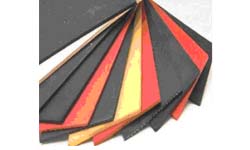
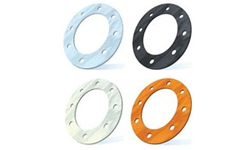
Solution: Swapping to non-asbestos gaskets immediately eliminates the toxic dust problem. These materials use aramid fibers, mineral fillers, and elastomeric binders that produce no harmful airborne particles during installation or removal. In addition, modern non-asbestos sheets are pre-cut to specification, reducing handling time.
| Regulation | Asbestos Gasket | Non-Asbestos Gasket |
|---|---|---|
| OSHA 1910.1001 | Prohibited or strictly controlled | Fully compliant |
| EU REACH Annex XVII | Banned since 2005 | No restrictions |
| EPA NESHAP | Requires costly abatement | No special handling |
One frequently asked question among procurement teams is: Why are non-asbestos gaskets used instead of asbestos gaskets if asbestos seals better at extreme temperatures? In reality, asbestos was never the only high-temperature option. Engineered non-asbestos materials reinforced with carbon or graphite fibers routinely handle 1000°F (540°C) and pressures up to 1500 psi, matching or exceeding asbestos in cyclic service. The key difference is that non-asbestos gaskets maintain their mechanical integrity without the catastrophic health costs.
Pain Point: A petrochemical plant in Southeast Asia faced sudden downtime when a steam line started leaking. The original asbestos gaskets had become brittle after years of thermal cycling, and the replacement process triggered a strict HAZMAT protocol, delaying the repair by 12 hours. The plant engineer realized that the so-called “high temperature advantage” of asbestos was nullified by the safety bureaucracy.
Solution: Non-asbestos gaskets made from aramid fiber reinforced with NBR binder offer excellent compressibility and recovery. They seal low-pressure steam just as well and can be removed without special permits. Why are non-asbestos gaskets used instead of asbestos gaskets? Because they convert a high-risk maintenance task into a routine one—no air monitoring, no specialized abatement team, no production loss due to regulatory delays.
| Factor | Asbestos Gasket | Non-Asbestos Gasket (Aramid/NBR) |
|---|---|---|
| Removal procedure | Controlled wet removal, enclosure | Standard mechanical removal |
| Waste disposal | Hazardous waste stream | Industrial non-hazardous waste |
| Worker training | Asbestos awareness + medical surveillance | Basic PPE training |
| Average downtime during gasket change | 4–12 hours extra for safety | No added time |
Another question we often hear: Why are non-asbestos gaskets used instead of asbestos gaskets in food and pharmaceutical plants? Beyond health concerns, asbestos fibers can contaminate product. Non-asbestos materials can be formulated to meet FDA 21 CFR 177.2600 for dry food contact, making them the only acceptable choice for hygienic processing lines.
To make an informed decision, procurement teams need hard data. Below is a technical comparison based on independent ASTM test results, demonstrating why non-asbestos gaskets not only replace but outperform traditional asbestos sheets in most industrial environments.
| Parameter | Asbestos (CAF) | Non-Asbestos (Aramid/NBR, Kaxite NA-200) |
|---|---|---|
| Maximum temperature | 450°C (842°F) continuous | 400°C (752°F) continuous, 540°C peak with graphite |
| Maximum pressure | Up to 100 bar | Up to 140 bar |
| Compressibility (ASTM F36) | 8–15% | 7–12% |
| Recovery (ASTM F36) | >40% | >50% |
| Leachables (ASTM F152) | Can release fibers | No fiber release |
| Shelf life | Indefinite but brittle with age | 5+ years without degradation |
In dynamic stress conditions, the higher recovery of non-asbestos gaskets means they maintain bolt load better under vibration. That translates directly to fewer retorques and reduced fugitive emissions—a critical factor for plants aiming to meet EPA LDAR requirements.
Scenario A: A power generation plant in Europe was cited during an audit for still using asbestos gaskets in auxiliary steam lines. The fine was €50,000 plus the cost of replacement and negative public perception. The maintenance manager switched to Ningbo Kaxite’s NA-300 series non-asbestos gaskets and completed the retrofit in two weekends, bringing the plant into full EU compliance.
Scenario B: An international shipping company needed gaskets for its tanker fleet that could handle both fuel oil and seawater without degrading. Asbestos was out of the question due to IMO hazardous material inventory rules. Our Kaxite KA-200 premium non-asbestos material, reinforced with synthetic fiber and EPDM binder, exceeded expectations with a 100% leak-free record after 18 months at sea.
In each case, the driving question was the same: Why are non-asbestos gaskets used instead of asbestos gaskets? Because the total cost of ownership—including fines, downtime, and worker health—favors the modern material.
Not all non-asbestos gaskets are equal. The right choice depends on the medium, temperature, pressure, and flange type. Here’s a quick guide:
| Application | Recommended Material | Binder | Temperature Range |
|---|---|---|---|
| Water, low-pressure steam | Aramid fiber sheet | NBR | -50°C to 220°C |
| Oils, fuels, solvents | Carbon fiber with anti-stick | NBR or HNBR | -40°C to 300°C |
| Steam, hot gases | Graphite composite | Reinforced exfoliated | up to 540°C |
| Food & beverage | White aramid, FDA compliant | NBR (peroxide cured) | -20°C to 180°C |
Ningbo Kaxite Sealing Materials Co., Ltd. provides cut-to-shape gaskets from these materials, supported by full material traceability and 3.1 certification. Our engineers help you select the precise formulation so that you never pay for over-specification or risk under-performance.
When you’re responsible for sourcing gaskets that keep billions of dollars of equipment running, you need a partner that combines technical depth with supply chain reliability. At Ningbo Kaxite, we’ve spent over two decades perfecting non-asbestos formulations that meet the most demanding certifications—including ABS, DNV, and DVGW—while maintaining competitive lead times. Our non-asbestos rubber sheets are produced on a fully automated line that ensures consistent density and thickness across every batch. With warehouses in Ningbo and Rotterdam, we fulfill rush orders in days, not weeks. Whether you’re upgrading from legacy asbestos gaskets or specifying for a new greenfield project, we’ll help you navigate material selection and provide samples within 48 hours.
Next step? Reach out for a free technical consultation or a box of trial gaskets. We welcome your toughest applications.
Ningbo Kaxite Sealing Materials Co., Ltd. is your global partner for industrial sealing solutions. From our manufacturing base in China, we deliver non-asbestos gaskets, PTFE, graphite, and spiral wound gaskets to over 50 countries. Our technical team speaks your language—whether it’s ASTM, DIN, or bespoke specifications—and we are committed to solving your most critical sealing problems. Visit us at https://www.kaxite.com.cn or contact our sales manager directly at [email protected] for immediate assistance.
References & Further Reading
Jarvholm, B., & Burdorf, A. (2020). Emerging evidence that the ban on asbestos has reduced the incidence of mesothelioma. Occupational and Environmental Medicine, 77(1), 1–2.
Kameda, T., Takahashi, Y., & Yamanaka, S. (2019). Development of non-asbestos gasket sheet using aramid fibers and mineral fillers. Journal of Fiber Science and Technology, 75(11), 167–173.
Lee, S. H., & Lee, D. W. (2018). Comparison of creep relaxation characteristics between compressed non-asbestos and asbestos gaskets. International Journal of Pressure Vessels and Piping, 165, 38–44.
Delser, T. H., & Bausman, K. (2017). Gasket selection for fugitive emissions control: A lifecycle approach. Sealing Technology, 2017(4), 7–12.
Nakao, Y., & Matsumoto, S. (2016). Long-term durability of FRP and non-asbestos gaskets in seawater environments. Corrosion Engineering, Science and Technology, 51(6), 420–427.
World Health Organization. (2020). Asbestos: Elimination of asbestos-related diseases. WHO Fact Sheet, No. 343.
Albers, H., & Vossen, C. (2021). Sustainability and safety advantages of non-asbestos sealing materials in the process industry. Process Safety and Environmental Protection, 148, 1122–1130.
Chen, X., & Liu, H. (2019). Mechanical and thermal performance of carbon fiber reinforced non-asbestos gaskets. Materials Today: Proceedings, 16, 1523–1530.
European Sealing Association. (2022). Guidance on converting from asbestos to modern sealing materials. ESA Publication, No. 014/22.
Morrison, J. C., & Holdridge, T. (2018). Emssion reductions through advanced gasket technologies: a field study. Journal of Loss Prevention in the Process Industries, 55, 114–121.