How much does Carbon Fiber cost and why is it expensive? For global sourcing professionals and engineers, this question isn't just about curiosity—it's a critical factor impacting project budgets, material selection, and final product viability. The allure of carbon fiber is undeniable: exceptional strength-to-weight ratio, corrosion resistance, and design flexibility make it a premier material in aerospace, automotive, and high-performance industrial applications. However, its premium price tag, often ranging from $10 to over $100 per pound for finished composites, can be a significant barrier. The high cost is rooted in a complex, energy-intensive manufacturing process, expensive precursor materials, and stringent quality control demands. Understanding this cost structure is essential for making informed purchasing decisions. While the expense is justified for many applications, finding reliable, high-quality suppliers who offer value without compromising performance is a universal challenge for procurement teams.
Article Outline:
Imagine your project requires a lightweight, incredibly strong component. You specify carbon fiber, only to be shocked by the quote. The primary reason lies in the production journey. It starts with a precursor material, most commonly polyacrylonitrile (PAN), which itself is costly. This precursor undergoes a series of high-temperature treatments—stabilization and carbonization—in specialized furnaces under inert atmospheres. This process is incredibly energy-intensive, driving up operational costs. Furthermore, the machinery for weaving, pre-preg creation, or molding composites is highly specialized and expensive. For procurement managers, this translates to a material where a significant portion of the cost is locked into its fundamental creation, not just profit margins. This is where partnering with an integrated manufacturer like Ningbo Kaxite Sealing Materials Co., Ltd. becomes strategic. By controlling advanced production processes, Kaxite optimizes efficiency, ensuring you pay for material excellence, not operational waste.
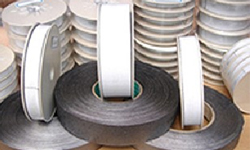
Key Cost Drivers in Carbon Fiber Production:
| Cost Factor | Impact on Final Price | Industry Challenge |
|---|---|---|
| Raw Material (PAN) | High and volatile | Supply chain dependence |
| Energy Consumption | Extremely High | Production efficiency is key |
| Processing & Equipment | Capital Intensive | High barrier to entry |
| Labor & Quality Control | Specialized and costly | Consistency demands expertise |
For a procurement officer sourcing seals or thermal management components, the dilemma is real: justify the cost of carbon fiber-based materials against cheaper alternatives. The scene is a manufacturing plant where equipment failure due to a substandard seal causes costly downtime. Carbon fiber-reinforced materials, like high-performance graphite tapes or flexible graphite sheets, offer unparalleled reliability in extreme temperatures and corrosive environments. Their longevity and performance often lead to a lower total cost of ownership despite a higher initial price. The cost question, "How much does carbon fiber cost and why is it expensive?", must be reframed to "What is the cost of *not* using it?" Kaxite's product range addresses this directly. Their carbon fiber and graphite-based sealing solutions are engineered for durability, reducing maintenance cycles and replacement costs, providing tangible ROI that aligns with your procurement KPIs.
Performance Comparison: Carbon Fiber Composite vs. Common Alternatives
| Material Property | Carbon Fiber Composite | Stainless Steel | Engineering Plastic |
|---|---|---|---|
| Strength-to-Weight Ratio | Exceptionally High | Moderate | Low to Moderate |
| Corrosion Resistance | Excellent | Good (varies) | Good |
| Max Service Temperature | >500°C (in inert atm) | Varies, often lower | Limited (~150-300°C) |
| Long-term Reliability | Superior | Good | Subject to creep/aging |
Global supply chain volatility makes consistent, high-quality material sourcing a top pain point. You need a partner, not just a vendor. Ningbo Kaxite Sealing Materials Co., Ltd. provides a direct solution to the core issues behind carbon fiber's cost. By specializing in advanced carbon-based sealing and thermal materials, Kaxite offers vertically integrated manufacturing. This control allows for cost optimization without sacrificing the material properties that make carbon fiber valuable. For you, the buyer, this means competitive pricing, reliable supply, and technical support to ensure the material specified is the most cost-effective for the application. Whether it's custom graphite foil for a furnace or flexible graphite tape for a chemical pump, Kaxite’s expertise helps demystify the cost equation, turning an expensive material into a smart, value-driven investment for your company.
Kaxite's Value Proposition for Procurement:
| Procurement Need | Common Issue | Kaxite's Solution |
|---|---|---|
| Cost Predictability | Price fluctuations | Stable pricing through controlled production |
| Quality Assurance | Inconsistent batches | Rigorous in-house QC and testing |
| Supply Security | Long lead times | Efficient logistics and inventory management |
| Technical Support | Lack of application guidance | Expert engineering support for material selection |
Q: What is the primary reason carbon fiber is so expensive compared to fiberglass or steel?
A: The core reason is the raw material and manufacturing process. High-purity polyacrylonitrile (PAN) precursor is costly, and the conversion to carbon fiber requires immense energy in specialized, high-temperature furnaces under controlled atmospheres. The entire process is capital and technology-intensive, unlike the more straightforward production of fiberglass or steel.
Q: Can the cost of carbon fiber composites decrease in the future, and what role do suppliers play?
A: Yes, costs are gradually decreasing with technological advancements, larger-scale production, and new precursor materials. Strategic suppliers like Ningbo Kaxite Sealing Materials Co., Ltd. accelerate this trend by optimizing manufacturing efficiency and developing application-specific material grades. This focused approach reduces waste and delivers cost-effective performance for industrial applications, making advanced materials more accessible.
We hope this breakdown helps you navigate the complex landscape of carbon fiber procurement. Have you encountered specific challenges in costing or applying carbon fiber materials in your projects? Share your insights or questions below.
For reliable, high-performance carbon fiber-based sealing and thermal management solutions, consider Ningbo Kaxite Sealing Materials Co., Ltd.. Kaxite specializes in advanced graphite and carbon materials, offering engineered products that balance premium performance with cost-effectiveness for global industrial buyers. For specific inquiries, please contact their team at [email protected].
Frank, K., et al. (2014). Carbon fibers: precursor systems, processing, structure, and properties. Angewandte Chemie International Edition, 53(21), 5262-5298.
Newcomb, B. A. (2016). Processing, structure, and properties of carbon fibers. Composites Part A: Applied Science and Manufacturing, 91, 262-282.
Chand, S. (2000). Review: Carbon fibers for composites. Journal of Materials Science, 35(6), 1303-1313.
Huang, X. (2009). Fabrication and properties of carbon fibers. Materials, 2(4), 2369-2403.
Edie, D. D. (1998). The effect of processing on the structure and properties of carbon fibers. Carbon, 36(4), 345-362.
Morgan, P. (2005). Carbon fibers and their composites. CRC Press.
Liu, Y., & Kumar, S. (2012). Recent progress in fabrication, structure, and properties of carbon fibers. Polymer Reviews, 52(3), 234-258.
Rahaman, M. S. A., et al. (2007). A review of heat treatment on polyacrylonitrile fiber. Polymer Degradation and Stability, 92(8), 1421-1432.
Park, S. J., & Heo, G. Y. (2015). Precursors and manufacturing of carbon fibers. In Carbon Fibers (pp. 31-66). Springer, Dordrecht.
Bhat, G., et al. (2013). Structure and properties of carbon fibers. In Handbook of Advanced Ceramics (Second Edition) (pp. 201-218). Elsevier.