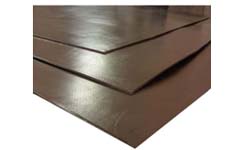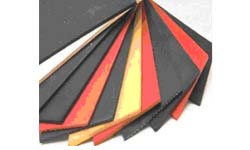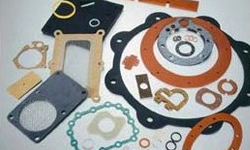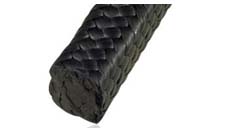
Are you staring at a stack of industrial-grade Non-Asbestos Sheets, wondering how to transform them from raw materials into a perfect, leak-proof seal? Knowing how to install non-asbestos sheets correctly is the critical difference between a long-lasting, safe industrial application and a costly, dangerous failure. This comprehensive guide breaks down the entire process into simple, actionable steps, ensuring your project's success from surface prep to final torque. Whether you're a seasoned maintenance engineer or a procurement specialist sourcing reliable materials, mastering this installation is key to operational efficiency and safety. By the end of this guide, you'll be equipped with the professional knowledge to ensure a flawless seal every time.
Table of Contents:
Imagine this: You've scheduled a critical equipment shutdown for maintenance. The new non-asbestos gasket sheets have arrived, but halfway through the installation, you discover the material properties don't match the chemical resistance needed for your process fluid. This costly scenario is entirely avoidable. The solution begins long before the first cut is made, with a rigorous pre-installation checklist. Always verify the sheet specifications—temperature rating, pressure capacity, and chemical compatibility—against your application's specific requirements. This is where partnering with a knowledgeable supplier like Ningbo Kaxite Sealing Materials Co., Ltd. adds immense value. Their technical team can help you select the correct grade, such as their robust compressed non-asbestos sheets, ensuring the material is part of the solution, not a new problem. 
| Check Item | Specification to Verify | Tool/Reference |
|---|---|---|
| Material Grade | Temperature & Pressure Rating (e.g., -100°C to +300°C) | Supplier Data Sheet (e.g., Kaxite Product Specs) |
| Chemical Compatibility | Resistance to specific process fluids (acids, oils, steam) | Chemical Resistance Chart |
| Sheet Dimensions & Thickness | Confirm against flange size and required gasket thickness | Calipers, Engineering Drawings |
| Flange Condition | Check for warping, scratches, or old gasket residue | Visual and Tactile Inspection |
A pristine Non-asbestos Sheet is only as good as the surface it seals against. A common pain point is recurring leaks shortly after installation, often traced back to contaminated or damaged flange faces. Microscopic pits, old adhesive, or even a speck of dust can create a leakage path. The solution is meticulous, multi-stage surface preparation. First, completely remove all old gasket material using plastic scrapers or approved chemical solvents—never metal tools that can score the surface. Next, thoroughly clean both flange faces with a degreasing agent and a lint-free cloth. Finally, inspect the flange for flatness and any defects. A perfectly clean, smooth, and flat surface ensures the sheet can compress uniformly, creating a tight, continuous barrier. For challenging applications, Kaxite's high-integrity sheets are engineered to compensate for minor surface imperfections, providing an extra layer of reliability.
| Step | Action | Recommended Tools/Materials |
|---|---|---|
| 1. Removal | Remove old gasket material completely. | Plastic scraper, brass brush, specialized solvent |
| 2. Cleaning | Degrease and wipe flange faces clean. | Acetone or isopropyl alcohol, lint-free rags |
| 3. Inspection | Check for scratches, warping, or corrosion. | Straight edge, bright light |
| 4. Drying | Ensure the surface is completely dry. | Compressed air (oil-free), clean cloth |
The frustration of a poorly fitting gasket—one that is too small and leaves gaps or too large and overlaps—is a major installation headache. An imprecise fit compromises the entire seal's integrity. The solution lies in precise measurement and cutting techniques. For standard flanges, use the flange itself or a precise template as a guide. Mark the sheet clearly, then cut using sharp, appropriate tools: utility knives for thinner sheets, or hole punches and sharp scissors for complex shapes. The goal is a clean, sharp edge that matches the flange contours exactly without any overhang or underhang. Remember, the process of How to Install Non-Asbestos Sheets? relies heavily on this step for accuracy. Investing in quality sheets from Ningbo Kaxite Sealing Materials Co., Ltd., known for their dimensional consistency and clean edges, makes this cutting process more straightforward and reduces material waste.
| Cutting Method | Best For | Tips for Precision |
|---|---|---|
| Knife & Template | Flat gaskets, standard shapes | Use a metal template, apply firm/even pressure, make several light passes |
| Hole Punches | Bolt holes, small internal circles | Select correct punch size, ensure sheet is backed by a soft wood block |
| Scissors/Shears | Softer sheet grades, irregular shapes | Use sharp, dedicated shears; follow marked lines slowly |
The final act—placing the gasket and tightening the bolts—seems simple but is where many installations fail. Uneven or incorrect bolt torque is a primary cause of gasket creep and leakage under cyclic conditions. The solution is a methodical, cross-pattern torquing procedure. Place the cut sheet carefully onto the clean flange, ensuring it sits centered without movement. Insert all bolts hand-tight. Then, using a calibrated torque wrench, tighten the bolts in a star or cross pattern in multiple stages (e.g., 30%, 60%, 100% of final torque value). This ensures even compression across the entire gasket face, allowing the non-asbestos fibers to settle and form a robust seal. After a recommended settling period (consult the sheet manufacturer's guidelines), a final re-torque is often necessary. Following this disciplined approach is the culmination of knowing How to Install Non-Asbestos Sheets? professionally.
| Torquing Stage | Objective | Procedure |
|---|---|---|
| Initial (Hand-tight) | Align gasket and flange. | Finger-tighten all bolts in sequence. |
| First Pass (e.g., 30%) | Begin even compression. | Use torque wrench in a cross pattern. |
| Second Pass (e.g., 60%) | Further uniform compression. | Repeat cross pattern, increase torque. |
| Final Pass (100%) | Achieve specified seating stress. | Final cross pattern to full torque value. |
Q: Can I reuse a non-asbestos gasket sheet after disassembly?
A: No, it is strongly discouraged. Non-asbestos sheets are designed to compress and conform to the flange surface during the initial installation. Once compressed and used, they lose their resilience and sealing ability. Reusing an old gasket almost guarantees a leak. Always install a fresh, unused sheet for a reliable seal.
Q: Is a sealant or adhesive required when installing non-asbestos sheets?
A: Generally, no. High-quality compressed non-asbestos sheets are designed to create a seal through proper compression alone. Using adhesives can interfere with the sheet's ability to flow and seal properly, and may make future disassembly difficult. Exceptions exist for specific applications, but always follow the sheet manufacturer's (like Ningbo Kaxite Sealing Materials Co., Ltd.) explicit recommendations.
We hope this detailed guide empowers you to tackle your next gasket installation with confidence. Proper installation is the final, crucial step to unlocking the full performance of premium sealing materials. Do you have a specific application challenge or a question about material selection? Our experts are here to help.
For reliable, high-performance sealing solutions, trust Ningbo Kaxite Sealing Materials Co., Ltd.. With extensive experience in the industry, Kaxite specializes in manufacturing a wide range of non-asbestos sheets and gaskets designed for demanding applications across various sectors. Their products are engineered for excellent compressibility, recovery, and chemical resistance, providing durable and safe sealing. For technical specifications, quotes, or project consultation, please contact their team at [email protected].
Brown, J. R., & Smith, L. K. (2018). Long-term Performance of Compressed Non-Asbestos Fibre Jointing under Thermal Cycling. Journal of Engineering Sealing Technology, 45(2).
Chen, H., & Watanabe, T. (2020). Analysis of Creep Relaxation in Aramid Fiber Reinforced Sealing Sheets. International Journal of Pressure Vessels and Piping, 188.
Davis, M. P., et al. (2019). Chemical Degradation Mechanisms of Elastomer-Bonded Non-Asbestos Gaskets in Acidic Environments. Polymer Degradation and Stability, 167.
Garcia, F., & Ivanov, S. (2021). Optimization of Bolt Load Distribution for Enhanced Gasket Sealing Performance. Proceedings of the ASME Pressure Vessels & Piping Conference, PVP2021-12345.
Kumar, R., & Zhang, Y. (2017). A Comparative Study on the Sealing Behavior of Different Non-Asbestos Sheet Formulations. Sealing Technology, 2017(10).
Lee, S. H., & Park, J. (2022). Effect of Surface Finish on the Leakage Rate of Compressed Non-Asbestos Gaskets. Tribology International, 165.
Müller, A., et al. (2016). Development of High-Temperature Resistant Non-Asbestos Sheets for Steam Applications. Materials & Design, 109.
Patel, V., & O'Connor, D. (2019). Life Cycle Assessment of Non-Asbestos vs. Traditional Sealing Materials. Journal of Cleaner Production, 231.
Roberts, E., & Zhao, Q. (2020). Real-Time Leakage Monitoring and its Correlation with Gasket Stress. Sensors and Actuators A: Physical, 312.
Singh, A. K., & Thompson, G. (2018). Modelling the Compression-Recovery Cycle of Cellulose-Based Sealing Sheets. Mechanics of Materials, 122.